
Politics
JUST IN: FAA Grounds Planes At Major Airports
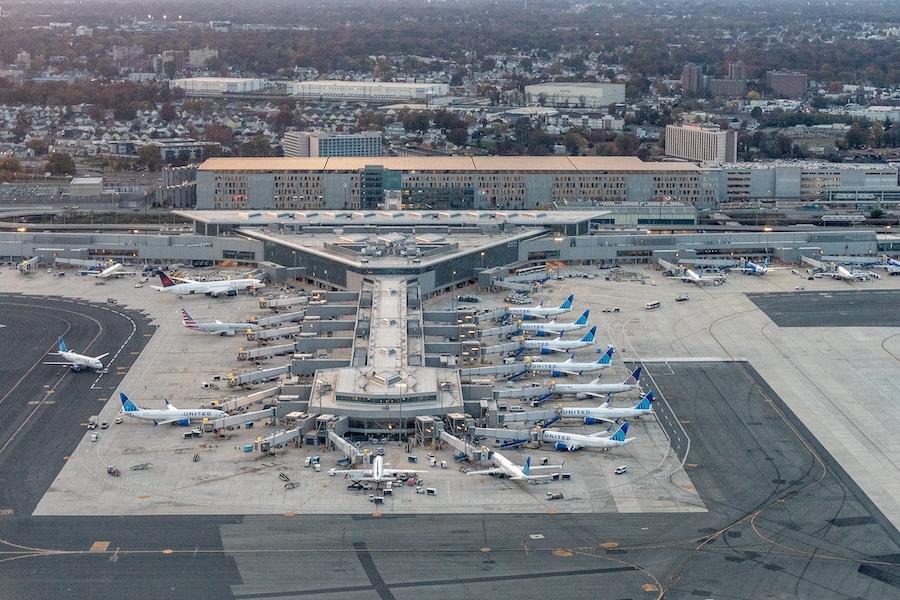
Passengers at several major Northeast airports encountered lengthy delays Monday after a telecommunications failure forced federal officials to restrict the number of planes entering some of the nation’s busiest airspace.
The problems began during the morning at a Federal Aviation Administration facility outside Philadelphia. Controllers there handle arriving and departing aircraft across a large portion of the region, including traffic connected to Newark Liberty International Airport and Philadelphia International Airport.
Once the communications trouble emerged, the FAA began holding certain flights at their departure airports instead of allowing additional aircraft to approach the affected area. The precautions eventually reached airports across New York, New Jersey and Pennsylvania as technicians investigated the breakdown.
Ground stops were issued for flights headed to Newark, Philadelphia and Teterboro Airport. Similar restrictions were later imposed at John F. Kennedy International Airport and LaGuardia Airport. Westchester County Airport was also listed among the affected facilities by flight-tracking service Flightradar24.
New York airports JFK and La Guardia have now been added to the list of airports ground stopped (flights to those airports are held on the ground at their origin) due to the FAA equipment outage.
All airports affected now:
JFK
LGA
EWR
TEB
PHL
HPN https://t.co/iY65Ywht3d— Flightradar24 (@flightradar24) September 21, 2026
The timing created another challenge for New York, where international delegations were arriving ahead of the United Nations General Assembly. The annual gathering brings presidents, prime ministers and other senior officials from around the world into the city.
FAA Administrator Bryan Bedford said the disruption involved a failed primary circuit at the Philadelphia Terminal Radar Approach Control facility. When the agency attempted to transfer operations to a separate fiber line, officials found that the backup had also been damaged.
Bedford said construction activity had cut the fiber somewhere between Newark and New Brunswick, New Jersey. Repairing that break was expected to take roughly 13 hours, prompting officials to work on installing another circuit that could return the system to service sooner.
The equipment problem affected frequencies needed by controllers to communicate with aircraft. Rather than allow traffic to continue at its usual volume with fewer communications resources available, the FAA slowed arrivals and temporarily kept some flights from leaving other cities.
Newark’s restrictions began at approximately 10 a.m. and were extended several times. Ground stops at JFK and LaGuardia followed shortly before 1 p.m., widening the disruption as scheduled departure times slipped throughout the afternoon.
FlightAware figures showed more than 600 delays at Newark and Philadelphia by Monday afternoon. That amounted to more than one-fifth of the scheduled flights at those two airports. Newark’s delays averaged approximately 112 minutes, and some inbound aircraft were redirected elsewhere.
The consequences were likely to extend beyond the airports initially involved. Newark is a major base for United Airlines, while Philadelphia is one of American Airlines’ principal hubs. Delayed planes and crews in either city can cause schedule problems at destinations around the country.
Monday’s failure also placed renewed focus on the communications infrastructure supporting American air travel. The facility handling Newark traffic suffered several serious equipment outages in 2025, including failures that temporarily prevented controllers from communicating with pilots.
Lawmakers have already allocated $12.5 billion toward modernizing the country’s air traffic control system. The funding is intended to replace aging technology, improve telecommunications equipment and address the nationwide shortage of qualified controllers.
Travelers were advised to check directly with their airlines before heading to the airport. Even after the FAA began easing restrictions, carriers still faced the task of clearing accumulated delays and getting displaced planes and crews back onto their scheduled routes.
