
Politics
Middle East Exports Rebound As Iran’s Chokehold On Strait Of Hormuz Falters
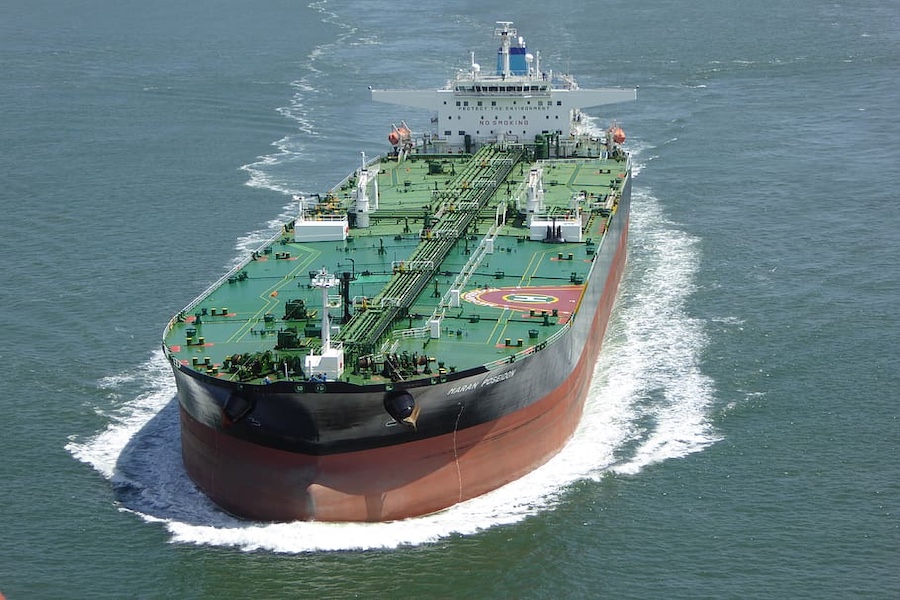
Middle East crude oil exports rose this month to their highest monthly level since the conflict since the U.S.-Iran conflict began on February 28.
Preliminary tracking data from Kpler put regional shipments at 16.3 million barrels per day. That figure remained about 3.2 million barrels per day below the 19.5 million barrels per day recorded in February, or roughly 6 million barrels per day below an 18.8 million barrel-per-day tally cited in other Kpler summaries that cover Saudi Arabia, the United Arab Emirates, Iraq, Oman, Qatar, Kuwait and Iran.
Saudi Arabia accounted for much of the increase. Its exports more than doubled from 2.446 million barrels per day in August to about 5.4 million barrels per day in September. Loadings at the Ras Tanura terminal in the Persian Gulf rose to approximately 3.25–3.6 million barrels per day from 929,000 barrels per day the previous month, though they stayed well below the 6.411 million barrels per day recorded in February.
A total of 19 very large crude carriers carrying Saudi oil, each with a capacity of about 2 million barrels, passed through the Strait of Hormuz in one recent week.
Flows through the Strait of Hormuz itself were projected at 7.4 million to 9.7 million barrels per day for the month. The higher volumes followed Saudi Arabia’s decision to send more crude from Gulf terminals after attacks damaged its East-West pipeline, which had previously allowed large volumes to leave via the Red Sea port of Yanbu.
Combined shipments that use the strait plus bypass routes — including the UAE’s Fujairah pipeline, Omani terminals and ship-to-ship transfers in the Gulf of Oman — reached nearly 80 percent of pre-conflict regional flows according to one Kpler assessment. Qatar-linked LNG tankers also crossed the waterway in September after no visible transits were recorded in August, though QatarEnergy continued to extend delivery suspensions for some customers.
POLL: Will You Support Trump And His Candidates In The Midterms?
Middle Eastern oil exports rise to highest level since Iran war began https://t.co/AResAwUzsm
— Financial Times (@FT) September 29, 2026
Earlier in the year, exports had fallen sharply. The International Energy Agency reported that flows through the Strait of Hormuz dropped from around 20 million barrels per day before the conflict to an average of 2.7 million barrels per day from March–May.
The UAE recovered faster than most producers by using storage, the Abu Dhabi Crude Oil Pipeline to Fujairah and alternative shipping routes, lifting its own exports from 1.9 million barrels per day in March to 4.3 million barrels per day in early June, or about 85 percent of pre-war levels. Saudi Arabia similarly increased Yanbu shipments from 2 million barrels per day to more than 5 million barrels per day at that time.
Tracking data remains incomplete because some vessels deactivate Automatic Identification System transponders while transiting the strait. U.S. Central Command has reported that such transports have consistently increased and recently surpassed one-billion barrels due to U.S. Navy escorts, however.
The latest tracking data comes after Iran and the United States held mediated talks on the sidelines of the United Nations General Assembly last week concerning a possible reopening of the Strait of Hormuz. The discussions, which were conducted through Qatari intermediaries and involving U.S. envoys Steve Witkoff and Jared Kushner together with Iranian Foreign Minister Abbas Araghchi, lasted about three hours and produced no agreement.
“I’m rejecting their deal. They want to make a deal where they open the strait immediately because they are losing so badly,” President Donald Trump said in response to Iran’s proposal.
“You don’t see that in the fake news. We’re winning tremendously, we have total control of the Hormuz Strait, massive amounts of oil are coming out of the Hormuz Strait, last night we had 29 ships come out. They want to make a deal. I think that’s fine, I like making a deal too. But that deal they offered would not be acceptable.”
RELATED: Trump Reportedly Strikes Deal With Russian President Vladimir Putin
