
Politics
Supreme Court Hands Trump Major Win In Biden Appointee Firing Case
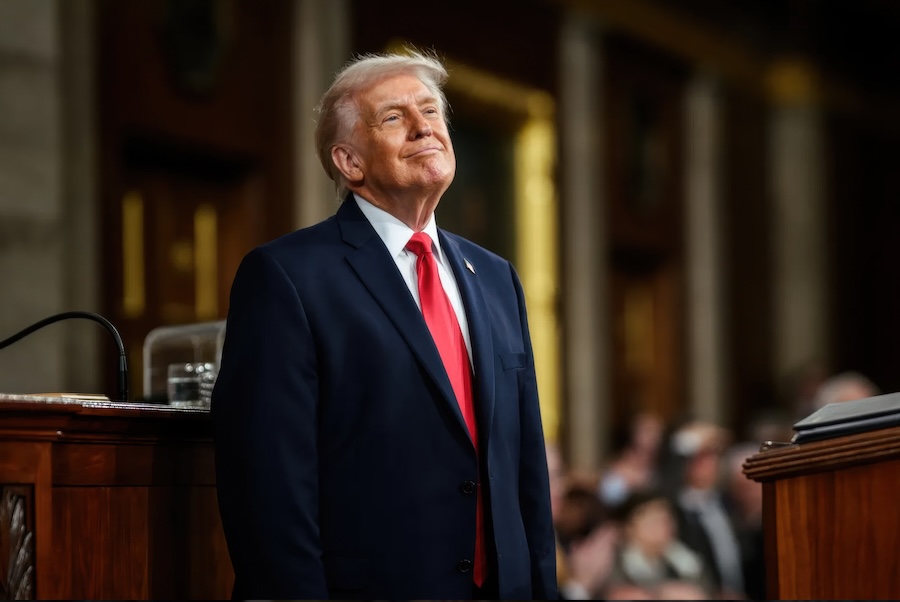
President Donald Trump scored another significant legal victory Monday after the Supreme Court declined to hear a challenge to his decision to fire a Biden-appointed federal labor official, leaving intact a ruling that reinforces the president’s authority over executive branch agencies.
The justices rejected an appeal from Gwynne Wilcox, a former member of the National Labor Relations Board (NLRB), who argued that Trump violated federal law when he removed her from her position shortly after returning to the White House in January 2025.
The decision effectively ends Wilcox’s legal effort to regain her position and represents another victory for the Trump administration in its ongoing battle over presidential authority.
Wilcox, a Democrat appointed by former President Joe Biden, was dismissed just one week into Trump’s second term. Her removal immediately triggered a legal fight over whether presidents can fire officials serving on federal agencies traditionally considered independent of the White House.
Federal law previously protected NLRB members from removal except under specific circumstances, including neglect of duty or misconduct.
However, the Trump administration argued that those restrictions improperly interfered with the president’s constitutional authority to oversee the executive branch.
The dispute initially appeared to favor Wilcox.
In March 2025, U.S. District Judge Beryl Howell ruled that Trump had unlawfully dismissed the labor board member, concluding that Congress possessed the authority to establish protections limiting presidential removals.
That decision was subsequently overturned by the U.S. Court of Appeals for the District of Columbia Circuit in December 2025.
In a 2-1 ruling, the appeals court determined that Trump’s decision fell within his constitutional authority, setting the stage for Wilcox’s unsuccessful appeal to the Supreme Court.
Monday’s development follows an even more consequential Supreme Court ruling issued in June involving Rebecca Slaughter, another Biden appointee who was removed from the Federal Trade Commission.
In that case, the justices ruled 6-3 in favor of Trump’s removal authority, overturning a major legal precedent dating back to 1935.
The earlier decision, known as Humphrey’s Executor v. United States, had allowed Congress to shield certain independent regulatory officials from being fired at the president’s discretion.
The Supreme Court’s June ruling substantially weakened those protections, giving presidents greater control over officials exercising executive authority.
Wilcox nevertheless argued that the NLRB differed from the Federal Trade Commission because its board primarily resolves labor disputes rather than directly exercising the same enforcement powers.
The Trump administration rejected that distinction, maintaining that the Supreme Court’s June ruling had already settled the underlying constitutional question.
Following Monday’s announcement, Wilcox expressed disappointment with the justices’ decision.
“I’m disappointed that the Supreme Court has declined to hear this case, not only for myself, but also for the workers and employers who rely on the National Labor Relations Board to resolve labor disputes impartially and free from political pressure,” Wilcox said in a statement.
The Justice Department declined to comment on the ruling.
For Trump, the outcome removes another legal obstacle to his administration’s efforts to restructure federal agencies and replace officials appointed under previous administrations.
Although the Supreme Court did not issue a new ruling on the merits of Wilcox’s case, its refusal to intervene leaves the appeals court’s decision standing.
