
Politics
NEW: DHS To Test ‘Heat Ray’ Weapon For Potential Use At US-Mexico Border
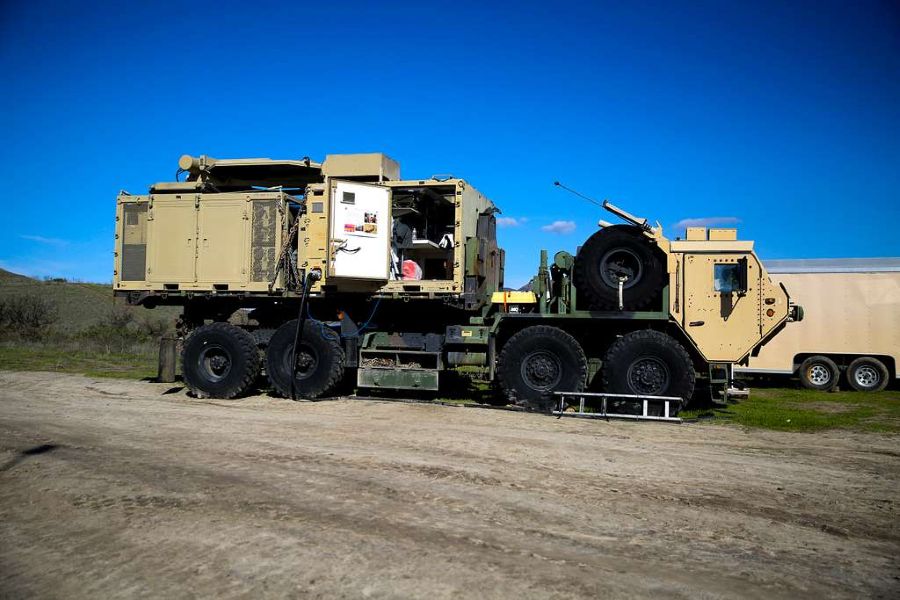
The Trump administration is exploring a powerful new tool for securing the southern border after the Pentagon reportedly authorized the Department of Homeland Security to test a military-grade heat ray capable of forcing people to retreat without firing a conventional weapon.
The technology, known as the Active Denial System, uses an invisible beam of electromagnetic energy to produce an intense burning sensation on exposed skin, prompting people to move away from its path.
According to CNN, Defense Secretary Pete Hegseth approved the testing arrangement in a memorandum signed last month, opening the door for DHS to evaluate the system for potential operations along the U.S.-Mexico border.
The device can reportedly reach targets more than half a mile away, giving federal authorities a long-range option for crowd dispersal.
Military officials have compared the sensation to opening an extremely hot oven, describing a “tingling effect” that can last between 10 and 15 minutes.
The technology reportedly creates “an instinctive and irresistible urge to run from the effect.”
Unlike conventional firearms, the Active Denial System is designed to repel individuals without using bullets or other projectiles.
However, questions remain about potential injuries, operational risks and whether the technology is appropriate for immigration enforcement.
Hegseth Hands DHS the Keys to a Military Heat Ray — and the Border Is About to Get HOT
When the beam hits human skin it produces a burning sensation — Pentagon officials have likened it to the blast of heat felt when opening a hot oven. Military officials say the resulting “tingling effect” lingers for 10 to 15 minutes, and triggers what they describe as an instinctive, irresistible urge to run.
The weapon, officially the Active Denial System, is a nonlethal device that fires an invisible beam of electromagnetic waves with a range of just over half a mile, the US military says.
— Steve Gruber (@stevegrubershow) October 21, 2026
The authorization allows DHS to temporarily borrow one system for seven months beginning in September.
POLL: Do You Approve Of Secretary Of War Pete Hegseth?
Under the agreement, the Pentagon will not operate the equipment during the testing period.
The memorandum specifies that the system “shall not be operated by DoW (Department of War) personnel.”
Instead, DHS assumes responsibility for “system employment, use and development of tactics, techniques and procedures.”
The arrangement could eventually lead to additional requests for equipment if federal officials determine the technology would benefit border operations.
RELATED: Mysterious ‘Humanoid Predator’ Caught On Camera At US-Mexico Border; UFO Expert Makes Shock Claim
Customs and Border Protection confirmed that it regularly examines emerging technology that could improve its capabilities.
“CBP is continually evaluating new technologies, especially those that enhance operational effectiveness and strengthen mission capabilities,” an agency spokesperson told CNN.
The Pentagon referred questions about the arrangement to DHS.
RELATED: Chaos Erupts As Border Patrol Raids Leftist ‘Autonomous Zone’
Although the heat ray has existed for years, deploying it along the American border would represent a significant departure from traditional enforcement methods.
The military previously sent the system to Afghanistan but ultimately chose not to use it during active combat operations.
Officials also considered deploying the technology at overseas detention facilities before deciding against it.
Federal border authorities have explored similar proposals in the past, particularly in areas experiencing large numbers of illegal crossings.
One previous evaluation involved the El Centro sector along the California-Mexico border, where officials considered whether the system could discourage unauthorized crossings near waterways.
Rodney Scott, who now serves as CBP commissioner, led the sector during that earlier review.
But officials raised concerns about whether the technology could inadvertently endanger migrants, particularly those attempting to cross rivers.
“Even if they’re chasing people back to the river, you don’t want them to go in and drown,” a former CBP official told CNN.
“For the cost, for the training and for the policies you’re going to create, is the juice worth the squeeze?”
The technology also generated debate during Trump’s first administration.
RELATED: Agent Charged With Illegally Modifying Border Patrol Hardware
In 2018, officials reportedly considered using the system against groups of migrants before then-Homeland Security Secretary Kirstjen Nielsen rejected the proposal.
“The issue was treating immigrants and citizens like enemy combatants,” a former DHS official told CNN.
“Thematically, inhumane treatments typically get rejected.”
Other concerns include whether the beam could inadvertently reach individuals standing on Mexican territory, creating potential legal and diplomatic complications.
Some Border Patrol personnel have also questioned whether the equipment is necessary given lower border-crossing numbers and increased staffing.
For now, DHS has permission to test the system and develop possible procedures, but no deployment at the southern border has been announced.
The decision nevertheless signals the administration’s continued interest in exploring unconventional technology as part of its broader border security strategy.
Whether the heat ray ultimately becomes part of federal immigration enforcement will depend on testing results, safety assessments and decisions about its lawful use.
POLL: Should Migrants Who Murder Americans Face The Death Penalty?
