
Politics
Netanyahu Makes Emergency Election Request As Israel Sees Record Voter Turnout
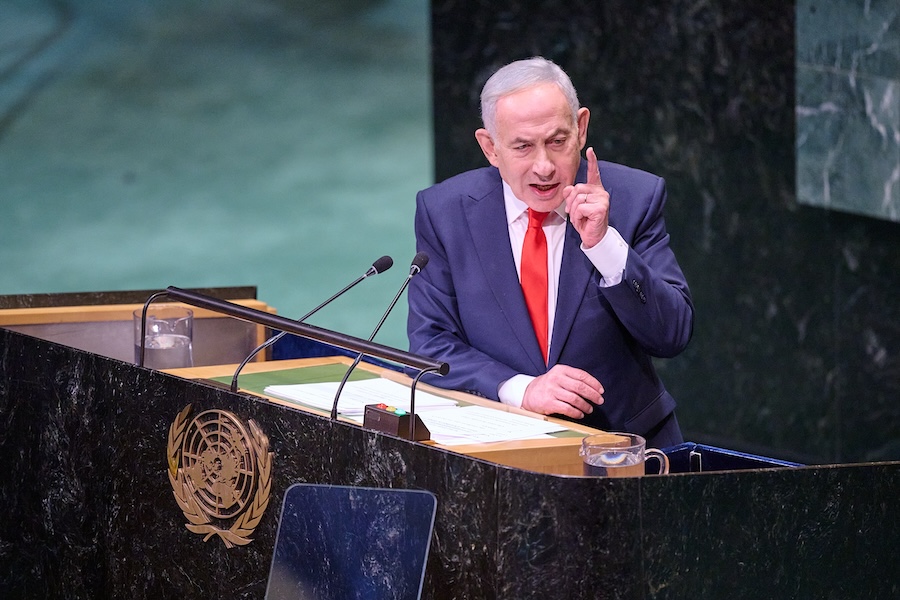
Israeli Prime Minister Benjamin Netanyahu and his political allies are making a last-minute push to keep polling stations open longer Tuesday as voters turn out in historic numbers for an election that could determine whether the country’s longest-serving leader remains in power.
Netanyahu’s ruling Likud party formally requested that Israel’s Central Elections Committee extend voting hours beyond the scheduled 10 p.m. closing time. The request was joined by the ultra-Orthodox Shas party and National Security Minister Itamar Ben Gvir’s Otzma Yehudit party.
The unusual move comes as election officials report extraordinary voter participation, with turnout reaching 66.7% by 6 p.m., the highest ever recorded at that stage of an Israeli election.
That figure represents a significant increase from the 57.7% recorded at the same hour during Israel’s 2022 election, suggesting voters are participating at levels that could dramatically reshape the country’s political landscape.
Likud did not publicly explain its request, but Shas pointed to the massive turnout and concerns that voters waiting in long lines might be unable to cast their ballots before polling stations close.
“The parties are trying to prevent a situation in which citizens waiting in line won’t be able to vote,” Shas said.
However, election officials had already announced that anyone standing in line by 10 p.m. would be permitted to vote, regardless of how long the process takes.
Dean Livne, acting director general of the Central Elections Committee, sought to reassure voters earlier Tuesday.
“We promise, everyone will vote,” Livne said, explaining that polling stations would continue operating until everyone who arrived before the deadline had cast a ballot.
The request quickly drew opposition from Gadi Eisenkot’s Yashar party, which argued that extending voting hours was unnecessary and accused Netanyahu of preparing to dispute the election’s legitimacy.
Yashar maintained that no extraordinary circumstances justified changing the established voting schedule.
Meanwhile, Netanyahu issued increasingly urgent appeals to conservative voters, warning that heavy participation among Arab Israelis and left-wing communities threatened his governing coalition.
“They are trying to steal the election from us,” Netanyahu declared in a video urging Likud supporters to vote. “No beach, no barbecue, everyone goes out to vote Likud,” he added.
The prime minister also warned that his political opponents could form a government dependent on Arab parties, framing the election as a consequential decision about Israel’s national identity and security.
His comments followed reports of unusually strong turnout in Arab communities, where increased participation could complicate Netanyahu’s path to securing another parliamentary majority.
Israel’s Central Elections Committee also addressed allegations of voting irregularities, stating that officials had found no evidence of systematic ballot tampering while investigating individual complaints.
The election represents Netanyahu’s most consequential political test since the October 7, 2023, Hamas attacks and the subsequent years of regional conflict.
Former military chief Eisenkot has emerged as a leading challenger, seeking to assemble an opposition coalition capable of ending Netanyahu’s latest period in office.
Israel’s 120-seat Knesset requires a governing coalition to secure at least 61 seats, meaning even relatively small shifts in voter participation could determine which political bloc controls the next government.
President Donald Trump has publicly supported Netanyahu, adding an international dimension to an election closely watched in Washington.
With turnout breaking records and both political camps scrambling to mobilize supporters, the final hours of voting could prove decisive.
As of Tuesday’s reported request, election authorities had not announced approval of a general extension beyond the existing provisions for voters already waiting in line.
