
Politics
BREAKING: Dems Take Crippling Hit In Must-Win Senate Race As Ex-Campaign Manager Blows Whistle On Ballot Scheme
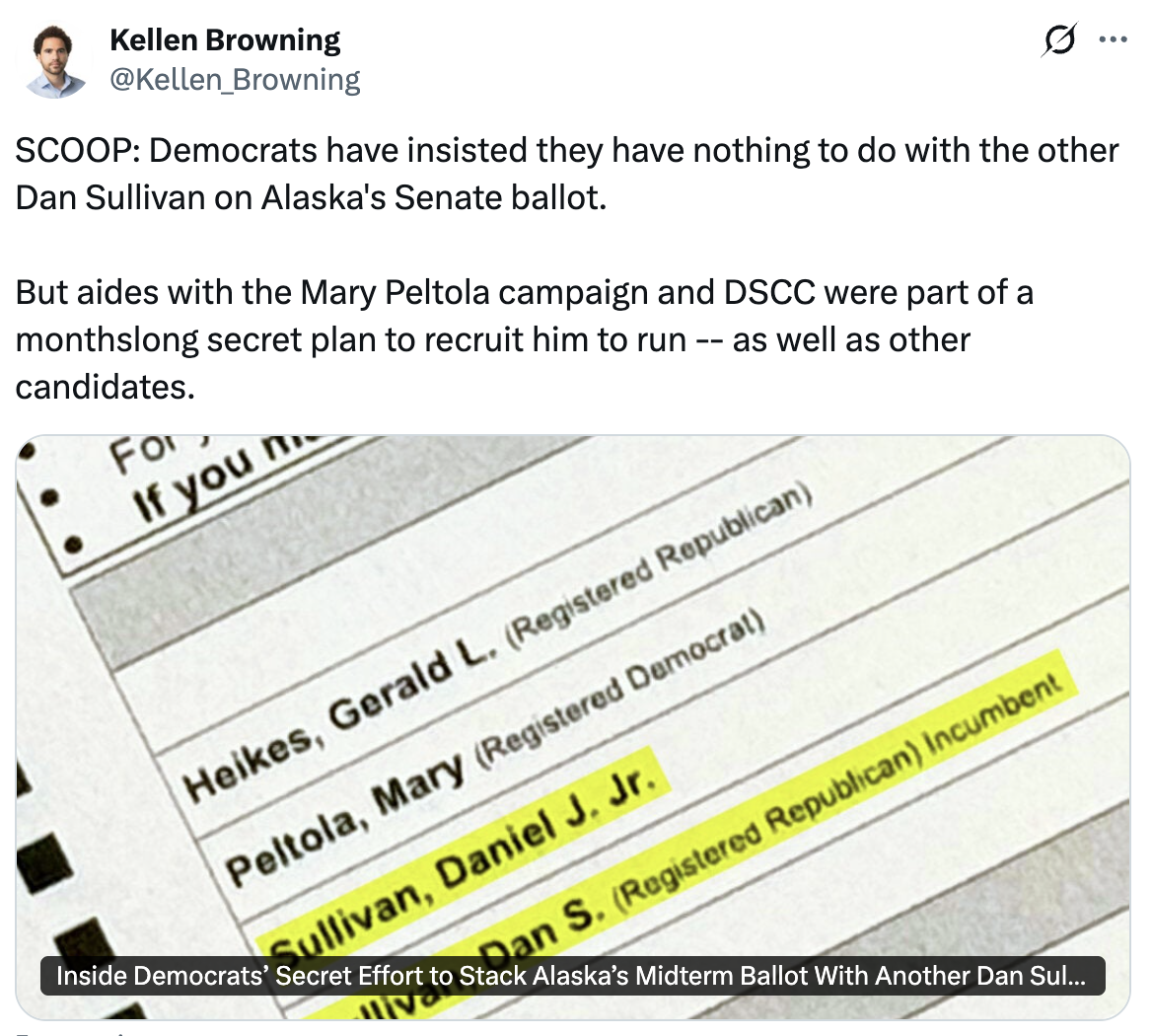
Mary Peltola’s campaign denied helping recruit rivals to siphon votes from Alaska’s Republican senator. But a New York Times investigation alleges her team helped pursue a ballot strategy with a blunt objective: Give Sen. Dan Sullivan more competition, including someone with his own name.
The Alaska Democrat heads into Tuesday’s Senate election as the only Democrat on a four-candidate ballot. Her opponents include Republican incumbent Dan S. Sullivan, retired teacher Dan J. Sullivan and long-shot contender Gerald Heikes.
According to the Times, the second Sullivan and Heikes were both recruited as part of an effort to peel support from the incumbent and improve Peltola’s chances in a race that could decide control of the Senate.
The allegations come as the Justice Department fights over the potential consequences. At President Donald Trump’s behest, the department sued in federal court last week to block certification of the results if votes for the second Sullivan deny the senator a victory.
Peltola’s campaign and the Democratic Senatorial Campaign Committee denied taking part in efforts to recruit spoiler candidates. Neither answered a detailed list of questions from the Times.
But Elisa Rios, Peltola’s former campaign manager and longtime aide, gave the newspaper an account that challenged those denials.
“Alaskan voters need to know,” Rios said. “There was a lot of speculation, and voters should get the full picture when making their decisions.”
Rios, who was fired during an August staff shake-up, said Peltola did not directly participate in the project but was “definitely aware.”
The Times based its findings on interviews, text messages and documents prepared for a possible lawsuit against the campaign.
POLL: Will You Support Trump And His Candidates In The Midterms?
The reported effort extended well beyond finding a second Sullivan. Campaign lawyers and senior DSCC aides participated in recurring discussions about recruiting candidates, according to the newspaper. Advisers even weighed creating a political party that could attract conservatives to the ballot.
Internally, the operation was known as the ballot composition project.
Its fieldwork included quiet trips to remote Alaska communities and a Midwestern political operative who traveled under a false name, pitching prospective candidates over beers at brewpubs, the Times reported.
The search for a namesake began in summer 2025, when Peltola was considering a Senate bid. Senior campaign aides instructed a staffer to find as many Alaskans named Dan Sullivan as possible, according to the Times’ report. The staffer searched voter records and assembled a list.
By spring, Dan J. Sullivan, a retired teacher living in a small Alaska Panhandle fishing village accessible only by air or sea, had entered the race.
The Times reported that Peltola’s team worked with people seeking to recruit him, despite the campaign’s repeated denials of involvement in his candidacy.
Sharing a name with the incumbent could give the newcomer an opening with confused voters on Alaska’s four-person ballot, potentially costing the Republican critical support.
Both parties have used ballot-stacking tactics in Alaska, and such strategies are generally considered legal. The newly reported operation, however, puts fresh scrutiny on how Democrats sought an advantage in a competitive Senate contest.
Polls suggest Mary Peltola has a strong chance of winning. Voters will now choose among her, Heikes, and two men named Dan Sullivan.
POLL: Will You Support Trump And His Candidates In The Midterms?
