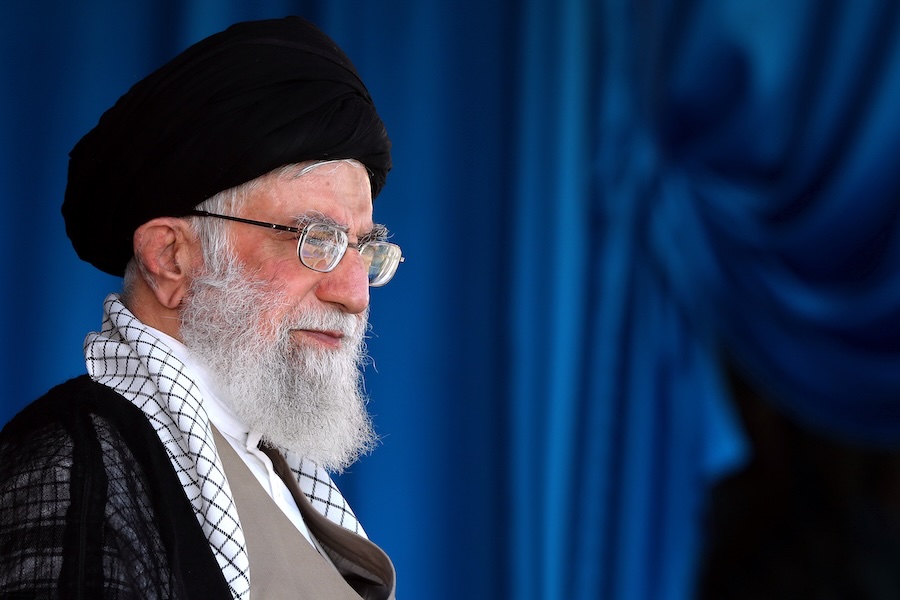
Mansoureh Khojasteh Bagherzadeh, the wife of Iran’s late Supreme Leader Ayatollah Ali Khamenei, has died days after sustaining injuries in the joint U.S.–Israeli airstrikes that killed her husband, according to Iranian state media.
She was 78.
Iranian outlets reported that Khojasteh had been in a coma since Saturday, when airstrikes targeted the Supreme Leader’s office in Tehran as part of the opening wave of what U.S. officials have called “Operation Epic Fury.” The strikes killed Khamenei along with dozens of senior Iranian military and political figures.
Her death on Monday marks another dramatic chapter in a conflict that has rapidly escalated into a broad regional confrontation.
Khojasteh, born in 1947 in Mashhad, married Ali Khamenei in the mid-1960s after meeting him in 1964. The couple had six children—four sons and two daughters. One of their sons, Mojtaba Khamenei, has long been viewed as an influential figure within Iran’s power structure.

Mansoureh Khojasteh Bagherzadeh
Despite her decades-long status as the spouse of one of the Middle East’s most powerful leaders, Khojasteh maintained an unusually low public profile. Unlike many political spouses, she did not take on an overt political role, rarely appeared in public, and granted no known interviews. Much of the information about her life comes from limited biographical accounts published in Iran.
Her husband had served as Iran’s Supreme Leader since 1989 and was previously president during the 1980s. His death in the strikes marked a historic turning point for the Islamic Republic, triggering immediate retaliation from Tehran.
In the days following the attack, Iran and Iranian-aligned forces launched missile and drone strikes against Israeli targets, U.S. positions in the region, and Gulf states. A British airbase in Cyprus was struck by Iranian-made drones, prompting the United Kingdom to review security measures. Gulf nations have protested Iranian attacks on their territory, and several European governments have urged restraint.
The conflict has also disrupted global energy markets. Tensions around the Strait of Hormuz have sent oil prices sharply higher, and major insurers have reportedly pulled coverage for some Gulf shipping routes.
Inside Iran, the military crisis has compounded longstanding internal pressures. Anti-regime protests driven by economic hardship and political repression had been ongoing prior to the escalation. The loss of the country’s supreme leader—and now his wife—adds further uncertainty to Iran’s political future.
The confrontation between Iran, the United States, and Israel has deep roots, stretching back decades through proxy conflicts, sanctions, and recurring military flare-ups. With leadership upheaval in Tehran and retaliatory strikes continuing, the situation remains volatile, with significant implications for regional stability and global markets.