
Politics
Biblical Sea Turns Blood-Red
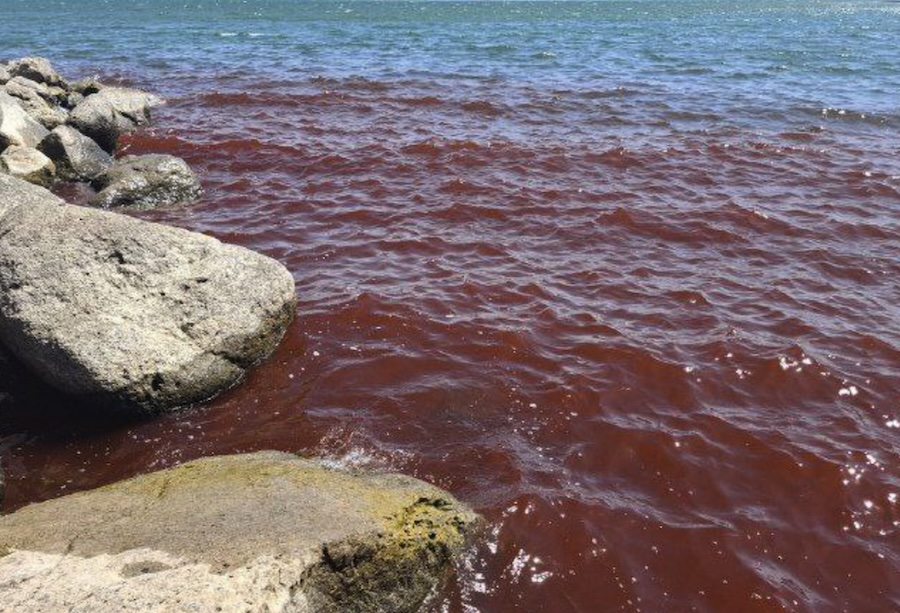
In early August, visitors to the Sea of Galilee were stunned to find portions of the water transformed into a striking, blood-red hue. Photos of the scene quickly spread online, with many calling it a chilling echo of the Plague of Blood from the Book of Exodus.
The Sea of Galilee, also known as Lake Kinneret, holds deep religious significance for Christians and Jews alike. It’s the site of numerous biblical accounts — from Jesus walking on water to the feeding of the five thousand — making any unusual event here resonate far beyond Israel’s borders.
The vivid red patches, visible from the shoreline and in aerial shots, ignited awe and concern, with some online voices speculating about prophetic signs or environmental disaster. Scientists say the explanation, while less apocalyptic, is fascinating in its own right.
The Israeli Water Ministry confirmed that the phenomenon was caused by a bloom of Botryococcus braunii, a species of microalgae that, despite being classified as green, can produce red pigments.
Under intense sunlight, these pigments become far more pronounced, turning swaths of the lake’s surface a rusty crimson. The conditions this month — high heat, calm waters, and nutrient availability — created an ideal environment for the algae to multiply rapidly, resulting in the dramatic visual effect.

The same algae have appeared in the Sea of Galilee before, though rarely with such intensity. Experts note that while it’s unusual for the phenomenon to spread so widely, it is not unprecedented. The Ministry of Health has stated that the pigment is non-toxic and does not pose any risk to humans, fish, or other aquatic life.
The Kinneret Research Laboratory conducted water quality tests to verify that the bloom was harmless. Past blooms of B. braunii in the region have not led to health issues, and there have been no reports of adverse effects from swimmers or local communities.
WATCH:
The Sea of Galilee turned red: A natural phenomenon caused the formation of spots in the waters of the Sea of Galilee, with no danger to swimmers. The red color results from the accumulation of a natural pigment produced by a certain type of algae, in response to strong sun… pic.twitter.com/NI4nXdmPhZ
— Adi 🎗 (@Adi13) August 4, 2025
While the sight may shock casual visitors, researchers say this is a known natural occurrence, often linked to environmental factors. Similar red patches have been documented in the Sea of Galilee during past warm seasons when algae flourished under favorable conditions.
Algal blooms — whether harmless or harmful — are a normal part of aquatic ecosystems. They can occur in freshwater or marine environments when algae multiply faster than usual, often triggered by a combination of sunlight, warm temperatures, and nutrient-rich water.
Recent studies have shown that changes in climate — including rising temperatures and fluctuating water levels — are impacting the Sea of Galilee’s ecological balance. Periods of reduced rainfall can concentrate nutrients in the water, providing a boost to microscopic organisms like B. braunii.
For some, the event was impossible to separate from the lake’s biblical backdrop. Social media quickly filled with side-by-side comparisons to the Nile turning to blood in the Old Testament. Pilgrims and tourists also commented on the eerie beauty of the red waters, with a few treating it as a divine sign. However, scientists caution against drawing supernatural conclusions.
For believers, it may carry spiritual meaning; for scientists, it’s a case study in environmental dynamics. Either way, the waters will eventually return to their familiar blue — until the next time sunlight, temperature, and biology align to paint the biblical lake in crimson once more.
