
Politics
Blue State’s Gerrymandering Push Smacked Down By State Supreme Court
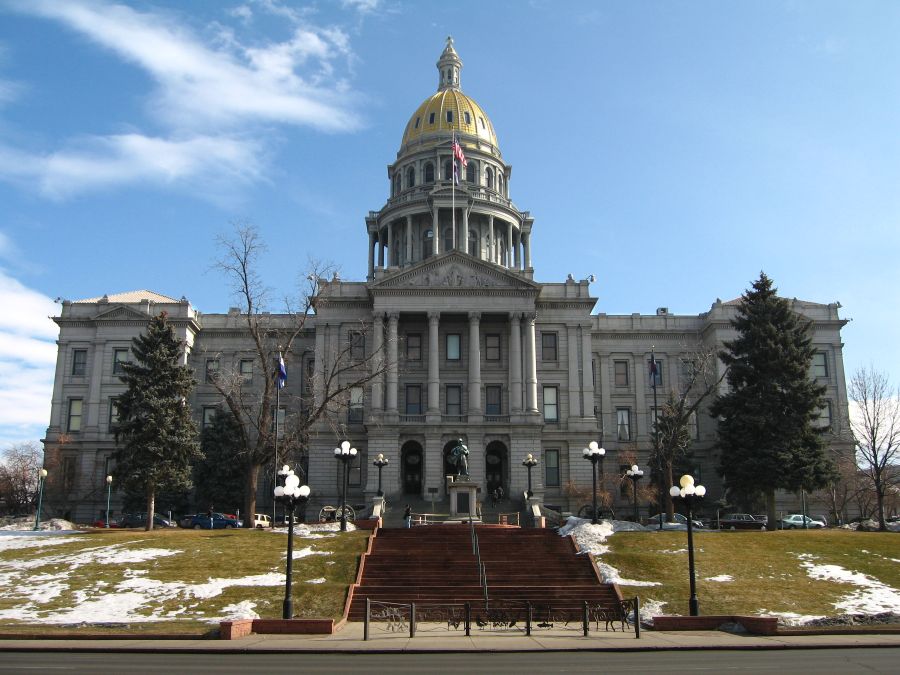
The court reviewed five related ballot measures aimed at redrawing Colorado’s U.S. House districts for the 2028 election.
Three of the proposals would have given Democrats a dominant advantage in the state’s congressional map, while two Republican-backed alternatives would have tilted the map slightly more toward the GOP than the current lines.
But the justices said the measures tried to do too much at once by changing Colorado’s redistricting process while also approving new political maps.
The rulings shut down, for now, an attempt to drag Colorado into the growing national redistricting arms race ahead of the 2026 and 2028 elections.
The court held that changing the state’s process for redistricting and approving new maps, whether in one proposal or through linked measures, violated the Colorado Constitution.
“To conclude otherwise and to allow initiative proponents to proceed with interlocking measures like those at issue here would allow proponents to achieve indirectly what they could not achieve directly and would endorse an end run around the single subject requirement. This we cannot do,” wrote Justice Richard L. Gabriel in the June 29 opinion pertaining to the three interlocking ballot measures.
The fight comes as both parties have moved aggressively in several states to redraw congressional maps for partisan gain before the next census.
Last year, the Texas Legislature, encouraged by President Donald Trump, redrew its House districts before the next census to give Republicans a shot at winning five additional seats.
The move came as Democrats appeared likely to retake the House in the 2026 midterm elections.
California voters later approved a ballot measure this spring creating a map with five additional Democratic-leaning seats.
According to the National Conference of State Legislatures, 10 states have completed mid-decade redistricting so far, with more GOP-led states redrawing their districts.
In some states, courts have had the final say.
In Virginia, voters narrowly approved a constitutional amendment that created Democratic-leaning districts, but the state Supreme Court struck down the change in May.
In Utah, the state Supreme Court upheld a trial judge’s order to redraw boundaries to create one Democratic-leaning district.
After the U.S. Supreme Court’s 6-3 decision in Louisiana v. Callais, multiple Southern states redrew their maps to eliminate districts with large Black populations.
In Colorado, five proposed measures for the 2026 general election ballot would have changed congressional district lines.
Two were competing proposals that would have broadly amended the state constitution to allow mid-decade redistricting, bypass the independent redistricting commission and adopt new maps for the 2028 and 2030 elections.
🚨 JUST IN: The Colorado Supreme Court has unanimously BLOCKED Democrat redistricting efforts in Colorado, which would’ve given them THREE MORE SEATS in the US House
The delegation will remain 4R-4D
THREE ballot measures were struck down by the court
HUGE win for Republicans… pic.twitter.com/n7WH78Gw5M
— Nick Sortor (@nicksortor) June 29, 2026
One would have favored Democrats by a 7-1 margin.
The other would have favored Republicans by a 5-3 margin.
The remaining three proposals, backed by either Republicans or Democrats, tried to accomplish the same goal in steps.
One initiative would have moved the language governing the redistricting commission out of the state constitution.
The other two would have put new 2028 and 2030 maps in place, favoring either Democrats or Republicans.
Those map proposals would only take effect if voters also approved the change to the commission.
In two decisions, the Colorado Supreme Court rejected both approaches.
RELATED: NEW: SCOTUS Strikes Down Blue State Gun Restriction
Chief Justice Monica M. Márquez wrote that temporarily allowing mid-decade redistricting and adopting a specific new map were distinct subjects that could not be packaged together.
“We conclude that these are distinct and separate subjects. Temporarily allowing mid-decade redistricting is not merely the means to implement or effectuate the Initiatives’ central purpose of adopting a specific new congressional district map for the 2028 and 2030 election cycles,” wrote Chief Justice Monica M. Márquez in the decision addressing the two combined measures.
Márquez said authorizing mid-decade redistricting would be “a seismic shift,” and voters might support changing the timing or power of the redistricting commission without backing a specific partisan map.
RELATED: JUST IN: Supreme Court Sides With Trump In 6-3 Ruling
“Conversely, other voters may support adopting one of the initiative’s specific maps to achieve partisan ends, but they might value the stability and continuity that comes with redistricting only once a decade,” wrote Márquez.
Gabriel reached a similar conclusion on the interlocking measures, saying splitting the process into separate but connected initiatives did not solve the constitutional problem.
“We conclude that the result is not different and that when a measure’s effectiveness is expressly contingent on the passage of a separate and independent measure, the measure contains multiple subjects, just as if the measures were combined into one,” he wrote.
The ruling leaves Colorado’s current congressional map and independent redistricting process intact.
It also sends a clear warning to partisan mapmakers: Colorado voters cannot be asked to approve a complicated redistricting scheme that bundles process changes with political maps in violation of the state constitution.
POLL: Will You Support Trump And His Candidates In The Midterms?
