
Politics
BREAKING: Iran Attacks Oil Tanker Near Strait Of Hormuz, Sparking Global Oil Fears
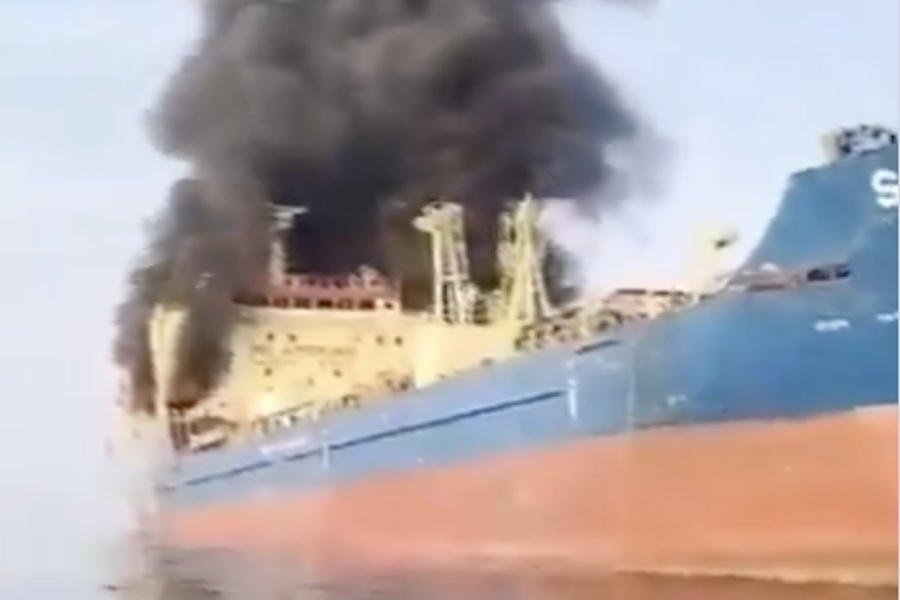
The Omani government has reported that an oil tanker was attacked by Iranian missiles in the Strait of Hormuz on Sunday. The attack confirms that the vital passageway — which is especially important for global oil shipments — could be effectively blockaded or at least disrupted, a development that could cause significant economic disruption.
Oman’s Maritime Security Centre reported that the incident occurred approximately five nautical miles north of Khasab Port. The tanker, identified as Skylight, was attacked not far from the entrance to the Strait of Hormuz.
The tanker had a crew of 20, consisting of 15 Indian nationals and five Iranian nationals. At least four crew members were injured, and all were evacuated for treatment on-shore.
The Skylight is subject to U.S. sanctions and has been identified by American authorities as part of Iran’s shadow fleet, used to transport Iranian oil. In effect, Iran attacked their own ship.
BREAKING:
Iranian forces attacked a tanker from their own “shadow fleet” in the Strait of Hormuz, causing it to catch fire and begin sinking.
The ship was targeted for allegedly “illegally passing” through the strait.
The Skylight had 20 crew members on board: 15 Indian… pic.twitter.com/hjmh0ZZeZV
— Visegrád 24 (@visegrad24) March 1, 2026
Iranian state television confirmed that Iranian forces carried out the attack, which occurred because it “defied orders” and attempted to enter the strait. “The fate of the offending oil tanker that was struck while attempting to illegally pass through the Strait of Hormuz is that it is now sinking,” reads an announcement from Iranian state media.
Additional reporting attributed to state television described the vessel as one that “was illegally attempting” to cross the passage after defying prior warnings not to enter.
The attack followed radio transmissions from Iran’s Islamic Revolutionary Guard Corps (IRGC) on February 28 warning vessels that “no ship is allowed to pass the Strait of Hormuz.” These VHF messages were received by multiple ships, according to an official from the European Union’s naval mission Aspides, according to a report from Reuters.
Iranian media described the strait as “effectively” or “practically” closed in response to prior U.S. and Israeli strikes on Iran.
No official closure has been communicated through recognized maritime channels such as NAVAREA warnings or IMO broadcasts, according to the United Kingdom Maritime Trade Operations agency. However, commercial traffic has declined sharply, with ship-tracking data showing a roughly 70 percent drop.
Major operators including Maersk and Hapag-Lloyd have suspended transits through the strait, according to a report from the New York Times. In addition, hundreds of tankers have anchored outside the waterway on both sides, and several oil majors and traders have halted crude, fuel, and LNG shipments.
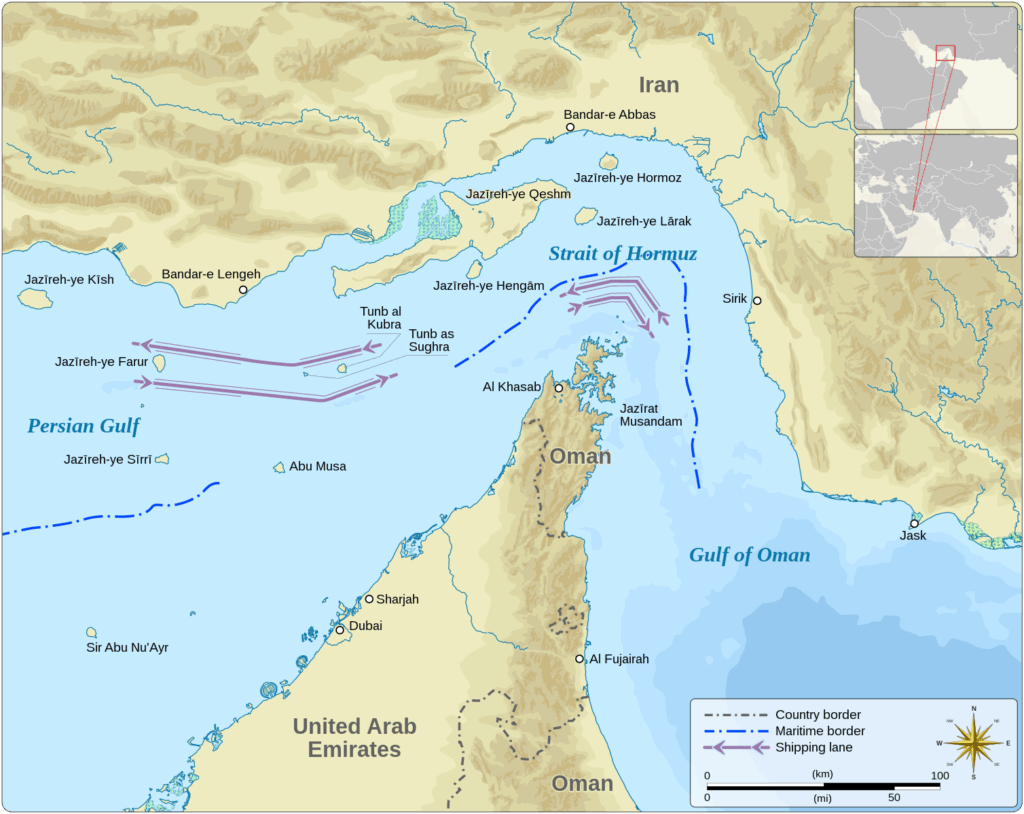
A graphic detailing the Strait of Hormuz
The Strait of Hormuz serves as the primary maritime route for oil and gas exports from the Persian Gulf. It handles approximately one-fifth of globally traded oil, or about 20-21 million barrels per day, along with significant volumes of liquefied natural gas from Qatar and the United Arab Emirates.
A prolonged shutdown or effective closure would disrupt supplies to international markets, potentially leading to higher energy prices and broader economic effects on oil-importing countries. Analysts have noted risks of supply shocks comparable to or exceeding those in past energy crises, though full closure would require sustained military effort and could limit Iran’s own export capacity.
The United States has called on vessels to keep clear of the Strait of Hormuz and surrounding waters amid the escalation.
RELATED: U.S. Allies Confirm Participation In ‘Defensive’ Operations Following Iran Strikes
