
Featured
BREAKING: New Investigation Exposes Wide-Open Smuggling Routes Into United States Along Canadian Border
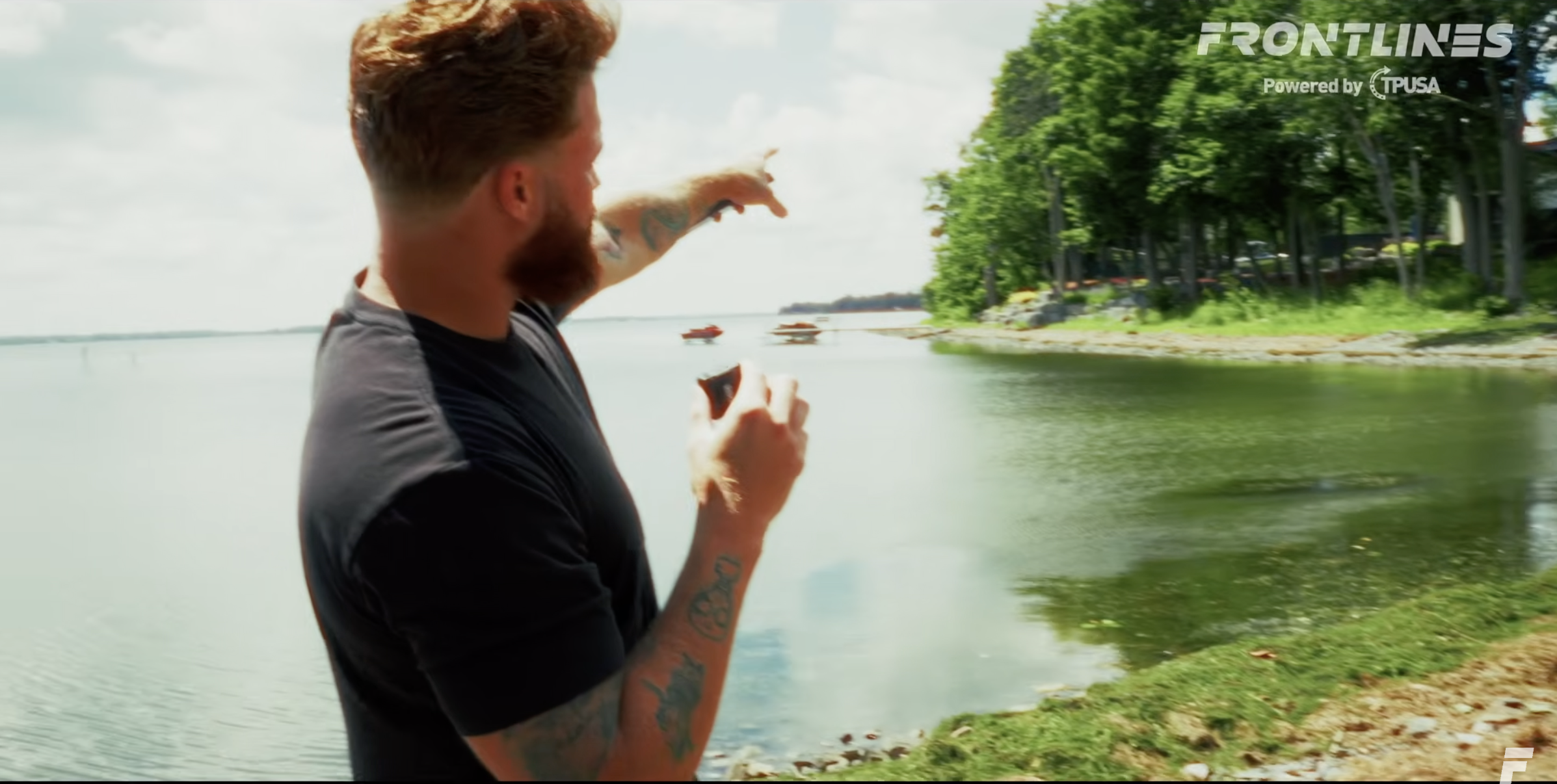
Nearly 50,000 foreign students have gone missing from Canada’s immigration tracking system, and a new investigative documentary alleges that an organized smuggling network is moving many of them across the northern border into the United States. The documentary, produced by Turning Point USA’s Frontlines, follows correspondents Tayler Hansen and Kian Simone as they travel Canada’s southern border, make contact with an alleged human smuggler advertising on social media, and test law enforcement response times at known crossing points.
The film opens with Canadian officials testifying before a parliamentary committee that roughly 47,175 student visa holders failed to demonstrate compliance with the terms of their visas. Pressed by a committee member on how many are fully non-compliant, the official responded, “I don’t have that number,” and said producing one would be difficult. Asked how the government could track or remove individuals it could not count, the official deferred to the Canada Border Services Agency.
According to the documentary, Canada does not collect exit data on foreign nationals, leaving officials unable to determine whether missing students returned home, remained in Canada illegally, or crossed into the United States. The film cites nationwide visa overstay estimates approaching one million. The correspondents traveled first to Brampton, Ontario, where they reported that roughly 52% of the city’s approximately 750,000 residents are of South Asian descent, a figure the film says excludes overstays and arrivals on 10-year tourist visas.
Toronto-based journalist Harrison Faulkner, interviewed on camera, described a network of unaccredited satellite campuses operating out of strip malls and basements that he characterized as diploma mills. Faulkner said Brampton’s mayor confirmed at least 80 unrecognized and unlicensed colleges were operating in the area, and that the schools were attracting students, almost exclusively from India, who paid high tuition with the intent of obtaining permanent residency.
International student intake in Canada rose 190% between 2019 and 2023, according to the film, peaking at more than one million active student visas.
The documentary also references allegations from India’s anti-money-laundering authority, which reported uncovering a criminal network spanning thousands of agents and 262 Canadian colleges. Under the alleged scheme, students entered Canada on study permits, never attended the schools, and crossed illegally into the United States.
Asked about the destination preferences of recent arrivals, Faulkner said many international students in Canada “would give a limb to be in the United States.”
Watch the full documentary here:
The correspondents then located smuggling operations advertising on Instagram and TikTok, most based in Montreal. After messaging a contact using a Chicago-area phone number, one correspondent said he was offered passage for himself, a wife and a child, along with a job, vehicle, food and housing in Chicago. The quoted price was $9,500 in cash, with instructions to consolidate belongings into a single bag and share live location data for eight hours.
After the correspondent shared a pickup point, multiple operators reached out separately, a pattern the film compares to cartel dispatch networks on the southern border. The vehicle that arrived to conduct the crossing was a licensed taxi.
Confronted on camera, one of the men denied wrongdoing. “We are not smuggling,” he said, adding that the operation was “just only helping” people with problems in Canada. Asked why the service cost roughly $10,000, he said the drivers had to be paid. When the correspondent replied that the arrangement met the definition of human smuggling, the man ended the conversation.
The designated crossing point was Chapman Bay, Quebec, where the film documented no cameras, fencing or law enforcement presence. The smuggler described a 10-to-15-minute walk along the shoreline and through wooded terrain around a port of entry, followed by pickup on Alburg Road. A local resident told the correspondents that migrants cross the frozen lake directly in winter.
At Roxham Road, where processing facilities and security infrastructure have since been removed, the correspondents timed the Royal Canadian Mounted Police response at 10 minutes and 55 seconds. An officer who arrived on scene said crossings continue, but now occur deeper in the woods to avoid surveillance cameras.
