
Politics
BREAKING: Trump Strikes Sweeping Trade Deal With China
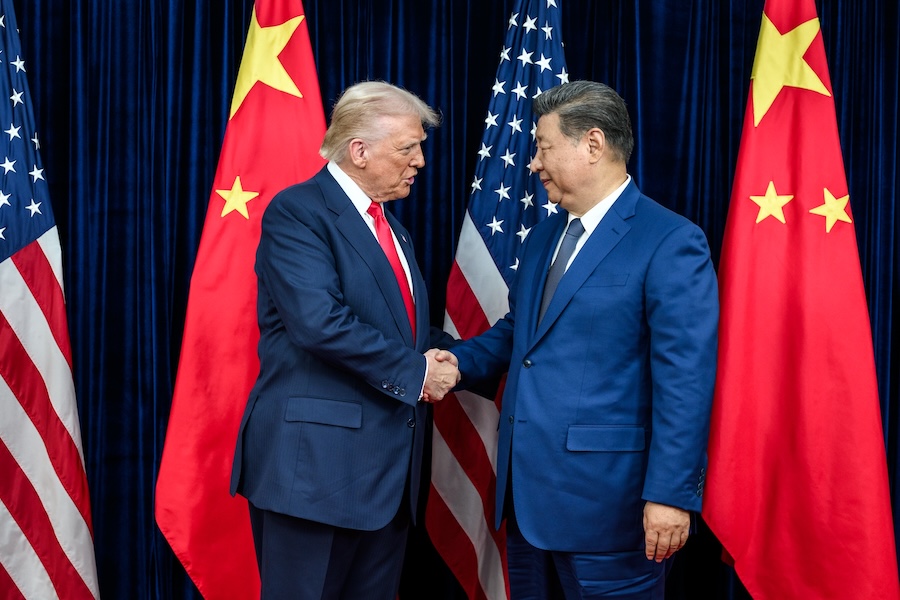
The United States and China have reached an arrangement covering reciprocal tariff reductions on $30 billion of “non-sensitive goods” in each direction as part of an eight-point consensus, according to a framework announced Saturday. The announcement follows Chinese President Xi Jinping’s state visit to Washington D.C. earlier this week.
The two governments also agreed to operationalize a Board of Trade and a Board of Investment, extend outcomes from earlier economic consultations in Kuala Lumpur, and establish a bilateral dialogue on artificial intelligence, which U.S. officials referred to as “super intelligence.” The announcement followed a two-month extension of the existing Busan trade truce, which Treasury Secretary Scott Bessent said on September 23 would run until January 10, 2027.
“We have agreed today that we will extend what we call the Busan Agreement,” Bessent said, adding that the extra time was intended “to give us more time to see what we can do on the economic front.”
A White House fact sheet released late Friday stated that the Board of Trade, first chartered at a May 2026 summit in Beijing, produced “consensus on recommendations for more favorable tariff treatment for $30 billion of non-sensitive goods in each direction.”
For U.S. exports to China, the covered categories include agricultural goods, fish and seafood, logs and wood products, cosmetics, and medical devices. For U.S. imports from China, the categories include small appliances, toys, holiday decorations, and children’s car seats.
POLL: Is JD Vance A Better Vice President Than Mike Pence?
🚨 IT'S OFFICIAL: Following the D.C. visit with Xi Jinping, Trump White House confirms China is buying 10 MILLION METRIC TONS of USA coal in 2027 and 2028 — and $30 BILLION in non-sensitive goods in each direction will receive more favorable tariff treatment
Trump is STRIKING… pic.twitter.com/hMXtM7jC0V
— Eric Daugherty (@EricLDaugh) September 26, 2026
The Board of Trade also launched a working group on agricultural market-access barriers. China committed to import at least 10 million metric tons of U.S. coal in 2027 and again in 2028. The fact sheet said the two sides “continue to work on U.S. concerns regarding supply chain shortages related to rare earths and other critical minerals, with the goal of ensuring shipment levels return to appropriate levels.”
A Board of Investment was established to discuss investment opportunities and related impediments.
China’s official list of eight deliverables described “an arrangement for a US$30 billion reciprocal tariff reduction” and instructed that the endorsed economic outcomes be implemented.
The two sides also agreed to create a China-U.S. AI Dialogue to exchange views on risks and benefits, with the next session, which is set for November of this year, and to set up a bilateral communication channel for AI-related incidents. Additional points included mutual support for hosting the APEC Economic Leaders’ Meeting and the G20 summit, with both leaders intending to attend the other’s gathering.
“The meeting was one of Friendship, Strength, and Success, for both China and the U.S.A… Much has been, and will be, accomplished,” President Donald Trump posted on social media. “I think our farmers are going to be very happy — a lot of very positive things happened… Great things for both countries. It’s just been very, very productive.”
Available official statements describe the tariff component as a consensus on recommendations and an endorsed arrangement rather than a fully detailed implementing schedule with specified duty rates or effective dates. The $30 billion figures refer to the scope of goods designated for more favorable treatment in each direction, not a pledged increase in trade volume.
Broader elements of the Busan truce, including earlier pauses on certain restrictions and purchase commitments, remain subject to the January 10, 2027, extension while officials continue work on a larger package.
RELATED: U.S. Imposes Steep Tariffs On Canada As Trade Talks Break Down
