
Politics
Catherine Herridge Exposes The Forces Working Against Trump From Within Intel Agencies
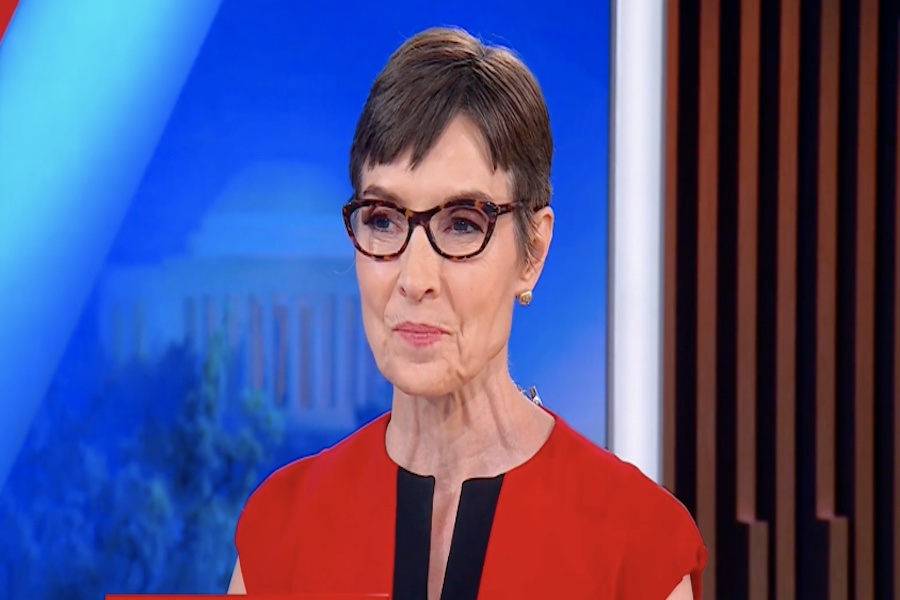
Veteran investigative reporter Catherine Herridge reported during an appearance on NewsNation’s “Katie Pavlich Tonight,” that a senior member of former Director of National Intelligence Tulsi Gabbard’s Director’s Initiatives Group, known as the DIG, described a pattern in which intelligence community officials acted on the belief that they needed to protect a globalist perspective by limiting certain information provided to policymakers, including President Donald Trump.
Herridge’s comments came amid discussion of recently declassified federal documents related to intelligence assessments from 2020 concerning China’s election influence operations. Those records, which were released in connection with a primetime address by President Trump the prior week, included internal communications indicating that some intelligence reports had been edited to remove references linking China’s activities to the 2020 U.S. election.
One November 20, 2020, email from a Strategic Intelligence Analyst in China and North Korea Strategic Assessments stated that officials had “deliberately massaged our one pending PDB (President’s Daily Brief) to avoid any direct links to the election.”
Herridge noted that she had reviewed the materials and found consistency with earlier whistleblower allegations that intelligence about China’s multi-domain influence efforts—aimed at impeding then-President Trump’s re-election and denigrating him as a candidate—had been suppressed or altered. In the same interview, Herridge connected these developments to broader observations shared by a source within Gabbard’s investigative team.
“In the last week, I’ve been speaking with a very senior member of Director Gabbard’s investigations team known as the DIG. And what they told me is that they did see a pattern where there was a sense or a feeling in the intelligence community that they just knew better,” she explained.
“They had to save President Trump from his own instincts, from his own tendencies, and that there was very much a globalist view. And they had to preserve a globalist view. So, whether it was downplaying or suppressing intelligence about the threat from China, whether it was giving a pass and calling the Hunter Biden laptop Russian disinformation, there was this level of a bureaucracy, a kind of conspiracy that was making decisions about the kind of information that should be reaching policy makers and ultimately the commander-in-chief.”
POLL: Do You Approve Of Secretary Of War Pete Hegseth?
Over the past week, Catherine Herridge has been speaking directly with a senior insider on Director Tulsi Gabbard’s investigative team.
What was revealed is nothing short of treason.
Investigators believe they uncovered evidence of a deeply entrenched bureaucracy within the… pic.twitter.com/cCAgjxn5Im
— Overton (@overton_news) July 24, 2026
The DIG, established under Gabbard’s tenure as Director of National Intelligence, had examined multiple topics, including the origins of COVID-19, Crossfire Hurricane, Anomalous Health Incidents also known as Havana Syndrome, and domestic surveillance practices. Gabbard’s team had previously assessed certain Biden-era intelligence community assessments as containing analytic shortfalls, such as selective exclusion of information and reliance on limited sources.
Herridge’s source indicated that the pattern observed by the DIG extended across these areas, reflecting decisions about which intelligence reached senior officials.
Herridge also referenced related details from the declassified materials involving Nikki Floris, then a senior FBI official handling counterintelligence matters related to foreign interference. Instant messages attributed to Floris described internal dynamics within the FBI.
Herridge reported that Senator Ron Johnson confirmed to her that in August 2020, around the period when intelligence on China’s activities was under discussion, Floris provided a defensive briefing to Johnson and Senator Chuck Grassley. According to Johnson, the briefing concerned potential Russian disinformation and was viewed by him as an effort related to inquiries into the Hunter Biden laptop. Herridge noted the temporal overlap with the suppression of China-related intelligence reporting.
Additional details from Herridge’s reporting included findings that some intelligence assessments contained handwritten notes or track changes referencing domestic political considerations, such as concerns that certain information could assist then-President Trump’s re-election campaign.
She further described instances in which reports about China’s influence operations were kept out of the President’s Daily Brief or altered in confidence levels. Independent cybersecurity assessments from the period, later declassified, had indicated increased Chinese activities targeting the U.S. election environment, though formal documentation by agencies including the CIA under then-Director Gina Haspel was limited according to the whistleblower accounts.
POLL: Will You Support Trump And His Candidates In The Midterms?
