
Sponsored Plus
Trump’s China Strategy Exposes The Same Old Washington Meltdown
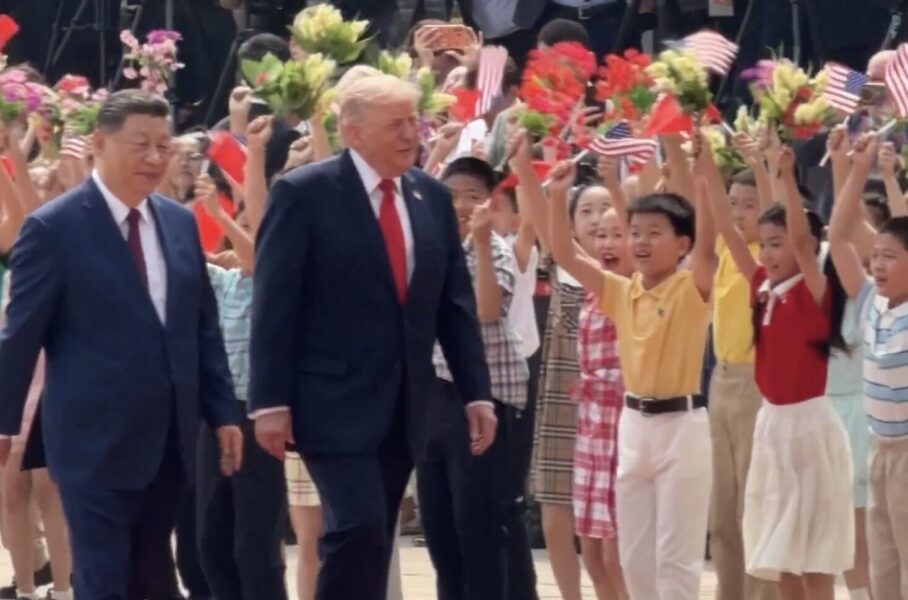
President Trump landed in Beijing this week with Elon Musk, Tim Cook, Jensen Huang, and a small army of American business heavyweights at his side, and the message wasn’t subtle.
America is still the center of the global economy, and China knows it.
The reaction from the usual foreign policy crowd was immediate. Cable news panels started hyperventilating. Think tank analysts warned Trump was “legitimizing” Beijing. Online China hawks spent the week insisting America was somehow surrendering leverage by showing up to negotiate.
These are the same people who’ve spent years misunderstanding why Trump keeps winning these battles in the first place.
Washington’s ruling class still talks about geopolitics like it’s a graduate school seminar. They think strength comes from carefully crafted statements, elite consensus, and diplomatic theater. Trump approaches it the way a businessman approaches a deal. Who has the leverage? Who has the money? Who actually needs the relationship more?
Right now, the answer is obvious.
China manufactures enormous amounts of the world’s goods, but the modern global economy still revolves around American technology and American capital. NVIDIA dominates advanced AI chips. Apple remains one of the most influential companies on the planet. Wall Street still drives global finance. The software, platforms, and investment pipelines shaping the future largely flow through the United States.
That’s why Trump showing up in Beijing with CEOs instead of bureaucrats mattered.
The panic over Trump “giving away leverage” also ignores the reality of China’s economic situation. Beijing is dealing with slowing growth, mounting debt problems, and enormous pressure to stabilize its economy. Continued access to American consumers and American technology matters to China far more than many critics want to admit.
Trump understands that instinctively. He always has.
The same people attacking him over trade negotiations are often the same crowd that insisted China would permanently overtake the United States years ago. That prediction hasn’t aged particularly well.
There is another piece of this trip that deserves more attention, especially with tensions involving Iran still hanging over global markets.
Trump’s meetings with Xi Jinping are happening while the administration continues trying to isolate Tehran economically without sliding into another endless military conflict.
That approach frustrates many Washington lifers because it doesn’t fit neatly into the old interventionist playbook. Trump has always leaned toward economic pressure, leverage, and short bursts of force over nation-building projects and decade-long wars.
China remains one of Iran’s most important economic partners and energy customers, which makes Trump’s meetings with Xi far more significant than a simple photo-op about tariffs or manufacturing. The administration has primarily favored economic pressure and leverage over the kind of open-ended foreign conflicts Washington spent decades stumbling into.
The people attacking him now are often the same people who backed the trade policies that hollowed out American industry and the foreign policy disasters that drained American power overseas. They still operate under the assumption that strength comes from diplomatic choreography and approval from international elites.
Trump sees it differently. He views power through the lens of markets, technology, energy, and leverage. That’s why he walked into Beijing surrounded by the executives running the companies shaping the future of artificial intelligence, finance, and global commerce.
And that’s the part the China doomers still can’t process. Beijing isn’t meeting with a weak America desperate for cooperation, but negotiating with a United States that still dominates the sectors that matter most heading into the next century. Trump understands that reality, and so does Xi.
