
Politics
China Draws ‘Red Line’ As War With Iran Escalates, Urges U.S.-Israel Strikes To Stop
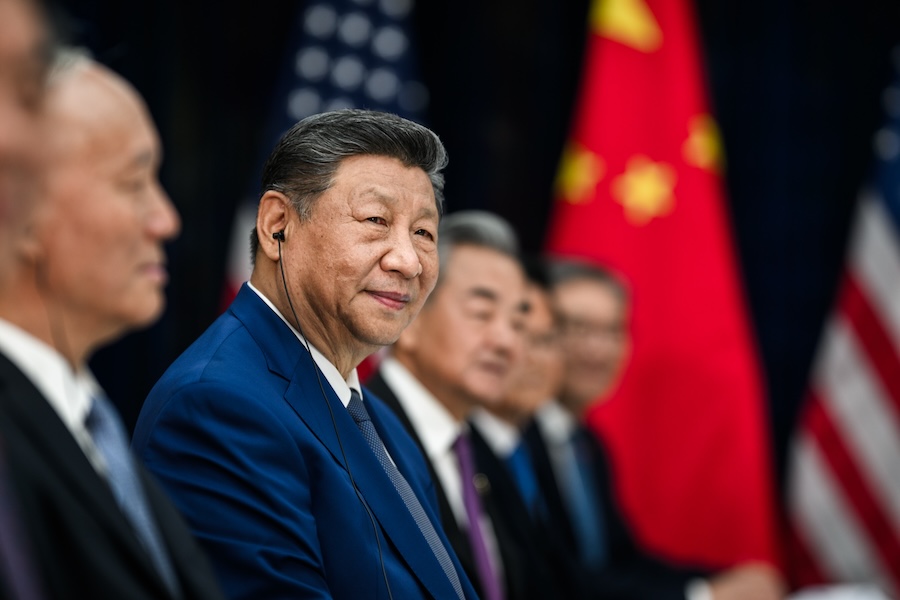
China’s top diplomat is warning that the expanding conflict involving Iran risks spiraling into a broader regional disaster, saying that Beijing views the protection of civilians as a “red line” as fighting intensifies across the Middle East.
Chinese Foreign Minister Wang Yi said Beijing plans to send a special envoy to the region as part of a diplomatic push aimed at calming tensions following weeks of escalating violence involving Iran, the United States, and Israel.
According to Reuters, Wang discussed the growing crisis with several Middle Eastern leaders as the war continues to spread beyond its initial battlegrounds.
During a call with Saudi Arabia’s foreign minister, Wang expressed support for Riyadh’s push to resolve disputes through diplomatic channels rather than military confrontation. China’s foreign ministry said Wang praised Saudi Arabia for encouraging negotiations and regional stability as the situation continues to deteriorate.
Wang also spoke with officials from the United Arab Emirates, where he issued a pointed warning about the humanitarian consequences of the ongoing fighting. During the conversation, he said the “red line” of protecting civilians during conflicts should not be crossed and that non-military targets must not be attacked.
The Chinese foreign minister delivered an even stronger message during a call with Israel’s foreign minister, making clear that Beijing opposes the ongoing U.S.-Israeli military campaign against Iran. According to reports, Wang told the Israeli government the strikes must stop immediately.
“Force cannot truly solve problems; instead, it often creates new ones and leaves serious long-term consequences. The real value of military power lies not on the battlefield but in preventing war,” he said.
China’s comments come as the conflict triggered by the U.S. and Israeli operation against Iran continues to intensify. The conflict began when American and Israeli forces launched coordinated strikes targeting Iranian nuclear facilities and military infrastructure. The opening phase of the operation also resulted in the killing of Iran’s longtime supreme leader, Ayatollah Ali Khamenei, dramatically raising the stakes of the confrontation.
Since then, Iran has carried out a series of retaliatory attacks targeting U.S. forces, regional bases, and shipping lanes across the Middle East.
One of the most significant developments on Thursday was Iran’s claim that its Islamic Revolutionary Guard Corps had struck a U.S. oil tanker in the northern Persian Gulf. Iranian state media said the vessel was hit by a missile and caught fire, though American officials have not yet confirmed the report.
Iran also warned that during wartime the Strait of Hormuz would fall under the control of the Islamic Republic, threatening ships tied to the United States, Israel, or allied countries. The Strait of Hormuz has quickly become one of the most dangerous flashpoints in the growing war.
The narrow waterway carries roughly one-fifth of the world’s oil supply, and threats against shipping have already disrupted maritime traffic in the region. Several major shipping companies have reportedly halted or diverted vessels due to the risk of missile or drone attacks.
Iran’s retaliation has not been limited to the Persian Gulf. Iranian forces have reportedly launched drone attacks targeting U.S. military positions in Iraq and Kuwait, while additional missile strikes have hit locations tied to American and allied interests throughout the region.
Other attacks in nearby countries such as Bahrain and Oman have damaged oil facilities and commercial vessels, demonstrating how the conflict is spreading well beyond Iran’s borders.
The fighting has already resulted in American casualties. U.S. officials confirmed earlier this week that at least six U.S. service members have been killed since the conflict erupted.
Global markets are also beginning to feel the impact of the escalating war. Oil prices have surged amid fears that continued attacks on tankers or energy infrastructure could choke off supplies moving through the Gulf.
Despite growing diplomatic pressure from countries such as China, there are currently no clear signs that the fighting will slow anytime soon.
