
Politics
Clarence Thomas Scorches Justices’ Tariff Ruling In Fiery Dissent
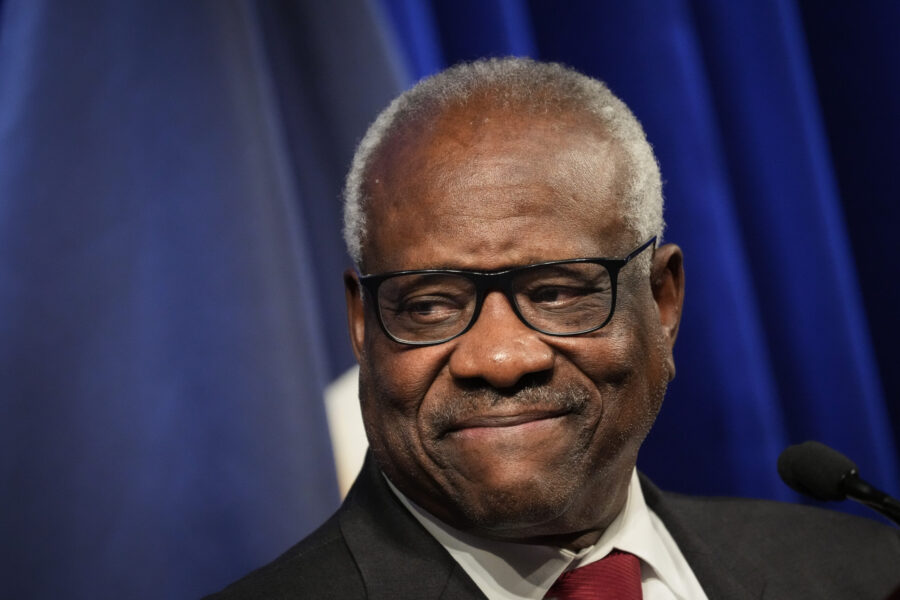
Justice Clarence Thomas delivered a blistering dissent Thursday after the Supreme Court struck down President Donald Trump’s sweeping tariffs, warning the majority had ignored both the Constitution and decades of precedent while undermining presidential authority over trade.
In a 6-3 decision, the court ruled that the International Emergency Economic Powers Act does not authorize a president to impose tariffs, effectively dismantling a cornerstone of Trump’s economic agenda. Chief Justice John Roberts authored the majority opinion, joined by Justices Sonia Sotomayor, Elena Kagan, Neil Gorsuch, Amy Coney Barrett and Ketanji Brown Jackson.
Thomas, joined by Justices Samuel Alito and Brett Kavanaugh, argued the court had overstepped by substituting its own judgment for that of Congress and the executive branch.
“NEITHER the statutory text nor the Constitution provide a basis for ruling against the President.”
Thomas emphasized that Congress expressly granted the president broad authority to regulate imports, which historically includes the power to impose duties and tariffs as tools of economic policy and national security.
“Congress authorized the President to “regulate . . . importation.” Throughout American history, the authority to “regulate importation” has been understood to include the authority to impose duties on imports.”
🚨 BREAKING: SCOTUS Justice Clarence Thomas dropped straight TRUTH BOMBS in his dissent on the tariffs
He nailed it.
“NEITHER the statutory text nor the Constitution provide a basis for ruling against the President.” 🔥
“Congress authorized the President to “regulate . . .… pic.twitter.com/nhKtBQ669Y
— Eric Daugherty (@EricLDaugh) February 20, 2026
He noted that such authority was not theoretical but had been exercised repeatedly by past administrations and upheld by the courts.
“The meaning of that phrase was beyond doubt by the time that Congress enacted this statute, shortly after President Nixon’s highly publicized duties on imports were UPHELD based on identical language.”
Thomas concluded that the statute Trump relied upon clearly permitted the tariffs at issue, rejecting the majority’s interpretation as disconnected from legal reality.
RELATED: BREAKING: SCOTUS Rules On Trump Tariffs
“The statute that the President relied on therefore authorized him to impose the duties on imports at issue in these cases.”
Beyond the statutory argument, Thomas pushed back against claims that Congress improperly delegated power to the president. He said the Constitution allows lawmakers to assign significant responsibilities to the executive branch, particularly in areas requiring swift action such as foreign commerce and national emergencies.
“Because the Constitution assigns Congress many powers that do not implicate the nondelegation doctrine, Congress may delegate the exercise of many powers to the President.”
“Congress has done so repeatedly since the founding, WITH THIS COURT’S BLESSING.”
Kavanaugh, in a separate dissent, warned the ruling could trigger massive financial fallout, including potential refunds of billions of dollars already collected.
“Refunds of billions of dollars would have significant consequences for the U. S. Treasury,” he wrote, noting the court offered no guidance on how such repayments should occur.
The decision marks a major setback for Trump’s trade strategy and highlights a deep divide on the court over the scope of presidential power. For Thomas, the ruling represents more than a legal disagreement, it signals what he views as an unwarranted judicial intrusion into authority that both Congress and history have long placed in the hands of the president.
Download the FREE Trending Politics App to get the latest news FIRST >>
