
Politics
Close Trump Ally Reportedly Betrayed Trump And Cozied Up To Epstein
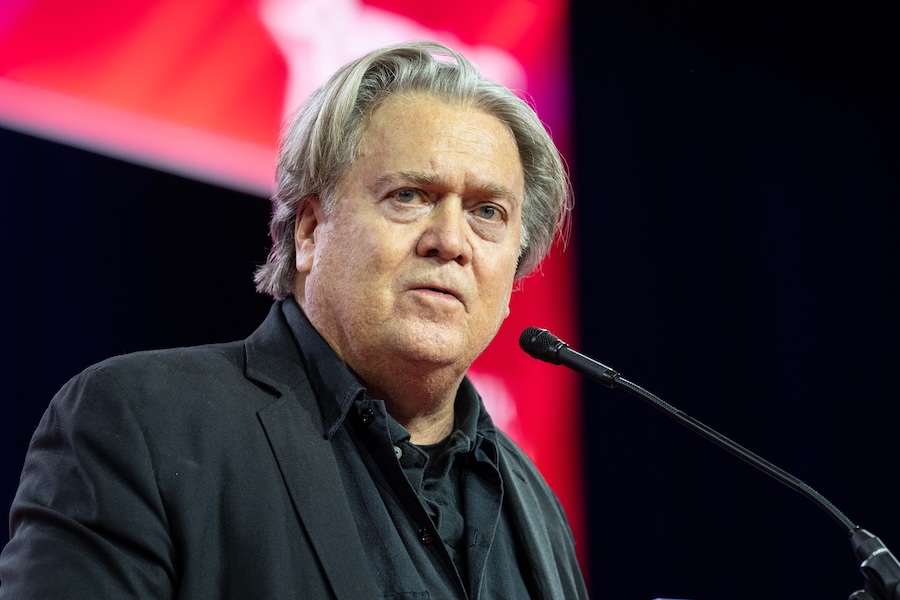
Longtime Donald Trump confidant Steve Bannon, once one of the closest advisers to the president, is now facing mounting questions after newly unsealed documents revealed an unusually close and controversial correspondence with convicted sex offender Jeffrey Epstein, including discussions that appear to undercut Trump’s leadership.
The revelations, drawn from millions of pages of Justice Department files related to Epstein, show that Bannon maintained regular and frequently friendly communication with Epstein in the months leading up to Epstein’s arrest in 2019. In private text exchanges that have now surfaced publicly, Bannon discussed national political strategy, media tactics and, most strikingly, the possibility of removing President Trump from office under the 25th Amendment, a constitutional provision allowing for the displacement of a president deemed unfit.
A batch of messages reveals a tense back-and-forth that unfolded on New Year’s Eve 2018, shortly after Democrats took back the House.
In the exchange from December 2018, Bannon texted Epstein that he considered Trump “beyond borderline” and referenced the 25th Amendment — a contrast to his public persona as a stalwart defender of the president.
.jpg)
Bannon vented about what he viewed as paralysis inside the administration, saying the “WH” — commonly understood to mean the White House — had “zero plan to punch back” as outside pressure mounted.
Epstein responded bluntly about President Trump, writing, “He is really borderline. Not sure what he may do.”
Bannon pushed the conversation even further, replying, “I think it’s beyond borderline — 25 amendment,” invoking the constitutional process that allows a president to be removed from office if deemed unable to carry out the duties of the job.
At another point in the thread, Bannon added, “we really need an intervention” in reference to Trump.

According to documents, the two also traded advice on public relations strategy and even discussed efforts to rehabilitate Epstein’s public image — a move that many national security analysts and sexual abuse survivors have deemed profoundly troubling.
Epstein, a financier with a long history of sexual abuse convictions and allegations, became a deeply polarizing figure before his death in 2019 while awaiting trial on sex trafficking charges. The newly disclosed archive, released under the Epstein Files Transparency Act, has brought long-buried communications into the open, illuminating connections between Epstein and high-profile political operatives.
As Epstein’s legal troubles escalated in early 2019 following reporting by The Miami Herald, Bannon’s messages turned to damage control. In April 2019, he texted Epstein: “First we need to push back on the lies; then crush the pedo/trafficking narrative; then rebuild your image as philanthropist.”
In another message, Bannon stressed the reputational risk, “We must counter ‘rapist who traffics in female children to be raped by worlds most powerful, richest men’ — that can’t be redeemed.”
When federal prosecutors began reviewing Epstein’s 2008 plea deal, Epstein asked if he should respond publicly. Bannon replied, “Have you lost your f****** mind.” He added, “The moment you say ANYTHING, this is global story#1!!!!!”
Bannon, who hosts the influential political podcast War Room and continues to play a prominent role in conservative media circles, has sought to downplay the significance of his relationship with Epstein.
Yet, even some within the conservative movement have expressed discomfort. Social media posts from GOP figures like General Michael Flynn and former Representative Marjorie Taylor Greene have publicly criticized Bannon, questioning how someone so closely linked to Trump could engage in private conversations that appear to contradict his loyalty to the president and Republican priorities.
