
Politics
Denmark Announces Plans To Ban Muslim Call To Prayer
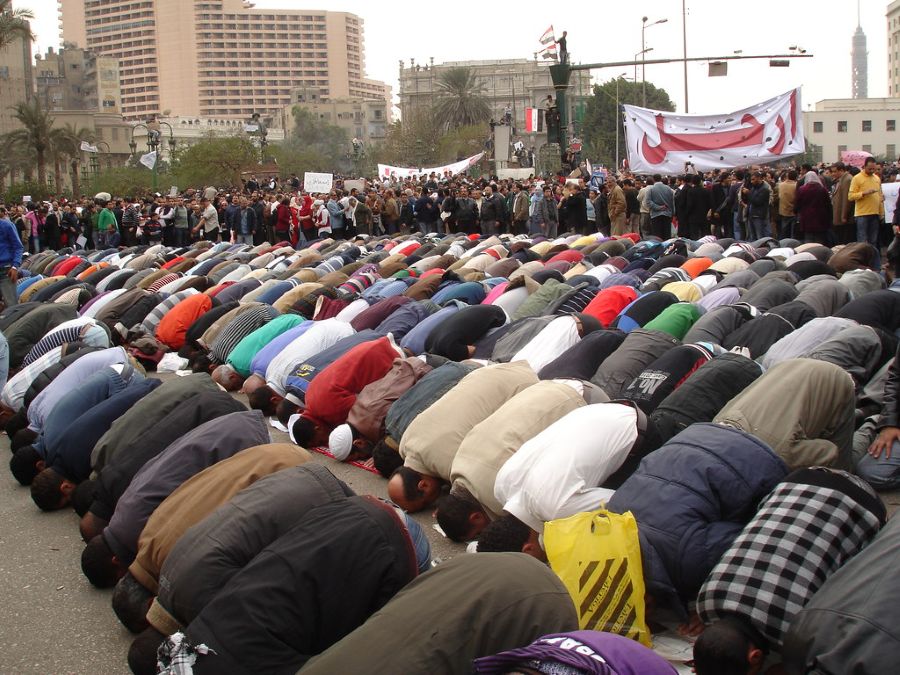
Denmark is moving toward a possible nationwide ban on the Islamic call to prayer, with the country’s immigration minister warning that parts of the nation should not sound like “a suburb of Islamabad.”
Morten Bødskov said the government will reopen a review into whether the Muslim call to prayer can be outlawed across the country while still complying with Denmark’s religious freedom protections.
The Social Democrat minister argued that creeping “Islamisation” is taking up too much public space in Denmark.
‘The call to prayer should not be heard over Danish rooftops,’ the Social Democrat minister told Danish news agency Ritzau.
‘It has no place in Denmark, and you shouldn’t be in any doubt whether you’ve ended up in a suburb of Islamabad when you walk around Denmark.’
The Adhan, the Islamic call to prayer, is traditionally broadcast five times a day to summon Muslims to mosques, often through loudspeakers mounted on minarets.
Bødskov’s proposal marks the third attempt by a Danish immigration minister to create a legal framework that could ban the practice, following similar efforts in 2020 and 2025.
Some parts of Denmark already restrict public calls to prayer.
In Copenhagen, local noise regulations effectively prevent mosques from broadcasting the Adhan outdoors through loudspeakers.
The new investigation will examine whether a national ban can be introduced without violating Denmark’s constitutional protections for religious worship.
The proposal comes as Denmark continues to pursue some of Europe’s strictest immigration policies under Prime Minister Mette Frederiksen.
JUST IN: Denmark’s Minister for Immigration & Integration Morten Bødskov, investigating banning the islamic call to prayer
“The call to prayer should not be heard over Danish rooftops. It has no place in Denmark. You shouldn’t be in any doubt whether you’ve ended up in a suburb… pic.twitter.com/QW5SnBRU5k
— Libs of TikTok (@libsoftiktok) June 24, 2026
Under the country’s controversial “ghetto” laws, authorities can force migrants to relocate from neighborhoods deemed to have too many foreign residents.
Asylum seekers may also be required to surrender valuables to help cover the cost of their accommodation.
During the 2015 migrant crisis, Denmark accepted far fewer asylum seekers than several neighboring European countries.
Any effort to ban the call to prayer nationwide is expected to face legal challenges.
Denmark’s constitution protects public worship, though the country already has restrictions on anti-democratic preaching and support for banned organizations.
RELATED: Top Islamic Commander Taken Out As Trump Calls Situation Room Meeting
Other European countries have also imposed limits on mosque loudspeakers.
Britain and Germany restrict when mosques can broadcast calls to prayer and how loud they can be, with officials citing the need to reduce disruption for nearby residents.
Roughly 270,000 Muslims live in Denmark, a country of about 6 million people.
Denmark has an estimated 100 mosques.
The Grand Mosque of Copenhagen does not issue an outdoor call to prayer under an agreement with local authorities.
For Denmark’s government, the issue is being framed as a question of national identity, public order and whether religious broadcasts should echo across city rooftops.
RELATED: San Diego Mosque Attackers Were Anti-Trump, Bone-Chilling Manifesto Reveals
For critics, the proposed ban will almost certainly be cast as a fight over religious freedom.
Either way, Bødskov’s message was blunt, Denmark’s public square should remain unmistakably Danish.
