
Politics
DNC Makes Major Decision That Gives Kamala Harris A Huge Leg Up In 2028
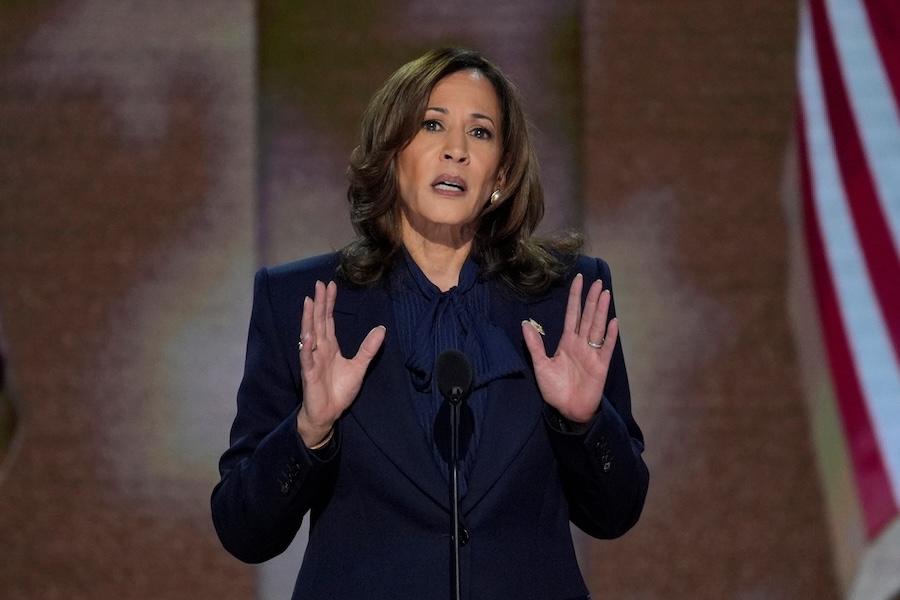
The Democratic National Committee’s Rules and Bylaws Committee voted on Friday to recommend that South Carolina hold the first contest in the party’s 2028 presidential primary calendar. If enacted, this decision could have a significant impact on the primary’s trajectory and would likely benefit former Vice President Kamala Harris.
The recommendation passed with 26 votes for South Carolina, compared with 19 for Nevada and 4 for New Hampshire. The full Democratic National Committee is scheduled to consider the proposal for final approval at its meeting next month.
Under the committee’s recommended schedule, South Carolina would hold its primary on January 22, 2028. Nevada would follow on February 1, New Hampshire on February 8, New Mexico on February 15, Michigan on February 22, and Virginia on February 29.
The proposal expands the early primary window to a maximum of six states, an increase from prior limits of four or five. South Carolina, Nevada, New Hampshire, Michigan, New Mexico, and Virginia would occupy the early slots, with one state designated from each major region of the party plus two additional contests.
This arrangement continues a shift that began with the 2024 cycle. For decades prior to 2024, Iowa’s caucuses had opened the Democratic nominating process, a position held since 1972, followed by New Hampshire’s primary, which had long claimed first-in-the-nation status under state law. Nevada and South Carolina typically followed as the third and fourth early contests.
POLL: Will You Support Trump And His Candidates In The Midterms?
In December 2022, the Rules and Bylaws Committee approved a Biden-backed plan that placed South Carolina first for 2024, with New Hampshire and Nevada sharing the second position, followed by Georgia and Michigan. The full DNC ratified that calendar in February 2023.
South Carolina’s selection for 2028 would mark the second consecutive cycle in which it leads the process, while Iowa remains outside the early window.
A dozen states lobbied to be considered for the first spot. Supporters of South Carolina cited the state’s ability to set its own primary date with certainty, its history of conducting orderly contests, and the demographic composition of its Democratic electorate.
Nevada emphasized its growing Latino population and western geographic representation. New Hampshire pointed to its longstanding tradition and voter engagement, while Iowa highlighted its caucus system and Midwest perspective. The committee ultimately selected the six-state slate after debate that included presentations from the competing state parties.
South Carolina’s Democratic primary electorate has historically included a substantial share of black voters. Exit polls from recent cycles showed black voters comprising approximately 55 to 61 percent of participants. For example, they accounted for about 56 percent in 2020 and higher shares in some earlier contests. This composition has made the state’s primary a significant early indicator of support among a core Democratic voting group.
The placement of South Carolina first could provide an advantage to candidates who demonstrate strength with black voters, such as the former vice president. In the 2024 general election, exit polls and surveys indicated that roughly 86 percent of black voters backed Harris. Pre-election polling in battleground states similarly showed support in the low-to-mid 80 percent range among Black likely voters
Because black voters form a large portion of South Carolina’s Democratic primary electorate, early performance there could generate momentum, media attention, and fundraising advantages for a candidate with established appeal in that group.
Other potential candidates, such as former Transportation Secretary Pete Buttigieg, have polled well with the wider Democratic Party electorate, but have struggled mightily to gain support from black voters.
POLL: Should Foreigners Be Banned From Buying American Farmland?
