
Politics
Hegseth Warns Russia To Stay Out As Campaign Intensifies Against Iran
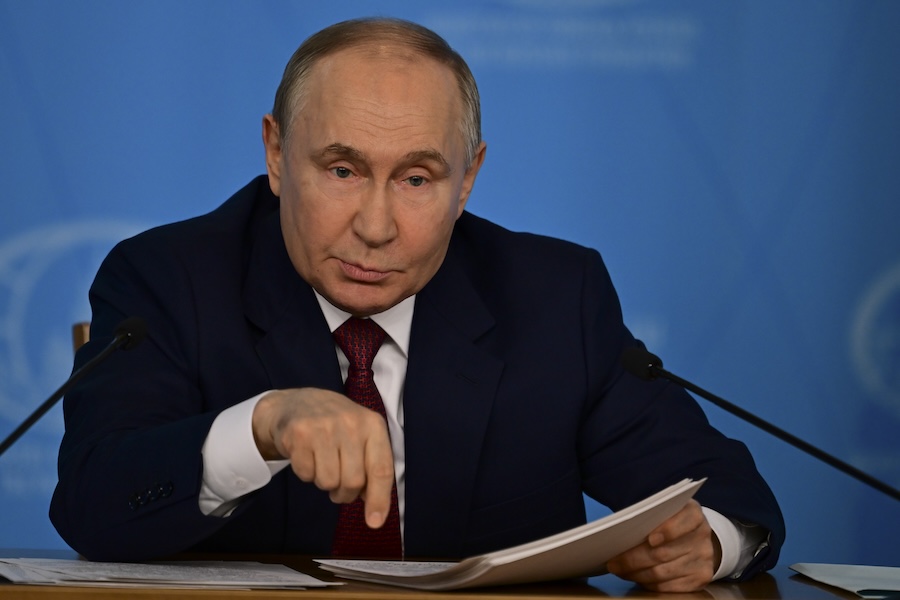
War Secretary Pete Hegseth issued a blunt warning Tuesday that Russia “should not be involved” in the rapidly escalating conflict between the United States, Israel and Iran, as questions grow about whether Moscow may be quietly assisting Tehran behind the scenes.
Hegseth’s comments came amid reports that Russian intelligence may have provided Iran with information that could help identify U.S. military assets operating in the Middle East, including American warships and aircraft involved in the expanding military campaign.
“The president maintains strong relationships with world leaders, which creates opportunities and options for us in very dynamic ways,” Hegseth said when asked about Trump’s latest conversation with Putin.
However, he made clear that Washington does not want Moscow playing any role in the ongoing conflict. But as it relates to the Middle East conflict, he added, Russia “should not be involved.”
The warning comes as intelligence assessments circulating among Western officials reportedly indicate that Russia has passed along information that could help Iran determine the locations of American military assets across the region. Those assets include warships operating in key waterways and aircraft participating in the ongoing bombing campaign.
The exact scope and operational impact of any information Russia may have provided has not been publicly detailed, leaving open questions about how significant the assistance might be.
Hegseth’s remarks came as the war entered a new and more intense phase. Tuesday marked the 11th day of the military campaign, with American and Israeli forces dramatically expanding their strikes inside Iranian territory.
According to Pentagon officials, more than 5,000 targets have been struck so far, including missile launch sites, weapons depots and dozens of Iranian naval assets believed to be tied to Tehran’s military operations in the Persian Gulf.
Hegseth described March 10 as the “most intense day of strikes” since the conflict began, suggesting the pace of operations has accelerated as coalition forces push deeper into Iran’s military infrastructure.
At the same time, U.S. military leaders say the sustained air campaign appears to be weakening Iran’s ability to respond at the same pace it did earlier in the war.
Gen. Dan Caine said Iranian missile activity has dropped sharply in recent days, a sign that repeated strikes against launch sites and weapons stockpiles may be degrading Tehran’s offensive capabilities. Despite those setbacks, Iran continues to retaliate and is expanding the conflict beyond direct exchanges with U.S. forces.
Iran launched additional attacks targeting Israel and several Gulf Arab countries, while Iranian leaders ruled out negotiations and continued issuing threats against the United States.
Those moves have heightened concerns that the war could spread across a broader portion of the Middle East if more regional actors become involved. Energy markets are also closely watching developments around the Strait of Hormuz, the narrow waterway through which a significant portion of the world’s oil supply passes.
Politically, the outlook remains uncertain. President Trump has suggested the conflict could be nearing its end, telling reporters the war may be over “very soon,” a comment that briefly steadied financial markets.
Still, Israeli leaders have indicated that any decision to wind down the campaign would be made jointly with Washington. Israeli Foreign Minister Gideon Saar said discussions about ending the fighting would be coordinated closely with the United States, though he declined to offer any specific timeline.
For now, while speculation about a possible endgame continues to circulate, the military reality on the ground suggests the conflict is still escalating, not winding down.
