
Politics
BREAKING: U.S. Firms Sign Deal To Restore Oil Pipeline That Bypasses Strait Of Hormuz In Iraq, Syria
Iraq and Syria have signed a cooperation agreement to reconstruct the long-defunct Kirkuk-Baniyas crude oil pipeline, which would connect northern Iraq’s oil fields to Syria’s Mediterranean port of Baniyas. The agreement was signed on Friday, July 17, during a U.S.-Iraq business summit at the U.S. Chamber of Commerce in Washington, D.C.
The project involves Iraq’s Basra Oil Company and Syria’s Petroleum Company. A U.S.-led international consortium, including Chevron, is expected to lead the technical and financial aspects of the rehabilitation.
Chevron has also signed separate preliminary agreements focused on boosting production from Iraqi oil fields as part of the broader package of deals.
“Upon rehabilitation, this groundbreaking project will have an initial transport capacity of 2 million barrels per day of crude oil,” the State Department said in an official press release. The department described the pipeline as “a critical energy corridor linking Iraqi oil production to Mediterranean export markets and beyond.”
Earlier reports indicated the restored line could eventually handle 2 to 2.5 million barrels per day, with rehabilitation expected to take two to three years at an estimated cost of $4 billion to $8 billion. The pipeline runs from the Kirkuk region in northern Iraq to Baniyas on Syria’s Mediterranean coast.
U.S. Ambassador to Turkey Tom Barrack stated that Iraq’s latest oil pipeline agreements would lead to a programme “that will make the Strait of Hormuz an afterthought.”
Iraqi Prime Minister Ali al-Zaidi described Iraq’s approach as an “open-door policy,” noting that “Everybody who has a project can come and talk to us. We will not make it difficult for anyone.” He also characterized the U.S. relationship as “the most important strategic partnership in the world,” adding that “It’s not emotional; it’s about money.”
The pipeline agreement forms part of a larger set of preliminary deals worth more than $60 billion signed between Iraq and U.S. companies during Prime Minister al-Zaidi’s visit to the United States. These include agreements in energy, infrastructure, healthcare, and technology with firms such as Chevron, ExxonMobil, Shell, ConocoPhillips, Halliburton, HKN Energy, and Starlink.
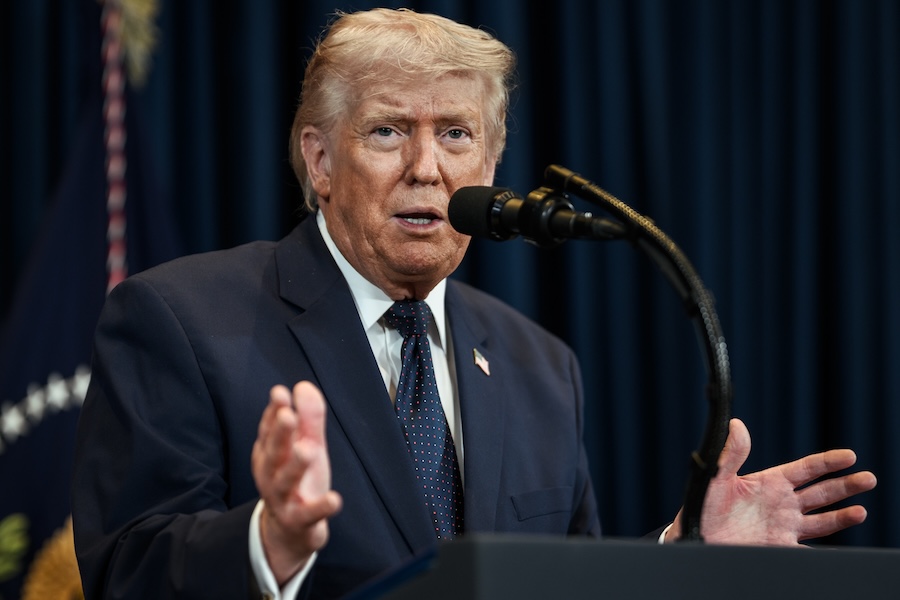
President Trump hosted al-Zaidi at the White House and emphasized Iraq’s oil reserves and potential for joint economic activity.
Honored to welcome Iraqi Prime Minister Al-Zaidi to Washington and witness the signing of over $60 billion in commercial agreements with U.S. energy companies.
Deepening U.S.-Iraq energy cooperation advances a more secure, prosperous, and energy abundant future for the United… pic.twitter.com/rnoqH0X6Ey
— Secretary Chris Wright (@SecretaryWright) July 18, 2026
Since the onset of heightened tensions and conflict involving Iran in early 2026, several Gulf producers and Iraq have advanced or reactivated alternative oil export routes that avoid the Strait of Hormuz.
Saudi Arabia’s East-West Pipeline (also known as Petroline) transports crude across the Arabian Peninsula to the Red Sea port of Yanbu. The line has a design capacity of up to 7 million barrels per day and has been operating at elevated levels, with reports of pumping around 7 million barrels per day since March.
The United Arab Emirates operates the Habshan–Fujairah pipeline (ADCOP), which carries crude from Abu Dhabi fields to the port of Fujairah on the Gulf of Oman. Its capacity is approximately 1.8 to 2 million barrels per day.
In addition, Iraq has moved to restart its Kirkuk-Ceyhan pipeline to Turkey’s Mediterranean port of Ceyhan. The line, which had been closed, is expected to resume with an initial capacity of around 250,000 barrels per day and holds a total potential capacity of approximately 1.6 million barrels per day.
Additional proposals under discussion include expanded or parallel pipelines in Saudi Arabia and the UAE, new export terminals on alternative coastlines, and longer-term concepts for Iraqi pipelines toward Oman, Jordan, or Egypt.
RELATED: State Department Issues Worldwide Travel Warning As Iran Conflict Escalates
