
Politics
Israel Election Results Are In As Netanyahu’s Political Future Hangs In Balance
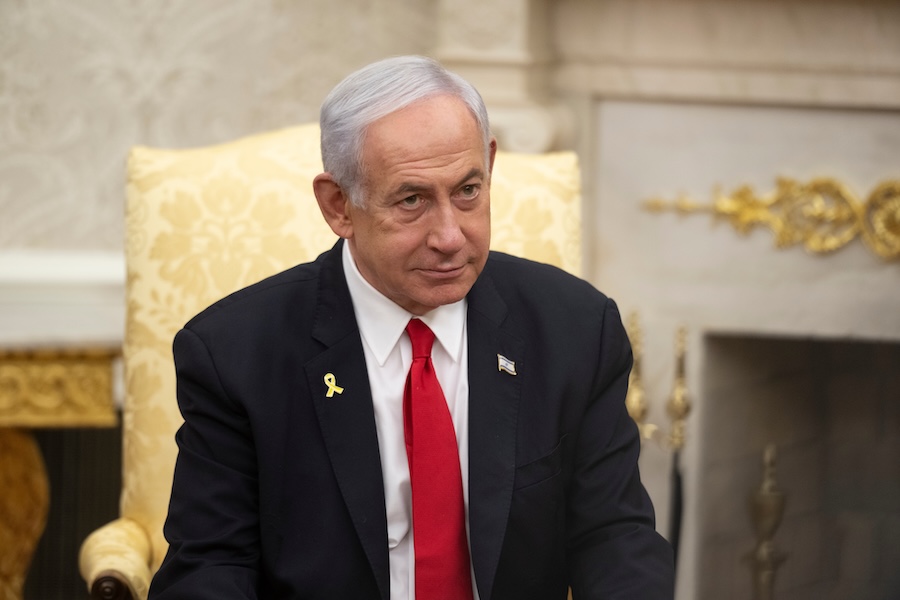
Israeli Prime Minister Benjamin Netanyahu’s political future was thrown into uncertainty Tuesday after exit polls showed his governing coalition falling short of a parliamentary majority, despite his Likud party emerging as the largest individual party in Israel’s closely watched national election.
The preliminary projections suggest Netanyahu’s political opponents secured more seats than his governing alliance, potentially ending his latest bid to retain power. However, neither side appears capable of assembling the 61 seats required to control Israel’s 120-member Knesset, setting the stage for difficult coalition negotiations.
According to exit polls released by Israel’s three major television networks, Netanyahu’s right-wing bloc is projected to secure approximately 50 seats, compared with 52 or 53 for the main opposition parties. Arab-led parties are expected to capture another 17 or 18 seats, potentially giving them considerable influence over the formation of the next government.
Netanyahu’s Likud party nevertheless remains Israel’s largest political force, with projections placing it between 24 and 25 seats. Its closest challenger, the centrist Yashar party led by former Israeli military chief Gadi Eisenkot, is expected to secure between 21 and 23 seats.
The results represent a potentially significant setback for Netanyahu, who has dominated Israeli politics for much of the past two decades and campaigned heavily on his national security credentials.
Tuesday’s election marked Israel’s first national vote since Hamas terrorists launched their October 7, 2023, attacks, triggering years of military conflict and intensifying divisions over Netanyahu’s leadership.
Voters turned out in extraordinary numbers, with participation reaching levels not seen in decades.
By 8 p.m. local time, approximately 74.3 percent of eligible voters had cast ballots, according to Israeli election figures. The unusually strong participation included substantial turnout among Arab communities, whose political parties are projected to make historic gains.
The unexpectedly strong performance of Arab-led parties could become the decisive factor in determining Israel’s next prime minister. Although those parties generally oppose Netanyahu’s continued leadership, several Jewish-led opposition factions have previously rejected forming a governing coalition with Arab parties.
That political divide presents Eisenkot with a significant challenge, even if his broader opposition alliance ultimately finishes ahead of Netanyahu’s bloc.
Eisenkot, a former chief of staff of the Israel Defense Forces, campaigned on replacing Netanyahu’s government and restoring public confidence following the security failures surrounding the October 7 attacks.
Speaking after the exit polls were released, Eisenkot argued that the projections demonstrated a “lack of confidence” in Netanyahu’s leadership.
“I will act immediately to fulfill the decision of the country,” he said.
Not every television projection showed Netanyahu trailing. Channel 14, a network supportive of the prime minister, projected his bloc winning 60 seats, leaving it just one seat short of a majority. Other networks produced considerably less favorable forecasts.
Once official results are finalized, Israeli President Isaac Herzog will oversee the process of determining which political leader receives the opportunity to form a government.
Should neither Netanyahu nor Eisenkot succeed in securing enough parliamentary support, Israel could face another election, prolonging the country’s political uncertainty.
For now, Netanyahu remains prime minister, but Tuesday’s preliminary results leave his political survival far from guaranteed.
