
Politics
Israel Killed Iran’s Supreme Leader With A Missile That Traveled Through Space
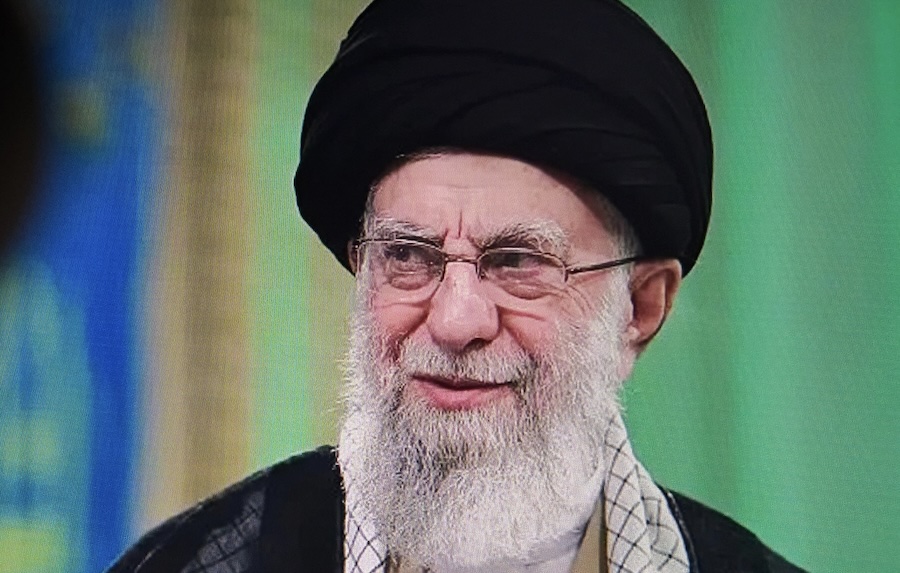
Israel’s killing of Iran’s Supreme Leader Ayatollah Ali Khamenei in February marked one of the most dramatic targeted strikes against a sitting head of state in modern history. The operation served as the opening blow in a U.S.-Israeli campaign aimed at crippling Iran’s military and nuclear infrastructure.
Officials familiar with the mission say the strike relied on months of intelligence gathering, careful deception, and a specialized missile that briefly traveled beyond the Earth’s atmosphere before descending on its target.
The mission began long before the strike itself. U.S. intelligence agencies, including the Central Intelligence Agency, reportedly tracked Khamenei’s movements for months in coordination with Israeli intelligence services.
Officials involved in the planning said analysts were searching for a rare opportunity when the Iranian leader would appear at a predictable location. Such moments are extremely uncommon due to the elaborate security measures surrounding Iran’s supreme leader.
That opportunity eventually emerged when intelligence indicated Khamenei would attend a high-level meeting of senior Iranian officials at a heavily guarded compound in Tehran. For military planners, the meeting presented a strategic window. Khamenei and several other top officials would be gathered in one place at a known time.

via DailyMail
According to Israeli officials, the idea of eliminating Khamenei had already been under discussion months earlier. Israel’s defense leadership reportedly approved the concept in late 2025 during internal security meetings. Detailed operational planning continued until intelligence confirmed the meeting would take place.
The weapon used in the strike was a jet-launched ballistic missile designed to briefly leave Earth’s atmosphere before reentering at extreme speed. Weapons in this category follow a ballistic trajectory, climbing high above the atmosphere before arcing back down toward their target.
At 9:40 a.m., Israeli fighter jets launched a wave of Blue Sparrow missiles toward the ayatollah’s compound in central Tehran, with reports indicating that at least 30 were fired during the strike, according to the Daily Mail.
The Blue Sparrow system, developed in Israel, has a range of roughly 1,240 miles and weighs about 1.9 tons. It was originally built as a target missile used to test missile defense systems, but its speed and flight profile also allow it to function as an air-to-surface strike weapon.
After launch, the missile accelerates sharply upward and exits the atmosphere before reaching the top of its trajectory. It then follows a long arc through space before descending back toward its target.
During reentry, the warhead travels at hypersonic speed, making interception extremely difficult for air defense systems. By the time the missile reenters the atmosphere, defenders typically have only seconds to detect the incoming weapon and attempt a response.
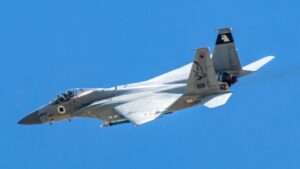
Rehovot, Israel – April 11, 2019: Israeli Air Force F-15 “Baz” takes off
According to officials familiar with the operation, Israeli F-15 Eagle fighter jets launched dozens of missiles as part of the strike package, including at least one of the space-capable ballistic weapons aimed directly at Khamenei’s compound.
A key element of the operation involved deception designed to lower Iranian defenses. Israeli planners reportedly tried to convince Iranian leadership that tensions were temporarily easing. Signals suggested Israeli forces might pause military operations over the weekend.
Instead, the strike was launched early Saturday morning, precisely when Iranian officials had gathered at the compound. Electronic warfare also played a role. During the attack, communications around the complex were reportedly jammed, preventing Iranian security forces from warning leadership or coordinating an immediate response.
At roughly the moment intelligence predicted Khamenei would be present, Israeli aircraft launched the strike. Multiple missiles slammed into the compound that served as the Supreme Leader’s headquarters. Satellite imagery released later showed heavy destruction across the complex.
The attack killed Khamenei along with several other senior figures in Iran’s leadership structure. Iranian state media confirmed his death shortly afterward. Military planners describe operations of this kind as “decapitation strikes” — attacks intended to remove the top leadership of a government or military organization in a single operation.
Khamenei’s death triggered immediate escalation across the Middle East. Iran responded by launching missiles and drones targeting Israel, U.S. bases, and energy infrastructure in Gulf states.
Meanwhile, Israel and the United States continued air operations against Iranian military facilities, missile sites, and suspected nuclear infrastructure. Within the first days of the campaign, hundreds of targets across Iran were reportedly struck.
