
Politics
JUST IN: Iran Threatens To Attack U.S. Ships During Tense Ceasefire Talks
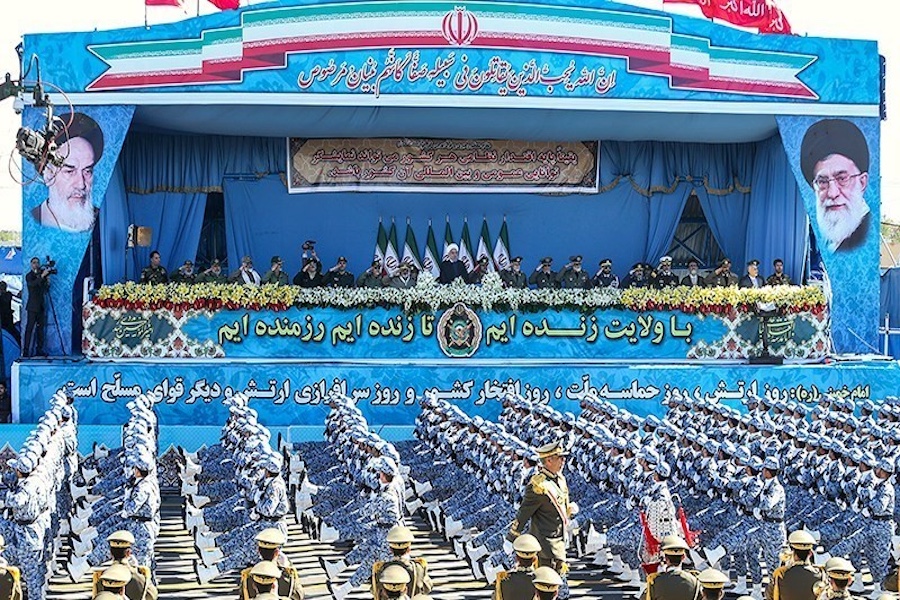
Tensions between the U.S. and Iran escalated dramatically on Saturday — in the middle of tense negotiations on a potential peace deal in Islamabad, Pakistan — when the Iranian regime threatened to attack U.S. Navy ships that are reportedly attempting to navigate through the Strait of Hormuz.
Iranian state media and military officials issued explicit threats against U.S. vessels attempting to navigate the critical chokepoint, which was responsible for roughly one-fifth of the world’s traded oil prior to the conflict’s eruption on February 28. Traffic in the strait has since declined upwards of 95 percent as a result of an Iranian blockade.
On Saturday, U.S. naval and commercial vessels have been attempting to traverse the Strait of Hormuz to reopen maritime traffic in line with ceasefire terms. Even after the ceasefire was declared earlier this week, only about a dozen vessels had transited in the first days.
President Donald Trump has repeatedly asserted that the Strait of Hormuz is an international waterway that cannot be blockaded under international law. He has also indicated that the U.S. is involved in re-opening the strait, which could include mine-clearing efforts.
In response to potential U.S. ship movements, Iran threatened to break the ceasefire and attack in the middle of negotiations. “Any vessel trying to travel into the sea … will be targeted and destroyed,” the Islamic Revolutionary Guards Corps (IRGC) said in a statement, according to a report from Reuters.
In a more targeted incident involving U.S. forces, Iranian state television and military officials stated that a warning was issued directly to a U.S. military ship. “Any US military vessel crossing the Hormuz Strait will be attacked within 30 minutes,” the regime said in a pointed threat.
U.S. officials have denied the specifics of any such warning occurring, but the episode has fueled immediate diplomatic friction.
The confrontation unfolds squarely in the middle of high-stakes negotiations in Islamabad. The U.S. delegation, led by Vice President JD Vance and including special envoys Steve Witkoff and Jared Kushner, arrived Saturday to meet Iranian counterparts headed by parliamentary Speaker Mohammad Bagher Ghalibaf and Foreign Minister Abbas Araghchi.
Both delegations met with Pakistani Prime Minister Shehbaz Sharif, though Iran and the U.S. will not be meeting directly. The two sides will be seated in different locations, with Pakistan mediating all talks.
The agenda centers on converting the temporary ceasefire into a more durable arrangement, with key issues including safe passage through the Strait of Hormuz, regional de-escalation, and broader elements of a potential peace agreement. Details on the preconditions of a lasting deal remain limited, while both sides have disputed reports concerning the framework.
President Donald Trump has publicly outlined U.S. expectations for any deal and described Iran’s proposals as a “workable basis to negotiate.” The president has repeatedly stressed that an end to the regime’s nuclear program, as well as the reopening of the Strait of Hormuz, are essential to any agreement.
RELATED: U.S. Responds After Iran Makes Bold Claim Ahead Of High Stakes Peace Talks
