
Politics
JUST IN: Red State Officially Moves Forward With Redistricting
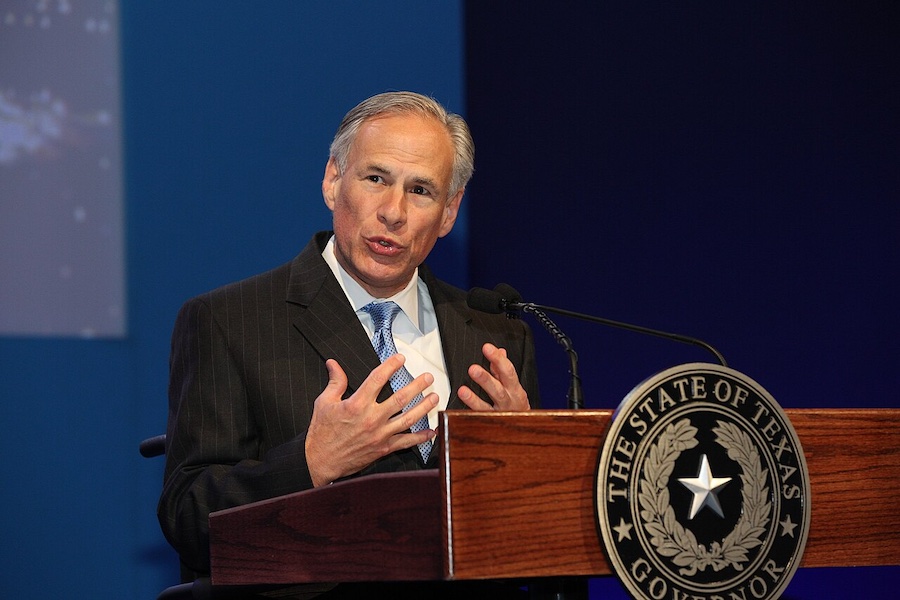
A Texas House panel on Saturday advanced a draft congressional map aimed at adding five new Republican-leaning districts ahead of next year’s pivotal midterm elections.
The legislature’s redistricting committee approved the map along party lines in a 12-6 vote after spending much of the day Friday hearing testimony from U.S. House Democrats from Texas and members of the public. With the matter out of committee, redistricting could be considered for a floor vote as early as Tuesday.
Texas Governor Greg Abbott announced last month that the Texas legislature’s special session would include a discussion on redistricting. The proposed maps will draw out three Democrat leaning districts entirely and push two additional districts heavily in favor of Republicans, largely by diluting Democrat voting blocs in the major metro areas of Houston, San Antonio and Dallas-Forth Worth.
The redraw comes after the Trump Administration raised “serious concerns” about the legality of four congressional districts in the Lonestar State. “As stated below, Congressional Districts TX-09, TX-18, TX-29 and TX-33 currently constitute unconstitutional ‘coalition districts’ and we urge the State of Texas to rectify these race-based considerations from these specific districts,” the DOJ’s civil rights division wrote in a letter addressed to Governor Abbott and Attorney General Ken Paxton.
The letter cited Allen v. Milligan, a case focusing on redistricting in Alabama that went before the U.S. Supreme Court in 2023, which dealt with racial gerrymandering and the Voting Rights Act of 1965. The court ruled in a 5-3 decision, with Justices John Roberts and Bret Kavanaugh joining the courts three liberals, that Alabama “likely violated” Section 2 of the Voting Rights Act by failing to provide minority voters “equal opportunity” to elect candidates of their choosing.
In its letter to Texas, the DOJ pointed to Justice Kavanaugh’s opinion, which noted that “even if Congress in 1982 could constitutionally authorize race-based redistricting under § 2 for some period of time, the authority to conduct race-based redistricting cannot extend indefinitely into the future.”
“In SFFA v. Harvard, the Supreme Court reiterated that “deviation from the norm of equal treatment” on account of race ‘must be a temporary matter.’ 600 U.S. 181, 228 (2023). When race is the predominant factor above other traditional redistricting considerations including compactness, contiguity, and respect for political subdivision lines, the State of Texas must demonstrate a compelling state interest to survive strict scrutiny,” the letter noted.
The letter further cited Perry v. Galveston County, which, “made it abundantly clear that “coalition districts” are not protected by the Voting Rights Act.” The decision further found that any minority group must be “geographically compact enough” to constitute more than 50 percent of the voting population in a single-member district to be protected under the Voting Rights Act.
Democrats have come out firmly against the plan, arguing that it will violate the civil rights of non-white voters by ending the practice of drawing race-based districts. California Governor Gavin Newsom has vowed to retaliate, as have a number of Democrats, though their hands may be tied.
California is barred from redistricting due to an amendment to form an “independent” redistricting commission, though the supposed independent commission still managed to create an even more gerrymandered map than the one being considered by Texas. Additional blue states, including Illinois and Maryland, are already substantially gerrymandered, while New York’s proposed redraw was thrown out by the state Supreme Court in 2022.
Saturday’s vote comes just hours after the U.S. Supreme Court indicated that it will be revisiting its 2024 ruling on the Voting Rights Act of 1965. If the high court does indeed end the practice of intentionally drawing districts on the basis of race, it could lead to further Republican gains in the 2026 midterm elections.
Such a ruling, depending on scope, would allow states like Texas to avoid legal challenges to the proposed map, while also leading to the outright elimination of race-based districts in states like Alabama, Louisiana and Georgia.
Additional Republican-controlled states, including Missouri, Florida and Ohio, are also considering redistricting ahead of next year’s elections.
