
Politics
JUST IN: Supreme Court Issues 6-3 Ruling
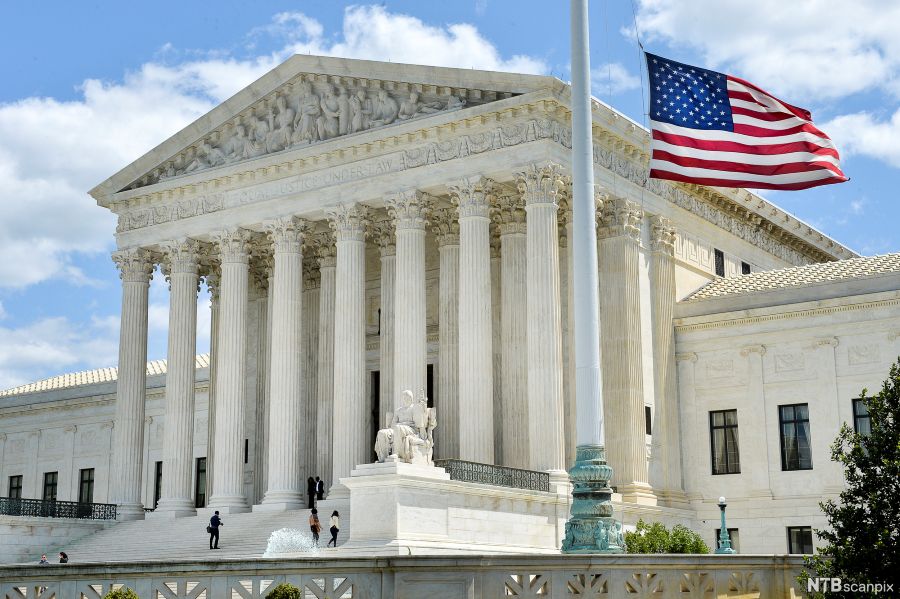
The Supreme Court handed Exxon Mobil a major win Tuesday, ruling that the energy giant can move forward with its lawsuit against a Cuban state-owned conglomerate accused of operating seized oil and gas assets.
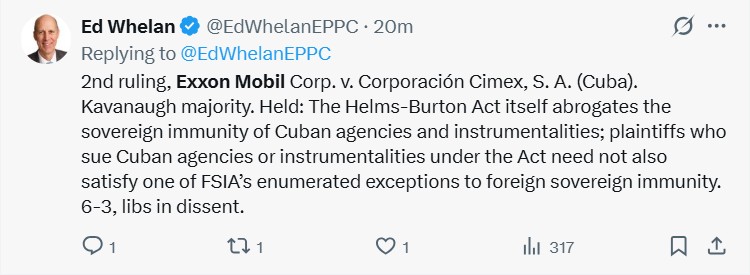
In a 6-3 decision, the justices sided with Exxon in its fight against Corporación CIMEX S.A., a Cuban government-owned company that allegedly used more than 100 service stations confiscated after the communist regime took power.
The court held that Congress waived the sovereign immunity normally given to foreign state-owned enterprises when it allowed private lawsuits over property seized by Cuba’s communist government.
The ruling reverses a decision from the U.S. Court of Appeals for the D.C. Circuit, which had ordered a lower court to reconsider whether CIMEX was protected under the Foreign Sovereign Immunities Act.
The case centers on Title III of the Helms-Burton Act, a 1996 law allowing lawsuits against companies that knowingly traffic in property confiscated by the Cuban regime.
For decades, presidents from both parties used a provision in the law to block those lawsuits from moving forward.
That changed in 2019, opening the door for companies and families seeking compensation over property taken by Cuba’s communist government.
Exxon is seeking compensation from CIMEX for its use of the seized service stations.
The ruling comes shortly after the Supreme Court revived a similar lawsuit from Havana Docks Corporation against four cruise lines that brought passengers to the Port of Havana after the Obama administration eased travel restrictions on Cuba.
RELATED: NEW: Supreme Court Overturns Key Verdict With 6-3 Ruling
Together, the cases mark a significant legal opening for claims tied to property confiscated by the Cuban regime.
Exxon was represented by former Sullivan & Cromwell partner Morgan Ratner, who has since moved to Gibson Dunn.
Corporación CIMEX was represented by Jules Lobel of the University of Pittsburgh School of Law.
For critics of Cuba’s communist government, the ruling is a long-overdue reminder that stolen property does not become legitimate simply because a regime keeps it long enough.
Download the FREE Trending Politics App to get the latest news FIRST >>
