
Politics
JUST IN: U.S. Navy Dismantles Iranian Blockade, Reopens Vital Oil Pathway
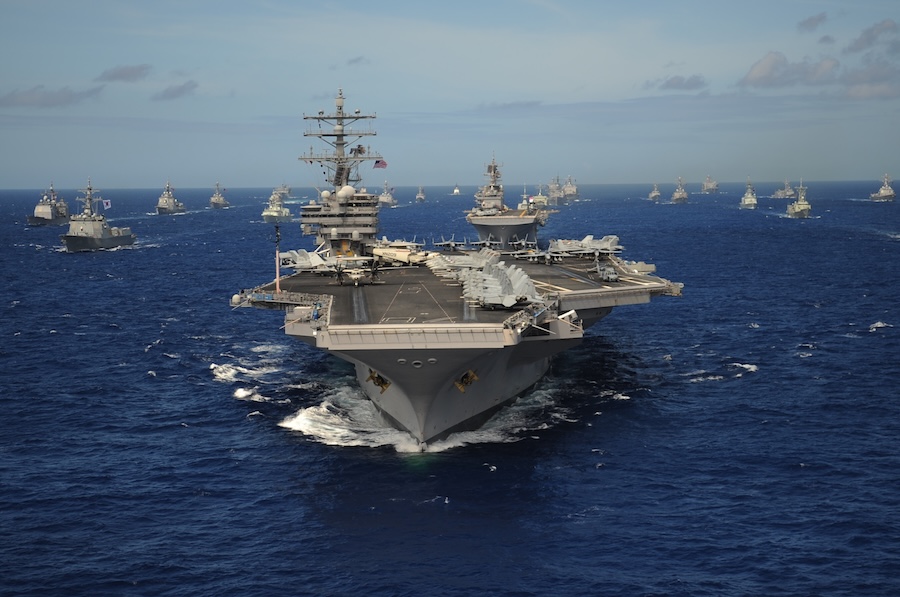
The U.S. military is ramping up operations aimed at restoring shipping through the Strait of Hormuz after Iranian threats and attacks brought traffic in the critical oil corridor close to a standstill, according to Pentagon officials.
Chairman of the Joint Chiefs Gen. Dan Caine said U.S. forces are striking Iranian mine-laying vessels and other assets tied to Tehran’s efforts to choke off the waterway, signaling that the Trump administration is now directly targeting the machinery behind the blockade.
Located between Iran and Oman, the narrow passage connects the Persian Gulf to the Gulf of Oman and ultimately the Arabian Sea. At its narrowest point the strait is only about 21 miles wide, with designated shipping lanes that are roughly two miles wide in each direction. Despite its relatively small size, it serves as the primary gateway for oil shipments leaving the Persian Gulf, making it a critical artery for the global economy.
Roughly one-fifth of the world’s oil supply moves through the Strait of Hormuz each day, amounting to around 20 million barrels of crude and petroleum products. Major energy exporters such as Saudi Arabia, United Arab Emirates, Kuwait, Iraq, and Qatar rely on the passage to transport oil and liquefied natural gas to global markets.
The standoff has rattled global energy markets for days. After fears of a prolonged blockade pushed Brent crude as high as roughly $119 a barrel, prices later fell sharply after President Donald Trump suggested the war could end sooner than expected.
Even so, energy analysts and shipping experts warn that reopening the route in a meaningful way could require more than a handful of strikes, especially if mines, drones, missile threats, and insurance concerns continue to deter commercial carriers. Amid the uncertainty, Trump is urging shipping companies not to back down.
BREAKING – Following the near-total obliteration of the Iranian Navy by U.S. forces, oil tankers have begun crossing the Strait of Hormuz with their transponders turned off, as oil prices drop 20 percent from recent highs. pic.twitter.com/OgVUZ1r1Si
— Right Angle News Network (@Rightanglenews) March 9, 2026
Speaking in an interview with Fox News, the president encouraged commercial vessels to keep moving through the Strait of Hormuz despite the recent attacks.
“These ships should go through the Strait of Hormuz and show some guts,” Trump said in the interview. “There’s nothing to be afraid of… they have no Navy, we sunk all their ships.”
Trump’s comments come as the maritime industry faces one of the most volatile security environments in years. Since late February, missile launches, drone strikes, and explosions have been reported across the Persian Gulf as the conflict involving the United States, Israel, and Iran has intensified.
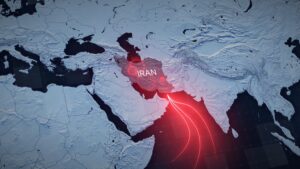
A detailed political map of Iran showing its borders and geographic location in the Middle East.
Because of the strait’s importance, maintaining freedom of navigation through the passage has been a longstanding priority for the United States Navy and its partners. The U.S. maintains a major military presence in the region through the U.S. Fifth Fleet, headquartered in Manama, Bahrain. American naval forces regularly patrol the Gulf and surrounding waters to deter attacks on commercial shipping and ensure that the strait remains open to international traffic.
During the Iran–Iraq War in the 1980s, both sides attacked oil tankers in what became known as the “Tanker War.” In response, the United States launched Operation Earnest Will in 1987, escorting Kuwaiti oil tankers through the Gulf to protect them from Iranian attacks.
Tensions escalated further in 1988 when the U.S. Navy carried out Operation Praying Mantis after an American warship struck an Iranian mine. The operation resulted in the destruction of several Iranian naval vessels and remains the largest U.S. naval battle since World War II.
In the decades since, the strait has repeatedly been at the center of geopolitical tensions.
