
Politics
Mamdani Faces Fury Over Move Viewed As Anti-White And Antisemitic
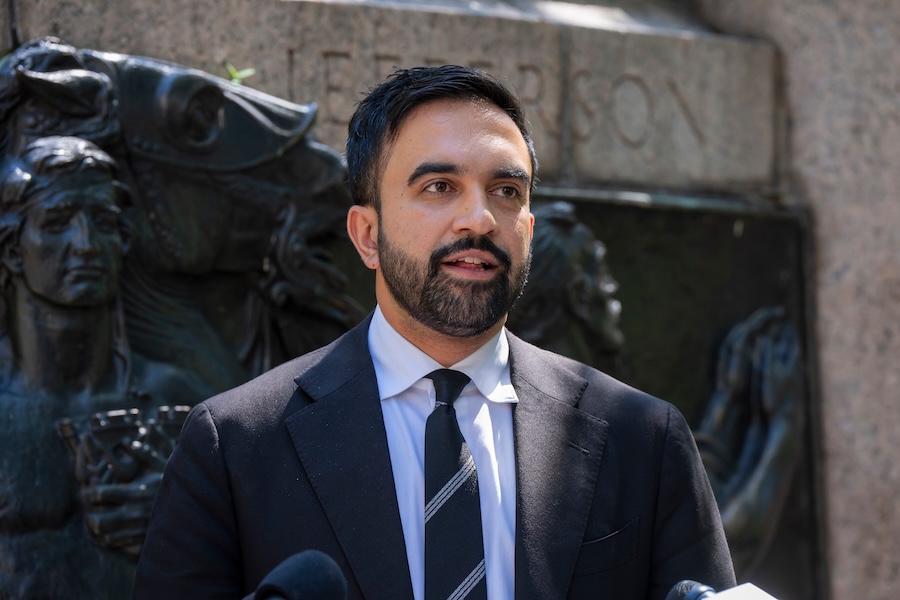
Mayor Zohran Mamdani caught a wave of outrage Wednesday after a city-backed map of New York’s immigrant neighborhoods highlighted places such as Little Palestine while leaving out Little Italy, Irish enclaves and major Jewish communities.
The map, titled “New York City Immigrant Enclaves,” lists 30 neighborhoods across the five boroughs, including Koreatown in Manhattan, Little Pakistan in Brooklyn and Little Yemen in the Bronx.
But critics quickly noticed what was missing.
Little Italy, the city’s famed Italian-American enclave and one of New York’s original “Little” neighborhoods, did not make the cut.
Neither did places such as Woodlawn and Sunnyside, long associated with Irish immigrants, or Brooklyn’s Borough Park, home to one of the largest Orthodox Jewish communities outside Israel.
“No italians. … Give me a break,” one observer fumed on X Wednesday.
Councilwoman Joann Ariola, a Queens Republican, said the omission of Little Italy was a stunning mistake from City Hall.
“They were able to get a Little Bhod-Tibet in there, but what about the original ‘Little neighborhood,’ Little Italy?” Ariola told The Post.
“And what about areas like Woodlawn, in the Bronx, which are home to plenty of Irish immigrants? Do the Irish and Italians not count for the Mayor’s office?”
Joseph Scelsa, founder of the Italian-American Museum on Mulberry Street, called the exclusion of Italian-American neighborhoods a “terrible mistake.”
“To respect one is to respect all,” he said.
“Italian-Americans are still a major population in New York City. To not recognize where Italian-Americans came from and settled is a terrible mistake. I don’t understand why Little Italy isn’t included. I hope it’s an oversight.”
The map, which appears to have been released in May, also includes Little Guyana in Queens, Little Mexico in Staten Island and Little Dominican Republic in Manhattan.
Kevin McCabe, a former City Council chief of staff and original Working Families Party operative, said the map also ignored generations of Irish New Yorkers.
“I guess they never heard of Woodlawn or Sunnyside but that’s OK, the Irish are everywhere, the way it’s supposed to be,” McCabe told The Post.
“The British Empire at the height of its powers couldn’t cancel the Irish, I’m not too worried about a couple of ill-informed bureaucrats.”
The backlash did not stop with Italian and Irish New Yorkers.
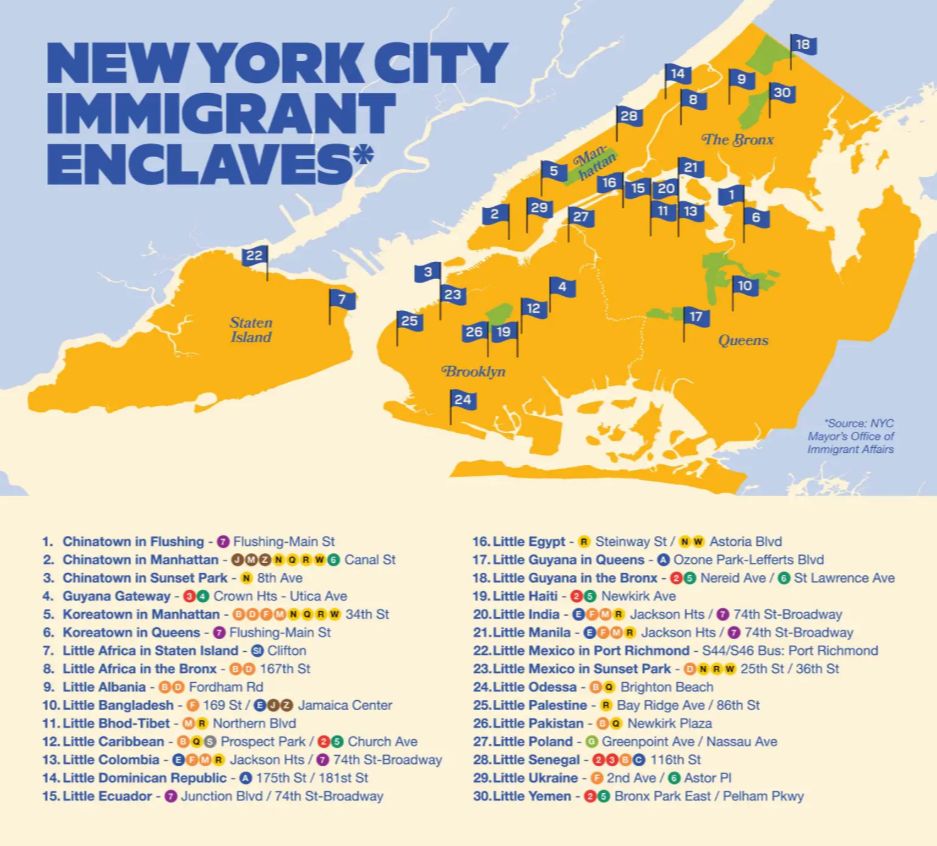
Mamdani-immigrant map
Critics also blasted the administration for excluding Jewish neighborhoods such as Borough Park, a heavily Orthodox community in Brooklyn.
“The Mayor’s Office made a map of NYC’s immigrant enclaves: Little Africa, Little Poland, Little Palestine. But they just couldn’t figure out how to represent 11% of the city. Couldn’t decipher where the Jews are from,” writer Avital Chizhik-Goldschmidt fumed on X.
“Huge riddle wrapped in a mystery inside an enigma.”
State Assemblyman Kalman Yeger, who represents heavily Orthodox Jewish southern Brooklyn, said the omission fit a pattern.
“Mr. Mamdani’s erasing Jews is an essential part of his brand. No surprise,” Yeger said.
City Hall pushed back on the criticism, saying the map was not intended to highlight religious enclaves.
In a statement, a City Hall spokesperson said the map “highlights neighborhoods in New York City that have substantial foreign-born populations from regions and countries around the world.”
The explanation did little to quiet critics who saw the omissions as political, not accidental.
For them, a map that finds room for Little Palestine but skips Little Italy, Irish New York and Orthodox Jewish Brooklyn sends a message, whether City Hall admits it or not.
In a city built by immigrants, Mamdani’s map managed to turn inclusion into another fight over who gets erased.
POLL: Will You Support Trump And His Candidates In The Midterms?
