
Politics
MUST-SEE: RFK Exposes Liz Warren’s Big Pharma Donations Mid-Hearing
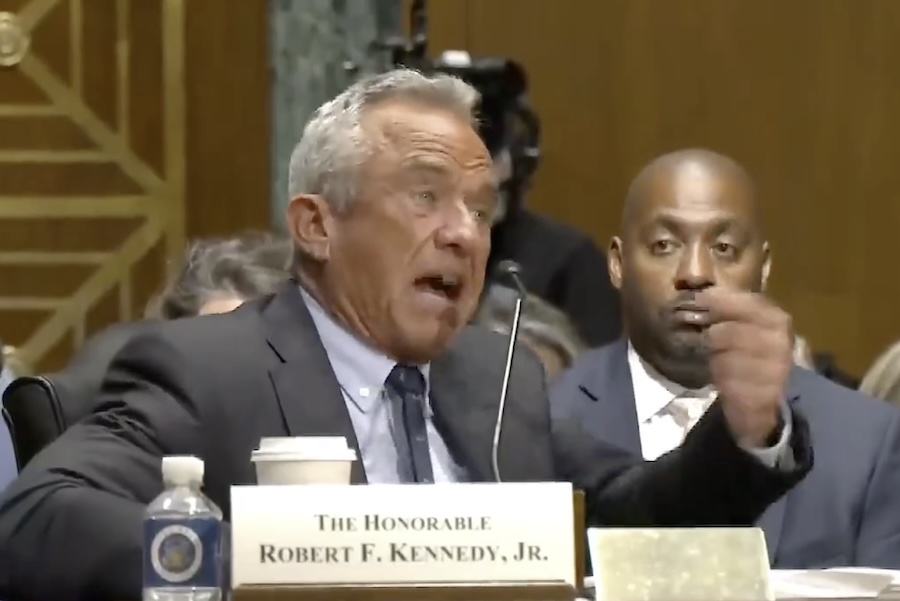
Washington erupted into fireworks Thursday as Health and Human Services Secretary Robert F. Kennedy Jr. and Sen. Elizabeth Warren (D-MA) squared off during a heated Senate hearing. What started as a tense discussion on COVID boosters quickly escalated into a dramatic clash over Big Pharma’s influence and political integrity.
Kennedy Jr. faced his first Senate Finance Committee hearing since May, marking one of the most contentious appearances of his tenure. The clash came against the backdrop of Kennedy’s controversial shake-up of federal health agencies.
A major point of contention revolved around Kennedy’s recent announcement that COVID-19 boosters are “not recommended for healthy people.” Lawmakers accused him of undermining scientific integrity and warned that his rhetoric blurred the line between politics and public health.
Warren pressed Kennedy to give a blanket endorsement of COVID boosters for all Americans. “Will you tell America that all adults and all children over six months of age are eligible to get a COVID booster at their local pharmacy today?” she asked.
Kennedy pushed back, pointing out the gap between eligibility and recommendation. Warren then accused Kennedy of denying people access to vaccines. “As Senator Dr. Cassidy said, you are effectively denying people vaccines.”
“We’re not going to recommend a product for which there’s no clinical data for that indication,” Kennedy responded. Then came the knockout moment. Kennedy leveled his charge, “I know you’ve taken $855,000 from pharmaceutical companies, Senator.”
WATCH:
Kennedy added, “You want me to indicate a product for which there is no clinical data?”
His firing of CDC Director Susan Monarez has already rattled lawmakers, with Democrats accusing him of undermining scientific integrity and even some Republicans voicing doubts about his leadership.
Warren also pressed Kennedy Jr. on whether he forced Monarez to step down after she allegedly refused to approve changes he wanted made to the childhood vaccine schedule.
Kennedy answered: “No, I told her she had to resign because I asked her, ‘Are you a trustworthy person?’ And she said, ‘No.’ What if you had an employee who told you they weren’t trustworthy? Would you ask them to resign?”
Sen. Ron Wyden (D-OR) and Sen. Tina Smith (D-MN) accused Kennedy of pushing conspiracy theories, while Sen. Bill Cassidy (R-LA) said Kennedy was “effectively restricting vaccine access,” citing complaints from constituents, including a cancer patient who could not get vaccinated.
Kennedy defended his decisions as necessary to restore public trust, blaming the CDC for prior mishandling of the pandemic and claiming that earlier guidance caused lasting economic damage. Still, the backlash was evident throughout the hearing.
Tense exchanges underscored the depth of the divide: Wyden labeled Kennedy’s policies a “healthcare calamity,” while Senator Tina Smith challenged his suggestion that psychiatric medications might be linked to violence, arguing that he offered no credible evidence. Senator Maria Cantwell went further, calling him a “charlatan,” and Warnock warned that he had become a “hazard to the health of the American people.”
Kennedy, however, remained steady, insisting his critics were resisting reform and failing to recognize the need for systemic change.
