
Politics
NEW: Federal Judge Issues Arrest Warrant For James Comey
A federal judge in North Carolina has issued an arrest warrant for former FBI Director James Comey after a federal grand jury returned a two-count indictment on Tuesday.
The charges stem from a May 2025 Instagram post in which Comey shared a photograph of seashells arranged on a beach to form the numbers “86 47.” Officials interpreted the post as a threat against President Donald Trump, the 47th president, as “86” is a common slang term for eliminate or kill.
Comey deleted the post shortly afterward and stated that he viewed the shell arrangement as a political message rather than a call to violence. “I didn’t realize some folks associate those numbers with violence” and “I oppose violence of any kind so I took the post down,” he said.

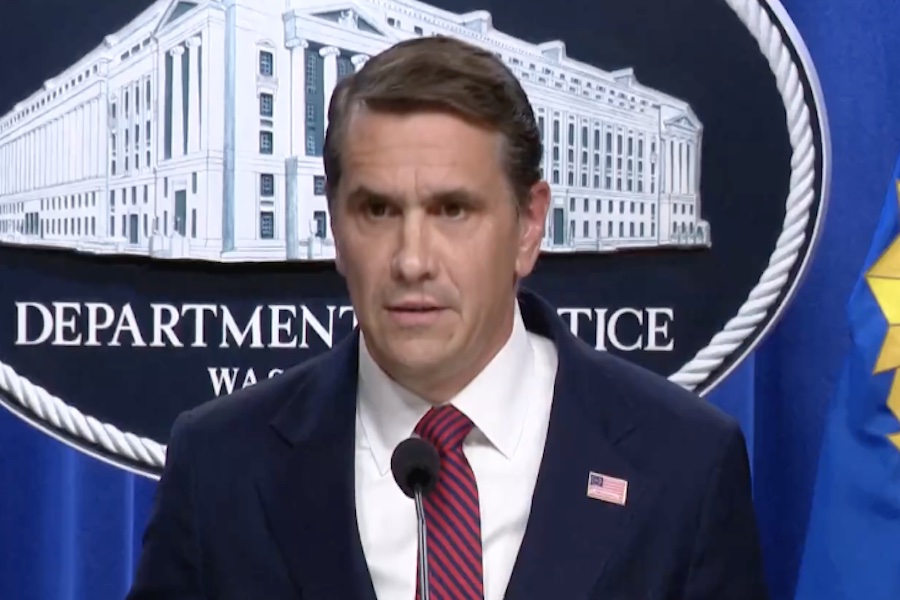
The two-count indictment charges Comey with “knowingly and willfully” making a threat to “take the life of, and to inflict bodily harm upon” Trump and with transmitting a threat in interstate commerce. Acting Attorney General Todd Blanche addressed the issuance of the arrest warrant while speaking with reporters alongside FBI Director Kash Patel.
“The Department of Justice does not issue arrest warrants. Grand juries do. And so the grand jury returned an indictment and arrest warrant,” Blanche said, adding that contact with Comey’s representatives was expected.
Following the grand jury’s return of the indictment, a federal court issued the arrest warrant as a matter of standard procedure. In federal criminal cases, once a grand jury finds probable cause and indicts a defendant, the court — typically through a magistrate judge or court clerk — issues either an arrest warrant or a summons.
An arrest warrant directs law enforcement officers to take the named individual into custody and bring them before the court. A summons, by contrast, is a less restrictive alternative that orders the defendant to appear in court on a specified date without being taken into custody beforehand.
The choice between the two depends on factors such as the nature of the charges, the defendant’s perceived flight risk, and public safety considerations. In this instance, the court opted for an arrest warrant rather than a summons.
It remains unclear whether Comey will be taken into immediate custody by U.S. Marshals or allowed to self-surrender. Federal arrest warrants are executed by U.S. Marshals Service personnel or other authorized law enforcement officers.
Tuesday’s indictment marks the second criminal case filed against Comey in less than a year. In September 2025, a grand jury in the Eastern District of Virginia charged him with one count of making a false statement to Congress and one count of obstructing a congressional proceeding. Those charges related to Comey’s 2020 testimony before the Senate Judiciary Committee concerning FBI investigations and the bogus Russian collusion investigation.
Comey pleaded not guilty, and a trial date was set for January 2026. However, a federal judge dismissed the case without prejudice on November 24, 2025, after ruling that the lead prosecutor’s appointment was unlawful.
The former director faces a maximum of 20 years in federal prison if convicted on both charges.
The Trending Politics News app is your home for breaking updates. Download it FREE today!
