
Politics
NEW: Iran-Backed Houthi Militants Attack Gulf State Capital
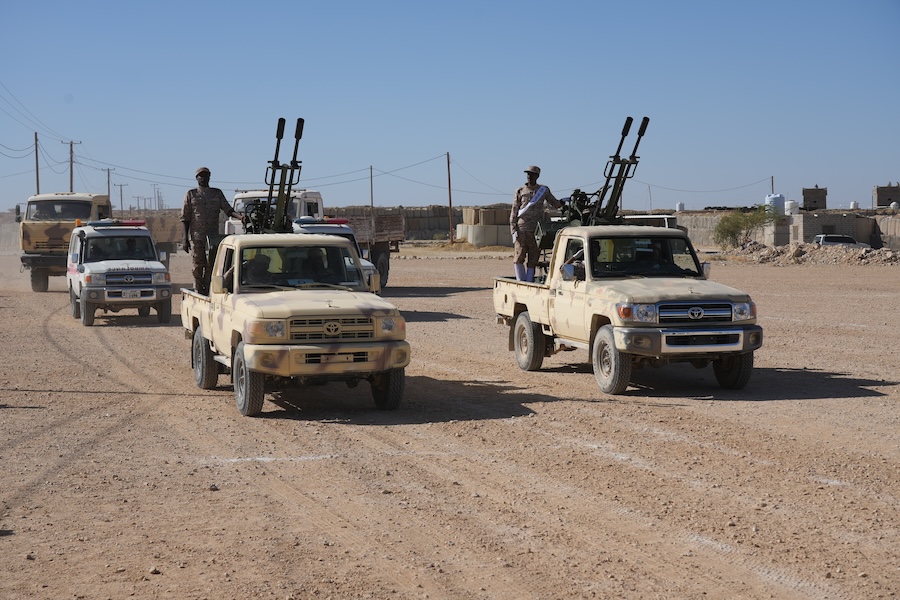
Yemen’s Houthi militant group announced Saturday that t launched ballistic and cruise missiles and drones at “sensitive sites” in Riyadh and at Saudi Aramco facilities in the Red Sea port of Yanbu. The claim came after overnight air-raid alerts in the capital and nearby Al-Kharj, reports of explosions, and a fire at a fuel storage depot near King Khalid International Airport.
Saudi Civil Defense issued phone alerts warning of a “hostile aerial threat” and urging residents to stay indoors, then later sent an all-clear. Journalists in Riyadh reported hearing booms. Video and photographs from the scene showed a large plume of black smoke and flames near airport fuel tanks bearing the Aramco logo
Flights at the airport were disrupted for a period before operations resumed. There were no immediate reports of casualties from the incident in the capital.
Houthi military spokesman Yahya Saree said the operations used “a large number of ballistic and cruise missiles and drones” and were a response to what the group described as Saudi attempts to target Sanaa and hundreds of airstrikes in Yemen. The Saudi-led coalition later said its air force intercepted and destroyed a ballistic missile fired toward Riyadh at dawn and that other attempted attacks, including on Yanbu and additional locations, were thwarted.
Saudi authorities have not issued a detailed public confirmation of the full Houthi claim as of this report.
POLL: Would You Vote Against ANY Candidate Who Calls Themselves A Socialist?
BREAKING: For the first time in four years, Yemen's Houthis have struck Saudi Arabia's King Khalid International Airport in Riyadh with drones, hitting the main jet fuel tanks, with flames and a massive plume of black smoke over the airport, per Reuters.
Saudi Arabia lost its… pic.twitter.com/DZq4KrcMOX
— The Hormuz Letter (@HormuzLetter) September 19, 2026
The exchange is part of a broader renewal of fighting that followed the collapse of a 2022 truce established in Yemen’s decade-long civil war. In July, the Houthis announced a maritime blockade aimed at Saudi-linked shipping, which they have attempted to enforce in the Red Sea.
Earlier this month, they conducted a rapid offensive along Yemen’s western coast, seizing the port city of Mokha, additional coastal districts, and Perim Island (Mayyun) in the Bab al-Mandab Strait. Those gains gave the group control of most of Yemen’s Red Sea shoreline and positions adjacent to a major international shipping lane. Fighting has continued in other governorates, including Taiz and Marib.
Houthi officials have repeatedly stated that they have not closed the Bab al-Mandab Strait to international shipping. Negotiator Mohammed Abdusalam said in July there was “no closure of Bab al-Mandab” and that measures were “limited to a maritime blockade that only affects the Saudi side.” After the coastal advances, officials said international navigation remained “free, safe and smooth,” that traffic was near recent averages, and that there was “no cause for international concern” or plan to impose transit fees.
Vessel-tracking data has indicated that ships have continued to transit, though some Saudi-linked traffic faced restrictions and overall volumes have been lower than pre-war levels.
U.S. President Donald Trump has declined requests from Saudi Crown Prince Mohammed bin Salman for American airstrikes against the Houthis. The United States has provided intelligence and targeting information to Saudi Arabia but has not conducted offensive strikes. Trump said the Houthis contacted U.S. officials and “don’t want to fight with us,” adding that they “would much prefer not having us involved and they’re letting most ships go through.”
He described the dispute as involving “just one country they’re not too happy with” and said the United States would “get that straightened out.” Officials have also referenced a 2025 U.S.-Houthi understanding under which the group agreed not to attack American shipping.
RELATED: ‘Fresh Activity’ Seen At Iran’s Nuclear Site
