
Politics
NEW: Iran Claims Attack On U.S. Oil Tanker
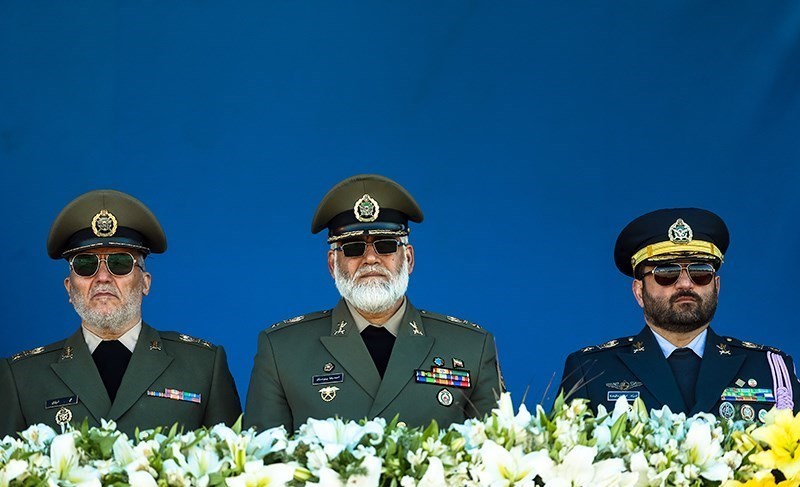
Iran’s Islamic Revolutionary Guard Corps (IRGC) claimed Thursday that its naval forces had conducted a missile strike on a U.S. oil tanker in the northern Persian Gulf.
The IRGC stated that the vessel was hit and set ablaze, according to reports from Iranian state media.
“Early this morning, this oil tanker in the northern Persian Gulf was struck by fighters from the IRGC Navy and is burning now.,” the IRGC said. They further asserted that, in time of war, passage through the Strait of Hormuz would be under the control of the Islamic Republic, warning that vessels affiliated with the United States, Israel, or their allies would face restrictions or attacks.
No independent confirmation of the strike on this specific tanker has been confirmed as of this report. U.S. officials have not issued immediate public statements verifying or denying the claim.
The announcement follows recent escalations, including a U.S. submarine’s sinking of an Iranian warship in the Indian Ocean earlier in the week, which Iran described as an unprovoked attack in international waters involving around 130 sailors.
This incident occurs amid a broader conflict that began on February 28, with coordinated U.S. and Israeli airstrikes on targets inside Iran. Iran has responded with missile and drone attacks on U.S. military bases across the region, including in Iraq, Jordan, Kuwait, Bahrain, Qatar, Saudi Arabia, and the United Arab Emirates, as well as strikes on civilian infrastructure in some locations.
Reports indicate significant casualties on both sides, with Iran reporting thousands of military personnel killed and the U.S. confirming losses among service members. The conflict has also involved attacks on shipping, with multiple tankers damaged in Gulf waters since early March, including incidents resulting in crew injuries and fatalities.
The Strait of Hormuz, a narrow waterway approximately 21 miles wide at its narrowest point, serves as a critical chokepoint for global energy trade. It handles roughly 20% of the world’s seaborne oil and a substantial portion of liquefied natural gas (LNG) exports, primarily from Gulf producers.
Iran’s declaration of control over the strait and threats against certain vessels have led to a sharp reduction in maritime traffic. Shipping data shows tanker transits have dropped by around 90% compared to pre-conflict levels, with many vessels halting movements, anchoring outside the strait, or rerouting around Africa’s Cape of Good Hope.
Major shipping companies, including Maersk, MSC, and others, have suspended bookings through the strait and advised delays for Gulf-bound services. This has left hundreds of vessels stranded or diverted, disrupting flows of oil, LNG, and other commodities such as aluminum, sugar, and fertilizer.
The slowdown has contributed to significant increases in energy prices: Brent crude rose sharply to over $80 per barrel, U.S. crude reached recent highs, and natural gas prices surged amid supply concerns. In the United States, gasoline prices have experienced one of the largest weekly increases in recent years.
Analysts note that prolonged restrictions could push oil prices higher and affect global supply chains, with Asia — receiving the majority of crude transiting the strait — facing particular exposure to shortages and cost increases. Efforts to restore safe passage remain uncertain as military activities continue in the region.
