
Politics
NEW: Justice Alito Abruptly Reverses Course In Key Supreme Court Case
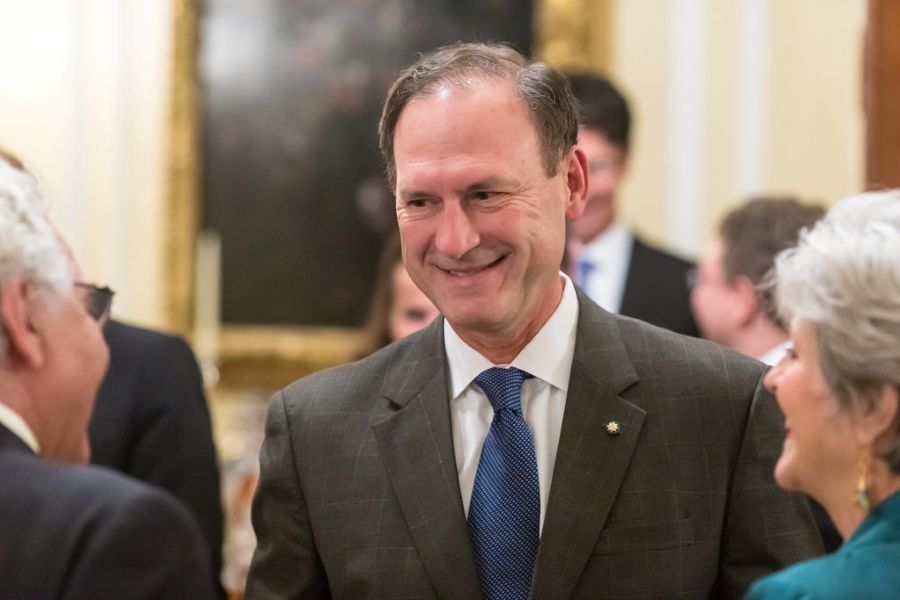
Supreme Court Justice Samuel Alito will not participate in a closely watched climate change liability case set for argument on the first day of the court’s new term, the court told the parties on Monday. The case holds significant sway for several, predominantly blue municipalities and states that are seeking billions of dollars from fossil fuel companies for alleged climate-related costs.
Clerk of the Court Scott Harris informed counsel that Alito “has determined that he will not continue to participate” in Suncor Energy Inc. v. County Commissioners of Boulder County. The letter offered no explanation.
The dispute began with a 2018 lawsuit filed in Colorado state court by Boulder County and the City of Boulder, which San Miguel County later joined. The municipalities alleged that Exxon Mobil and Suncor Energy contributed to “climate-related harms” through decades of fossil-fuel production, refining and sale, and through what they described as “concealment or misrepresentation” of the risks of those products.
They are seeking damages under state tort law for costs associated with flooding, wildfire risk, drought, and damage to public infrastructure, which they claim have been caused by climate change.
POLL: Should Foreigners Be Banned From Buying American Farmland?
NEW: Justice Alito has recused himself from Suncor Energy v. Boulder County, a major case asking whether federal law bars state lawsuits seeking damages from fossil-fuel companies for harms attributed to climate change. pic.twitter.com/JGC9fc25CE
— SCOTUS Wire (@scotus_wire) September 28, 2026
In response, the companies contend that the Clean Air Act, federal common law of interstate pollution, and constitutional limits on state regulation of interstate and foreign commerce preempt the state-law claims. After prolonged litigation over whether the case belonged in federal court, the Colorado Supreme Court in 2025 allowed the suit to proceed in state court.
The U.S. Supreme Court ultimately granted review earlier this year. A decision could influence dozens of similar actions filed by dozens of states and localities that seek billions of dollars from fossil-fuel producers.
Justice Alito recused himself from an earlier petition in the same Colorado litigation in 2023. He has also stepped aside in other energy cases, including a 2026 matter involving Chevron and Plaquemines Parish after his interest in ConocoPhillips, the parent firm of a related entity, became relevant.
When the court agreed to hear the current appeal, a spokesperson said in May that Alito “does not have a financial interest in any party” and that court legal counsel had advised that recusal was not required. He does not hold stock in Exxon Mobil or Suncor.
His most recent financial disclosure lists individual holdings in several energy-sector companies, including ConocoPhillips and Phillips 66, which are defendants in comparable climate suits elsewhere. Advocacy organizations argued that those investments, together with the industry-wide implications of a ruling, created at least an appearance of a conflict under the court’s 2023 Code of Conduct.
The code calls for recusal when a justice’s impartiality might reasonably be questioned or when a justice has a financial interest in the subject matter in controversy. Justices are not required to explain recusal decisions, and most do not.
With Alito sitting out, eight justices will hear the case. An even 4-4 division would leave the Colorado Supreme Court’s ruling in place without establishing a nationwide precedent. The remaining conservative justices would still outnumber the three liberal justices if they vote together, but Alito has been viewed by some legal observers as among those more receptive to preemption arguments of the kind the companies advance.
RELATED: Trump Torches Supreme Court Over Controversial Midterms Ruling
