
Politics
NEW: Official Issues Statement On Jet That ‘Vanished’ From Radar After Charlie Kirk’s Assassination
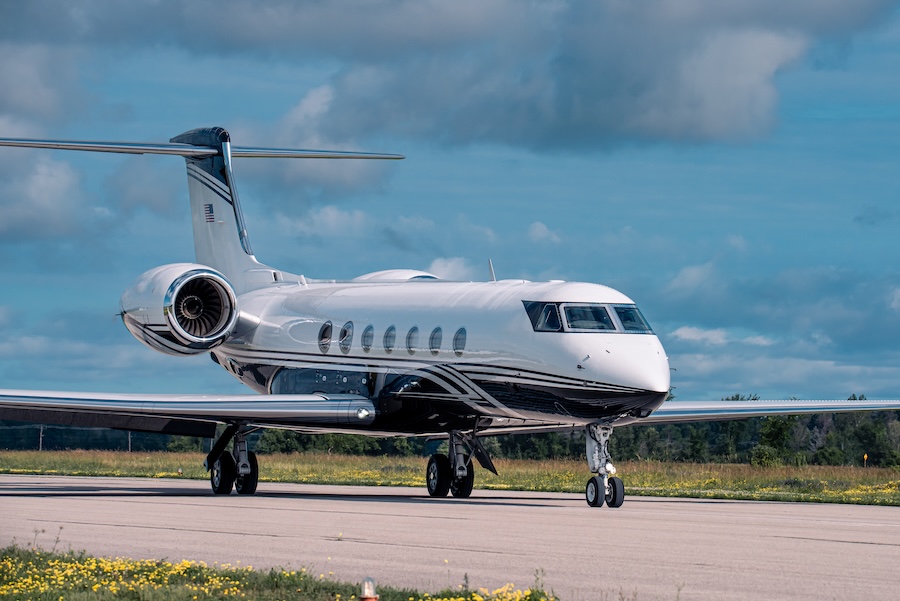
A top official is pushing back against rampant online speculation after a private jet briefly disappeared from public flight-tracking services in the hours following the assassination of Turning Point USA founder Charlie Kirk.
On Sunday, Secretary Sean Duffy released a detailed statement regarding the flight of a Bombardier Challenger 300 that departed Provo Airport on September 10, shortly after Kirk was gunned down during a speaking event at Utah Valley University. The jet, tail number N888KG, is registered to Derek Maxfield, CEO of Komigo. Its movements that day quickly became fodder for theories after sleuths claimed it “vanished” from radar.
Duffy explained that the aircraft never went dark in the way some suggested. Instead, he said, radar services with air traffic control (ATC) were ended by mutual agreement—a procedure allowed under certain conditions.
“Radar services are the active tracking and communication handled by air traffic controllers,” Duffy said. “Private pilots can voluntarily request to cancel radar services, and ATC may approve. But even when radar services are canceled, the FAA’s radar still captures aircraft in the air.”
He further stressed that the jet’s transponder—the device that automatically transmits an aircraft’s identity, altitude, and position—“was never turned off,” confirming the plane remained visible to federal systems the entire time.
“To be clear, statements from FAA and the plane’s owner are not in contention,” Duffy added. “The flight flown, as verified by their transponder, was consistent with our radar tracking and their flight plan.”
I want to clear up a few points about the private jet departing Provo Airport shortly after the Charlie Kirk assassination took place.
The plane’s owner stated that radar services with air traffic control (ATC) were ended by mutual agreement. Radar services are the active…
— Secretary Sean Duffy (@SecDuffy) September 28, 2025
According to public records from sites like FlightRadar24, the Challenger 300 departed Provo around 1:11 p.m. local time, less than an hour after Kirk was fatally shot. The flight appeared to drop off civilian tracking systems over Arizona before reappearing at Page Municipal Airport. It then returned to Utah later that day.
That brief lapse in tracking sparked a wave of online posts suggesting the jet may have been used to help the shooter escape or that it was tied to a larger operation.
Maxfield himself has publicly denied any connection between his aircraft’s flights and the Kirk shooting. He stated that the trip was pre-scheduled, flown outbound by two pilots with no passengers, and only picked him up along with seven other passengers in Page for the return leg.
He also explained that canceling radar services was standard procedure when operating between airports without active control towers.
“N888KG pilots followed all FAA requirements and protocols, tower directions and the predetermined flight plan,” he said.
“Any suggestion that the flights by N888KG yesterday are in any way connected to the tragic shooting of Mr. Kirk is inaccurate, false and without any credible basis of any kind,” Maxfield wrote, adding, “To our knowledge, no one associated with yesterday’s flights by N888KG has been contacted by law enforcement for any reason.”
Aviation experts note that temporary lapses in public flight-tracking data are not uncommon, particularly in remote areas or when transitioning between radar coverage zones.
Still, critics online argue the timing—minutes after Kirk’s assassination—warrants scrutiny. The fact that the plane’s registered address traces back to a high-profile Utah businessman only added fuel to speculation.
Duffy acknowledged the public’s interest in the details but urged patience. “I truly appreciate how many people are committed to getting to the truth,” he wrote. “My goal is to be as open and helpful as possible throughout this process.”
