
Politics
NEW: Supreme Court Issues Huge Immigration Ruling
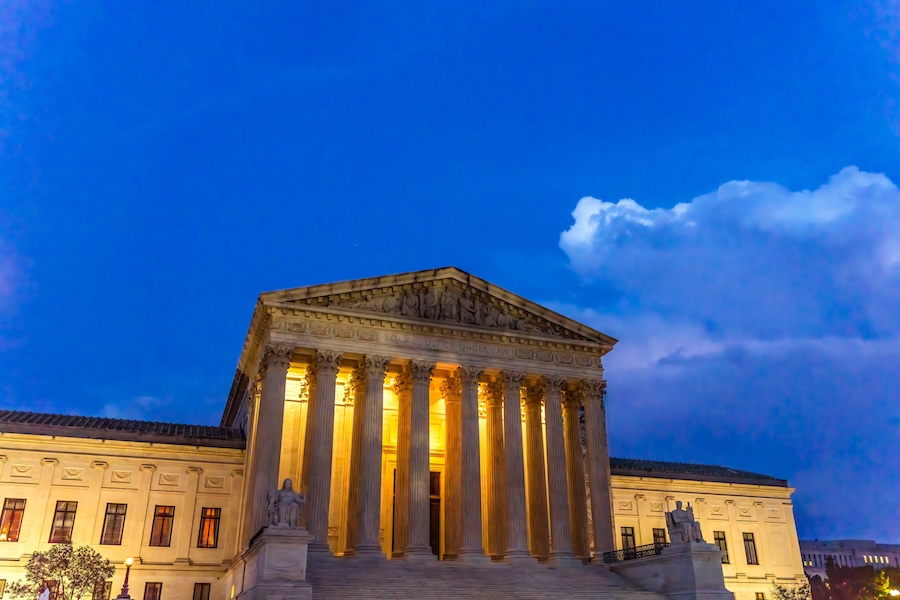
The Supreme Court on Friday declined, for now, to block a legal challenge to a Trump administration policy that limits speaking engagements by immigration judges, leaving intact a lower court ruling that sends the case back for additional fact-finding.
In a short unsigned order, the justices refused the administration’s request to halt a decision by the 4th U.S. Circuit Court of Appeals, which revived a lawsuit brought by the National Association of Immigration Judges. The court made clear, however, that the government could return if the trial court moves forward with discovery before the Supreme Court decides whether to take up the case.
The dispute centers on a policy the judges’ association says bars immigration judges “from speaking in their personal capacities about immigration and about the agency that employs them.” The group sued in federal court in Alexandria, Virginia, arguing the policy violates the First Amendment.
U.S. District Judge Leonie Brinkema initially dismissed the case, ruling that under the Civil Service Reform Act the judges must pursue their claims through the federal government’s administrative review process rather than in district court.
The association appealed, and the 4th Circuit sent the case back to Brinkema, citing recent actions by President Donald Trump that it said “call into question” whether that administrative system remains independent from presidential control. The appeals court pointed to Trump’s firing of the Special Counsel and the chair of the Merit Systems Protection Board, officials who play key roles in reviewing federal employment disputes.
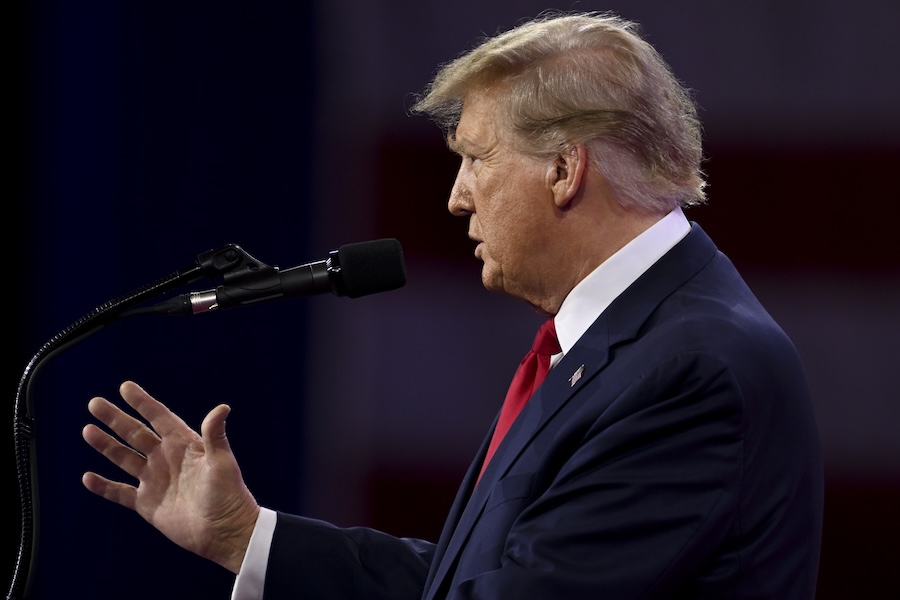
Donald Trump spoke at the American Conservative Union’s annual Conservative Political Action Conference. Maryland, USA. 24.02.2024
If the administrative process is no longer independent, the appeals court suggested, Congress may not have intended to require federal employees to use it exclusively. The panel ordered the district court to develop additional facts on “the continued vitality of the adjudicatory scheme.”
Solicitor General D. John Sauer asked the Supreme Court on Dec. 5 to block the ruling after the 4th Circuit refused to pause it. Sauer argued that “‘unelected judges’ do not get ‘to update the intent of unchanged statutes if the court believes recent political events … alter the operation of a statute the way Congress intended.”
He also warned the decision could create “destabilizing uncertainty” that might extend beyond federal employment disputes to other administrative review systems.
Chief Justice John Roberts, who oversees emergency matters from the 4th Circuit, temporarily paused the ruling while the full court reviewed the request. That pause expired Friday when the justices declined to intervene.
In opposing the administration, the judges’ association argued that if the administrative review process is not independent of the president, “the inference that Congress intended to withdraw district-court jurisdiction over federal employment claims may no longer be appropriate.” The group also said allowing limited fact-finding would not harm the government.
The Supreme Court agreed the administration had not shown it would suffer “irreparable harm” without a stay. At the same time, the justices emphasized that their decision does not prevent the government from seeking relief again if the district court proceeds before the Supreme Court considers a formal appeal.
Download the FREE Trending Politics App to get the latest news FIRST >>
