
Politics
NEW: ICE More Than Doubles Manpower As Newly-Hired Agents Enter Service
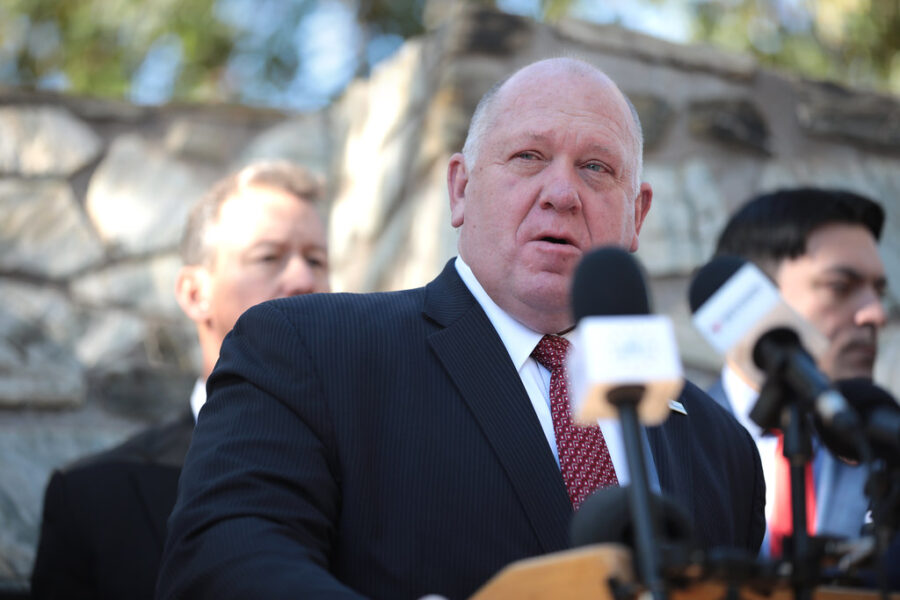
U.S. Immigration and Customs Enforcement (ICE) has recently completed a significant expansion of its workforce, with approximately 12,000 new officers and agents now entering service across the country.
The hiring spike follows a recruitment drive enabled by increased funding, aimed at enhancing immigration enforcement operations. As of early 2026, these new personnel are being deployed to field offices and participating in ongoing activities, such as targeted arrests in various cities, the Department of Homeland Security (DHS) has confirmed.
The hiring process was facilitated through the One Big Beautiful Bill Act, which was signed into law by President Trump last July. Most notably, the legislation allocated $8 billion specifically for ICE hiring, with the goal of adding 10,000 new positions over a one-year time period.
ICE has reported an astonishing surge in applications, with more than 220,000 Americans applying for open positions. This allowed the agency to exceed its target and onboard 12,000 individuals in less than six months.
“12,000 newly hired ICE officers are deploying to communities across our nation,” DHS Secretary Kristi Noem announced in an X post on Monday. “Thanks to [President Trump’s] One Big Beautiful Bill, our ICE workforce is up 120% to support enforcement operations, arrests, investigations, and removals. The patriotic men and women of [ICE] are doing God’s work to protect this country.”
12,000 newly hired ICE officers are deploying to communities across our nation.
Thanks to @POTUS Trump’s One Big Beautiful Bill, our ICE workforce is up 120% to support enforcement operations, arrests, investigations, and removals.
The patriotic men and women of @ICEgov are…
— Secretary Kristi Noem (@Sec_Noem) January 5, 2026
Recruitment efforts began shortly after the bill’s passage, with an increased focus on qualified candidates with prior law enforcement or military experience. The department offered hefty signing bonuses up to $50,000 and expanded student loan repayments. By January 2026, DHS announced that recruitment drives had doubled the agency’s manpower.
Training for new ICE agents typically involves a structured program at the Federal Law Enforcement Training Center. Historically, this has lasted around 13 weeks, covering topics such as immigration law, arrest techniques, and procedural guidelines.
To accelerate deployment amid the hiring surge, the training duration was shortened to approximately six to eight weeks, emphasizing core enforcement skills while reducing time on areas like language instruction and extended firearms practice. This adjustment allowed newly hired agents to enter the field more quickly, with on-the-job probation following the initial program.
With the addition of these 12,000 personnel, ICE’s total workforce now stands at around 22,000 officers and agents, up from 10,000 prior to the expansion. This represents a 120% increase, providing greater capacity for enforcement and investigative operations nationwide.
In addition, the Big Beautiful Bill significantly expanded ICE’s detention capabilities. It provided $45 billion over four years for expanding immigration detention facilities, including new centers for adults and families. This funding is expected to increase daily detention capacity from about 41,500 beds to over 100,000, potentially reaching 116,000 or more through contracts with private operators and state partnerships.
President Trump has established a deportation goal of 1 million individuals per year as part of his administration’s immigration policy. To achieve this, officials have set a daily arrest target of 3,000 illegal aliens.
As of late 2025, deportations had reached over 622,000, with additional self-deportations estimated at 1.9 million.
RELATED: Secret Service Plans To Hire Thousands Of Additional Agents
