
Politics
NEW: ‘Massive’ Federal Surge Planned In Blue Stronghold As Early As Next Week
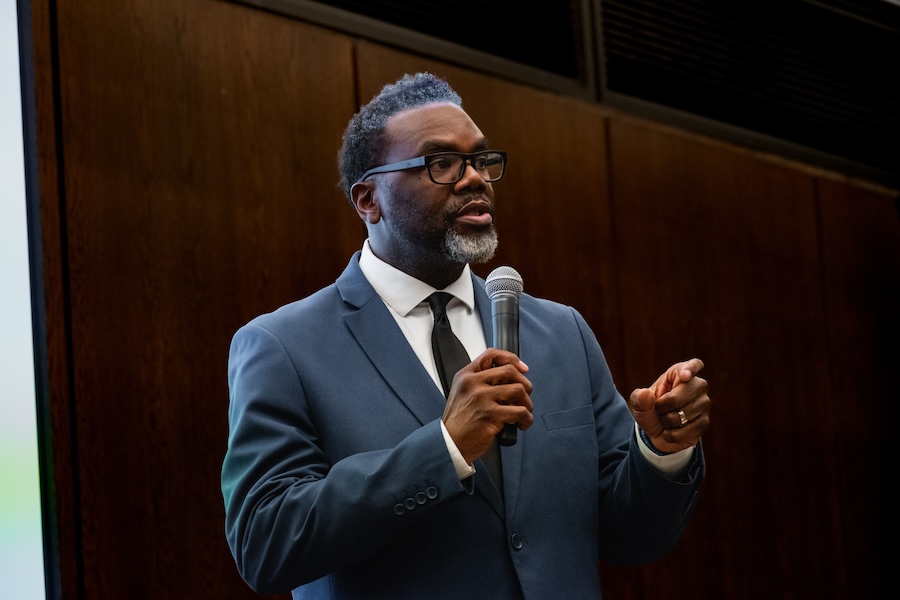
Chicago Mayor Brandon Johnson confirmed Saturday that the city is expecting a massive surge in federal resources aimed at immigration enforcement operations to arrive in the coming days, seemingly confirming President Donald Trump’s plan to combat crime and illegal immigration in the Windy City.
Johnson — whose approval rating currently sits near record lows — announced Saturday morning that he will be signing an executive order aimed at “stopping” the federal government’s efforts. According to a report from CNN, the mayor’s order will provide guidance and directives to the city’s agencies and law enforcement “in the midst of escalating threats from the federal government.”
The outlet further reported that the Trump Administration is planning a “major immigration enforcement operation” in Chicago as soon as next week, according to multiple sources familiar with the plan.
Johnson’s order “affirms” that Chicago police will not “collaborate with federal agents on joint law enforcement patrols, arrest operations, or other law enforcement duties including civil immigration enforcement.”
The order further “urges” federal law enforcement personnel operating in the city to refrain from wearing masks, to wear and use body cameras and to identify themselves to members of the public with names and badge numbers.” The “guidance” comes as U.S. Immigration and Customs Enforcement (ICE) agents have suffered a record-breaking, 830 percent surge in attacks directed against them, while multiple left-wing activists have been arrested for doxxing agents and their families.
Johnson’s order also directs city departments to “pursue all available legal and legislative avenues to resist coordinated efforts from the federal government.” The mayor concluded by telling the president to “stand down” and refrain from deploying federal assets to the city, though his efforts will likely prove unsuccessful.
California Attorney General Rob Bonta filed a lawsuit against the federal government aiming to stop the president’s federal takeover of the state’s National Guard earlier. That effort ultimately proved unsuccessful after a federal appeals court ruled that the president does indeed have the power to deploy National Guard personnel in order to quell the unrest that gripped Los Angeles for several days.
The expected surge in Chicago comes after President Trump federalized the D.C. Metropolitan Police and took control of the city’s law enforcement operations under the Home Rule Act. While Trump can only take direct control in the nation’s capital, he has hinted at federal surges in additional blue cities in order to combat crime, disorder and illegal immigration.
“After we do this will go to another location, and we’ll make it safe, also. We’re going to make our country very safe,” the president told reporters in the Oval Office last week. “We’re going to make our cities very, very safe. Chicago’s a mess.”
He went on to refer to Mayor Johnson as “grossly incompetent” and said his administration will be taking an increased role in tackling crime in the Windy City. “That’ll be our next one after this. And it won’t even be tough. And the people in Chicago, Mr. Vice President, are screaming for us to come,” Trump said while turning to Vice President Vance.
“They’re wearing red hats, just like this one. But they’re wearing red hats. African-American ladies, beautiful ladies, are saying, ‘please, President Trump, come to Chicago.’ Please. I did great with the black vote, as you know.”
The president’s efforts in Washington D.C. have indeed proven effective, according to city Mayor Muriel Bowser. While a massive Trump critic, the mayor conceded that carjackings have declined by 87 percent since the federal takeover began, down from record highs since 2018.
Since August 7, overall crime in the district is down 15 percent when compared with the same 20-day period in August of last year. The drop in violent crime has been even more significant, down 45 percent over the same time period, Bowser shared.
