
Sponsored Plus
NEW: Trump Becomes The Latest To Put Big Oil On Notice
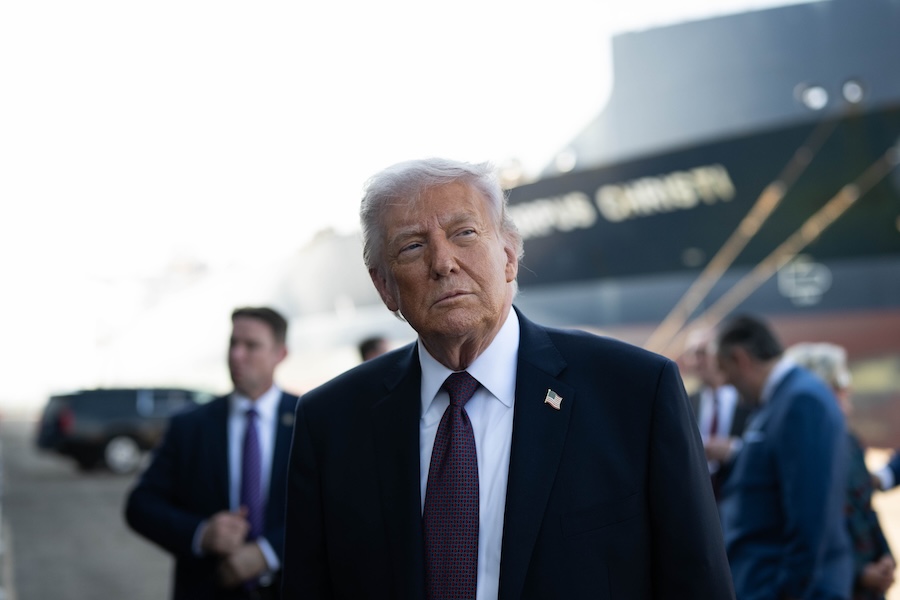
President Trump has spent years championing American energy dominance. But last week, he delivered a message Big Oil probably did not expect to hear: You’re making too much money.
“I don’t like it, and I should be the last one to say it because I’m a big free enterprise guy,” the president said.
Trump singled out ExxonMobil and Chevron after both reported enormous quarterly profits, telling reporters the companies were “making too much money” and arguing that when profits explode, companies should give some of that back through lower prices for consumers. “They better cut the retail price, the consumer price,” Trump said.
Indeed, criticism of Big Oil is no longer neatly confined to environmental activists. Republican leaders such as Florida Gov. Ron DeSantis and South Carolina Gov. Henry McMaster have opposed new offshore drilling as harmful to coastal communities and fishermen. And in 2021, Sen. Chuck Grassley accused Washington of providing “welfare to Big Oil” through refinery exemptions and other giveaways.
The rise of the Make America Healthy Again (MAHA) movement is making executives even more nervous. Trump’s White House describes MAHA as an effort to confront the “root causes” of America’s childhood chronic-disease crisis through science and prevention, while its reports have highlighted potential risks from synthetic chemical exposure. For a growing part of the right, corporate accountability and transparency are health issues, not just environmental ones.
As with any sector, advocates say to follow the money. In 2024, the oil and gas industry spent more than $150 million lobbying the federal government, according to OpenSecrets data – one of its biggest annual lobbying totals in years.
Perhaps not coincidentally, the EPA eliminated the office where scientists conducted work on pollutants such as PFAS, known as “forever chemicals.” A major focus of the MAHA movement, these chemicals take years to break down naturally once released into the environment. Studies have linked PFAS to cancer, immune problems, infertility, and other negative health effects.
History gives Americans another reason to demand transparency. Tetraethyl lead was understood to be highly toxic before leaded gasoline reached consumers in the 1920s. Early public-health advocates sounded alarms, and workers died from exposure – yet the industry nevertheless defended leaded fuel for decades.
Now, history may be repeating. Washington recently halted an $18 million study examining what happens when gas pollution is removed from the homes of asthma sufferers. Even with just 85 participants, researchers found “far fewer asthma attacks, emergency room visits and missed days of work,” while kitchen nitrogen-dioxide levels fell a whopping 70 percent.
That matters because nitrogen dioxide irritates the respiratory system, and research has linked indoor NO2 exposure with worsened asthma symptoms and reduced lung function in children with asthma.
With both President Trump and MAHA leaders like HHS Secretary Robert F. Kennedy Jr. calling out corporations that put profits over Americans’ health, the days of industry lobbying for secrecy and special treatment may soon be over.
