
Politics
NEW: Trump Drops The Hammer On Brazil Over Censorship, Human Rights Abuses
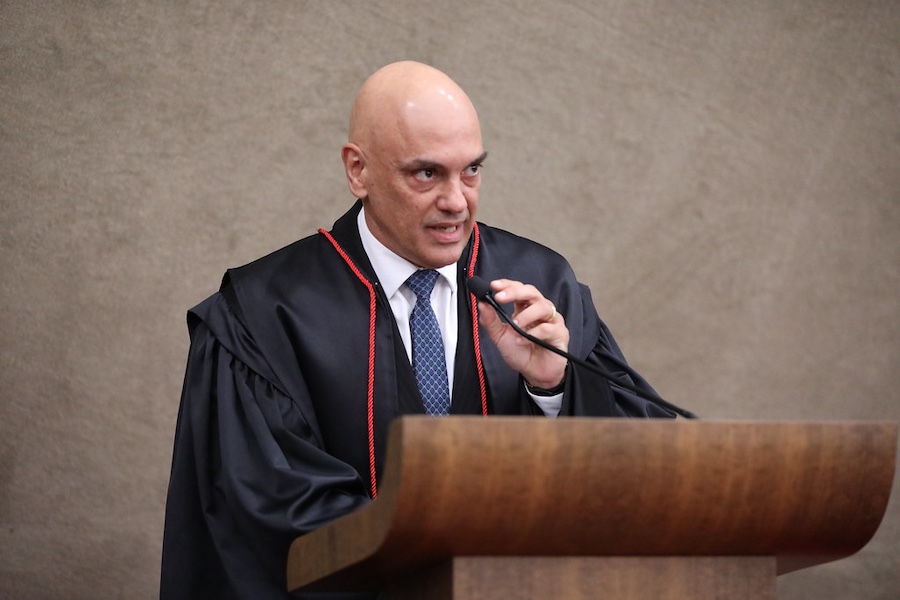
President Donald Trump announced Wednesday that he will be placing 50 percent tariffs on Brazil over the South American nation’s censorship of American tech companies and human rights abuses.
Trump signed a series executive actions on Wednesday that, among other things, imposes a 50 percent tariff on Brazil, a 50 percent tariff on certain copper products and closes a tax perk for all countries that allowed them to ship cheap packages to the U.S. duty-free.
The president had previously threatened to slap new tariffs on Brazil in a letter to current President Luiz Inácio Lula da Silva last month, which referenced his government’s authoritarian crackdown on political opponents, including former President Jair Bolsonaro. The former Brazilian leader is facing an investigation and an upcoming trial accusing him of leading an “attempted coup” to stay in office after his controversial electoral defeat in 2022.
After Bolsonaro was narrowly defeated, he held a number of rallies in which he argued that the election was stolen due to widespread voter fraud. He opted not to use the military to challenge the results, defying calls from some hardliners. About a week after Lula took office, supporters of Bolsonaro trashed the nation’s Supreme Court Building in a protest similar to the January 6 Capitol protests.
A number of protesters have been sentenced to decades in prison for what amount to petty vandalism and trespassing charges, while hundreds more are expected to stand trial. In one instance, Débora Rodrigues dos Santos, a mother of two who had no prior offenses, was sentenced to 17 years in prison for writing “you lost, loser” on a statute outside the Supreme Court building. The Lula government has also arrested dozens of additional lawmakers, pundits and opposition figures while others have been forced to flee the country.
“I have seen the terrible treatment you are receiving at the hands of an unjust system turned against you. This should end immediately!” Trump wrote in a letter he sent to Bolsonaro earlier this month.
“I share your commitment to listening to the voice of the people and I am very concerned about the attacks on free speech – both in Brazil and in the United States – coming out of the current government. I have strongly voiced my disapproval both publicly and through our Tariff policy.”
Trump further warned that he would be raising tariffs on Brazil to 50 percent, up from the current 10 percent baseline, if the politically-motivated prosecution proceeded. With Wednesday’s executive order, the new tariff rate is set to take effect on August 1.
The U.S. has also slapped sanctions on Brazilian Supreme Court Justice Alexandre de Moraes, a key Lula ally who is widely seen as the main power player in the current regime. In addition to a final ruling on the 2022 presidential election, Moraes has rapidly expanded the court’s power and has issued a number of authoritarian rulings aimed at cracking down on “extremism” and “disinformation,” leading to arrests of thousands of political dissidents and the current case against Bolsonaro.
Moraes has also targeted social media sites like X, Telegram and Rumble with criminal prosecution and censorship. In 2024, he blocked X nationwide for alleged lack of compliance with his orders, leading to a public feud with platform owner Elon Musk.
“Coming shortly, 𝕏 will publish everything demanded by [Moraes] and how those requests violate Brazilian law,” Musk wrote in an April 2024 X post. “This judge has brazenly and repeatedly betrayed the constitution and people of Brazil. He should resign or be impeached.”
On Wednesday, the U.S. Department of the Treasury’s Office of Foreign Assets Control (OFAC) imposed sanctions on Moraes under the Global Magnitsky Act. These sanctions include blocking any property or assets he might have in the United States and prohibiting U.S. citizens or companies from conducting business with him.
Additionally, the U.S. Department of State revoked his visa and those of his immediate family members on July 18, 2025, citing his involvement in censorship and human rights violations.
