
Politics
NEW: Trump Raises Alarm Over Possible Iranian Missile Threat to America
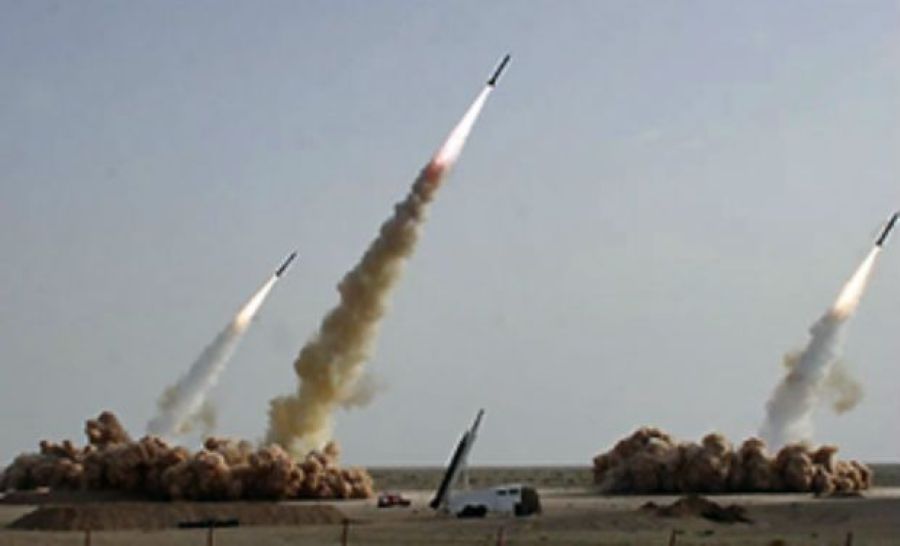
President Donald Trump is raising the alarm over Iran’s missile ambitions, warning that Tehran is working on weapons that could “soon reach the United States of America”, a stark reminder that while the U.S. homeland is not yet in range, American troops and bases across the Middle East already are.
Iran does not currently have an intercontinental ballistic missile capable of striking the United States, according to U.S. officials. But that has done little to calm concerns inside Washington, where Tehran’s missile arsenal is now a major flashpoint in nuclear talks and a growing threat to U.S. forces stationed throughout the Gulf.
Right now, Iran is widely believed to field the largest ballistic missile force in the Middle East. Its arsenal is made up largely of short- and medium-range ballistic missiles with ranges of up to about 2,000 kilometers, or roughly 1,200 miles. That is more than enough to put a long list of key American military sites in the region squarely in Tehran’s crosshairs.
Among the U.S. installations within reach are Al Udeid Air Base in Qatar, the forward headquarters for U.S. Central Command; Naval Support Activity Bahrain, home to the 5th Fleet; Camp Arifjan and Ali Al Salem Air Base in Kuwait; Prince Sultan Air Base in Saudi Arabia; Al Dhafra Air Base in the United Arab Emirates; and Muwaffaq Salti Air Base in Jordan.
That threat is not theoretical. In January 2020, Iran fired more than a dozen ballistic missiles at U.S. positions in Iraq after the U.S. strike that killed Iranian Gen. Qassem Soleimani. Dozens of American service members later suffered traumatic brain injuries, underscoring how exposed forward-deployed U.S. personnel remain.
As tensions rise, the U.S. has responded by beefing up its military posture in the region. Carrier strike groups, destroyers and Air Force fighter aircraft have surged into and around the Middle East, giving Washington added muscle as diplomacy with Tehran remains shaky.
Iran’s missile capabilities also pose a potential threat to parts of Europe. Depending on where missiles are launched, experts say some southeastern European countries, including Greece, Bulgaria and Romania, could fall within reach. But deeper strikes into Europe would require systems longer-range than any Iran has publicly shown as operational.
The more troubling question is whether Iran could eventually hit the United States itself.
For now, the answer is no. To reach the U.S. East Coast, Iran would need a missile with a range of roughly 10,000 kilometers — far beyond its known capabilities. Still, U.S. intelligence agencies have warned that Iran’s space launch program could provide the technological building blocks for a future ICBM if Tehran decides to go down that road.
The Defense Intelligence Agency recently assessed that Iran “has space launch vehicles it could use to develop a militarily-viable ICBM by 2035 should Tehran decide to pursue the capability.”
RELATED: WATCH: Fox News Star Forced To Evacuate During Live Broadcast As Iranian Missiles Strike Israel
That means the immediate danger is not a strike on New York or Washington, but on the tens of thousands of American troops, sailors and airmen already sitting inside Iran’s existing missile envelope.
The administration says that is exactly why the missile issue cannot be brushed aside as a side matter in nuclear negotiations. Secretary of State Marco Rubio has called Iran’s refusal to discuss limits on its ballistic missile program “a big problem,” arguing that delivery systems are inseparable from the broader nuclear threat.
Download the FREE Trending Politics App to get the latest news FIRST >>
