
Politics
NEW: U.S. Conducts Lethal Strike Against Venezuelan Thugs In The Caribbean
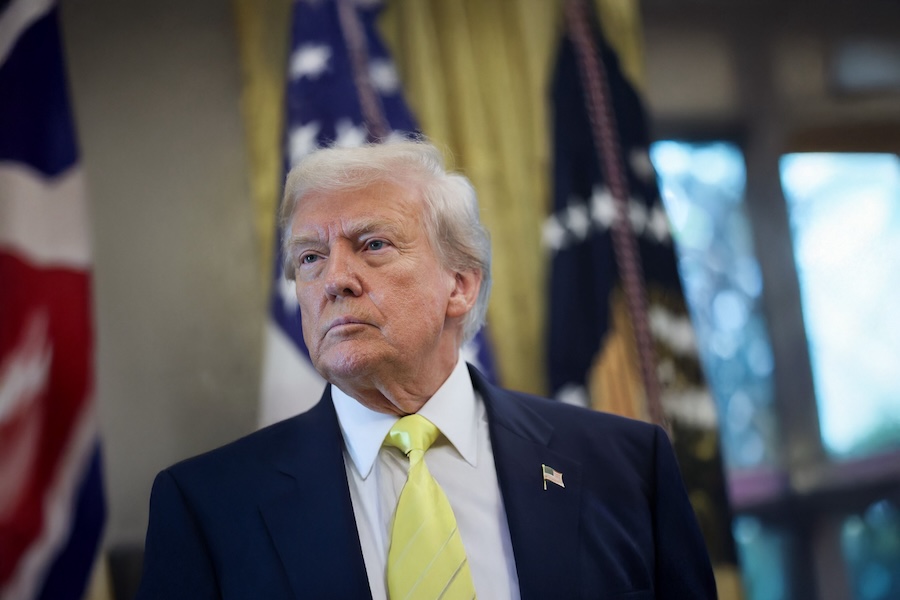
The United States has taken one of its boldest steps yet in the escalating standoff with Venezuela, carrying out a lethal strike on a narco-terrorist vessel in the southern Caribbean.
On Tuesday, President Donald Trump announced the action during an Oval Office event, bluntly telling reporters that the military “literally shot out a boat—a drug-carrying boat.” He said the vessel had departed Venezuela loaded with narcotics and posed a direct threat. “We just … shot out a boat … a lot of drugs in that boat,” the president added, underscoring his administration’s no-nonsense posture against smuggling operations.
Shortly after Trump’s remarks, Secretary of State Marco Rubio confirmed the details on X, declaring the action a “lethal strike” against a vessel operated by a “designated narco-terrorist organization.”
The strike was not an isolated maneuver but part of a larger U.S. buildup in the region. Over recent months, Washington has deployed a formidable array of assets to waters off Venezuela, including Aegis-equipped destroyers, an amphibious squadron, and a nuclear submarine. The force is supported by P-8 surveillance aircraft, helicopters, and Tomahawk-capable platforms, along with roughly 4,000 to 4,500 personnel.
While U.S. officials have framed these moves as enhanced counter-narcotics operations, foreign analysts have raised questions about whether they amount to “gunboat diplomacy” aimed at increasing pressure on Venezuelan President Nicolás Maduro.
Caracas, Venezuela; April 20 2023: Venezuelan President Nicolás Maduro participates in a press conference at the Miraflores Palace, the seat of government of Venezuela.
The administration has yet to provide details on the strike itself. Information regarding casualties, the specific identity of the group involved, and the exact method used to disable the vessel has not been released. The Pentagon and Southern Command have not issued formal statements, leaving many of the operational specifics unclear thus far.
What is clear is the political message: Washington is willing to escalate. By labeling the operators of the vessel as narco-terrorists, Rubio placed the criminal activity on the same level as terrorism, raising the stakes for any group linked to Maduro’s regime.
Maduro wasted no time in denouncing the strike, blasting it as an “extravagant, immoral, and criminal” assault on his nation’s sovereignty. Caracas quickly mobilized troops along its coast and near the Colombian border, while also calling for civilian militia forces to prepare for defense.
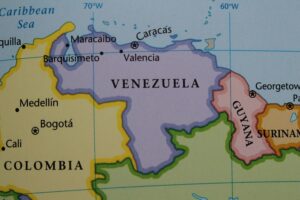
Close up of the country of Venezuela viewed on a wold map as a travel concept. Venezuela on a map
The Venezuelan leader accused the U.S. of exaggerating or fabricating drug-trafficking threats in order to justify regime-change operations.
The strike highlights how far relations between Washington and Caracas have deteriorated. Just this summer, Maduro and several of his top officials were formally designated terrorists by the United States, with the bounty on Maduro himself raised to $50 million. The Trump administration has repeatedly tied the Venezuelan regime to the Cartel de los Soles, a drug network allegedly operating with military involvement.
In the region, the show of force has prompted unease. Neighboring countries fear the buildup could spiral into intervention, even as most analysts believe the U.S. is not seeking a full-scale invasion. For now, the strike signals a sharpened edge in the U.S. campaign against drug trafficking and corruption tied to Venezuela’s leadership.
At home, Trump is framing the operation as a triumph of law enforcement and national security, aligning with his tough-on-crime agenda. What remains uncertain is whether this latest action will serve as deterrence—or as a spark for greater confrontation in the Caribbean.
