
Politics
NFL Legend Dies Suddenly At 45
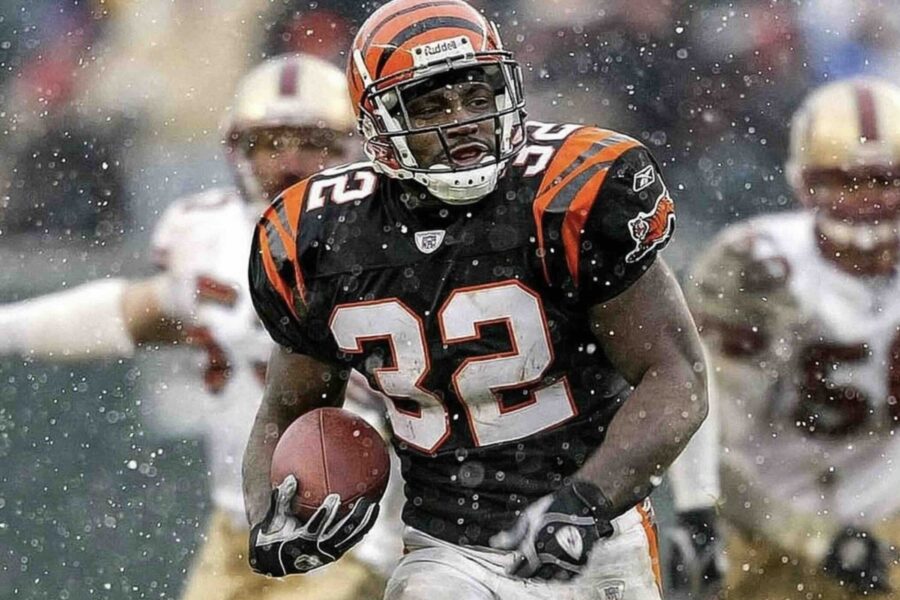
Former Cincinnati Bengals running back Rudi Johnson died this week. He was 45.
A member of Johnson’s family did not provide a cause of death but let it be known that he had been struggling in recent years with mental health, possibly resulting from chronic traumatic encephalopathy or CTE, a progressive and fatal brain disease caused by compounded blows to the head.
The family source said that prior to his death, Johnson devoted much of his time to helping others on and off the field in charitable causes that mattered most to him at the end of his life.
Johnson would have turned 46 next week.
Johnson was selected by the Bengals in the fourth round of the 2001 NFL Draft. He subbed in sporadically during his first two seasons before his hot streak began in his third season.
That year, he rushed for 957 yards and scored nine touchdowns. He played three more seasons for the Bengals, racking up a combined 4,000 yards and 36 scores, TMZ reported.
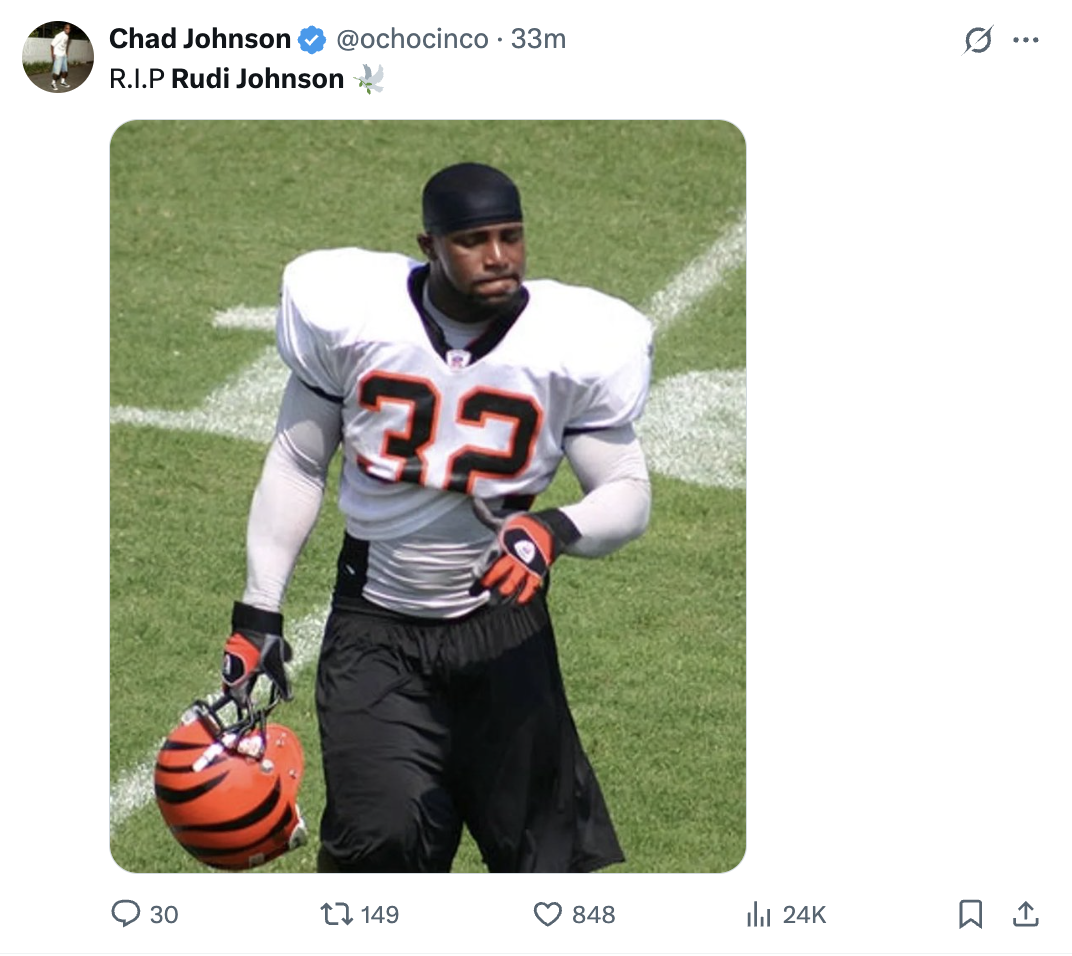
Johnson played his final season in 2008 with the Detroit Lions, signing a one-year contract that expired after he compiled 237 rushing yards, one rushing touchdown, 88 receiving yards, and one receiving touchdown.
“I don’t know, it was just that time to move on,” he said in an interview later that year about the end of his time with the Bengals.
“I think it was just a situation where my time had ran its course. And I kind of got the same feeling when the report came out last Monday that they were trying to trade me. [Being traded] was something I prepared myself for as best as I could and waited for the next situation to open up. And it presented itself in Detroit, and I’m content with that.”
The Ettrick, Virginia native played for Auburn, where his bruising style of hard-nosed running earned him the nickname “Auburn Rambler.” He was awarded SEC Player of the Year in 2000.
After going pro, Johnson launched his own foundation to support children and families in achieving self-reliance through community-based programs. Additionally, Johnson contributed significantly to a partnership with Be the Match to recruit more African Americans to participate in the National Bone Marrow Registry.
While it’s unclear if CTE contributed to Johnson’s death, a decline in mental health like the one he experienced is a symptom of the disease. CTE can only be discovered following a brain autopsy.
Other NFL players who took their own lives and were posthumously found to be suffering from CTE include Dave Duerson of the Chicago Bears and New York Giants; former New England Patriots tight end Aaron Hernandez; Andre Waters of the Philadelphia Eagles; and Kansas City Chiefs’ former linebacker Terry Long.
