
Politics
NORAD Scrambles Fighters After Russian Incursion Into North America
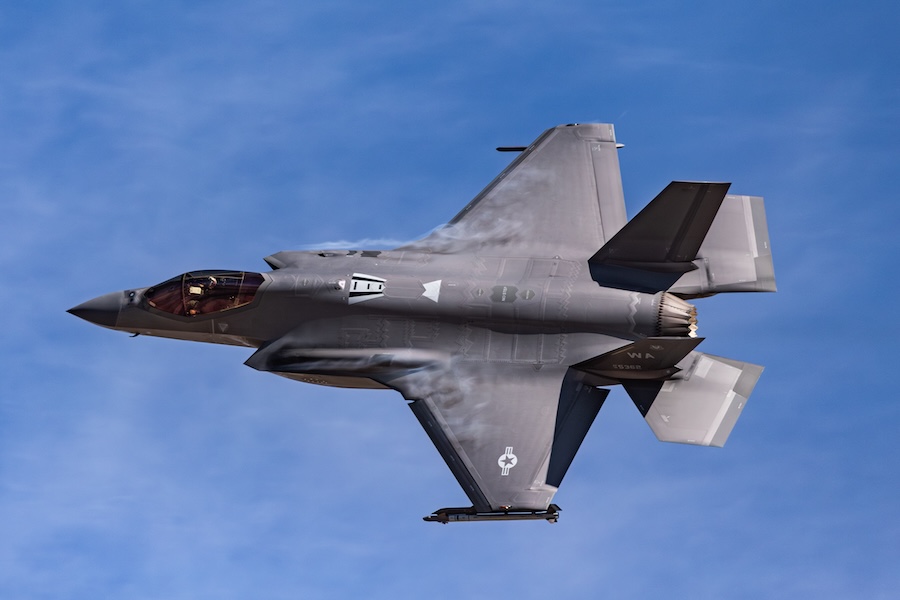
The North American Aerospace Defense Command scrambled multiple U.S. and Canadian military aircraft on Wednesday after two Russian TU-142 planes were detected operating inside the Alaskan and Canadian Air Defense Identification Zones, according to a NORAD press release.
NORAD said the Russian aircraft were tracked on March 4 as they flew through the identification zones, prompting a sizable joint response from the United States and Canada. The command launched two U.S. Air Force F-35 fighter jets, two F-22 fighter jets, four KC-135 tankers, one E-3 AWACS surveillance aircraft, two Canadian CF-18 fighter jets and one CC-150 tanker to identify, monitor and intercept the Russian bombers.
Despite the response, NORAD said the aircraft never entered American or Canadian sovereign airspace. Officials stressed that the planes remained in international airspace throughout the encounter and that the activity was not considered a direct threat.
Still, the intercept served as another reminder of the military pressure that Russia continues to apply near North American territory. Flights like these are not unusual, especially in the Arctic region, where Russian long-range aviation missions have become a recurring challenge for air defense forces.
NORAD noted that this type of Russian activity inside the Alaskan and Canadian ADIZ “occurs regularly” and is “not seen as a threat.” Even so, the command moved quickly to ensure the aircraft were positively identified and closely watched from start to finish.
An Air Defense Identification Zone is not the same as sovereign airspace. Instead, it is a section of international airspace that begins where a nation’s territorial airspace ends.
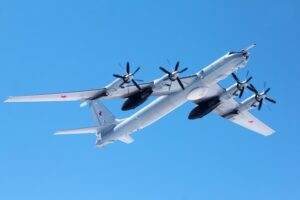
SAINT-PETERSBURG, RUSSIA, JULY 22, 2021: Russia Naval aviation anti-submarine plane Tupolev Tu-142 in flight
Aircraft entering an ADIZ are expected to identify themselves so military authorities can determine whether they pose any possible security concern. That is where NORAD’s layered defense system comes into play.
The binational command, which is responsible for defending the skies over the United States and Canada, uses satellites, ground-based radar, airborne radar platforms and fighter aircraft to detect and track approaching aircraft. When necessary, it can deploy interceptors and support aircraft to shadow foreign planes and maintain situational awareness.
The TU-142 is a long-range maritime patrol and anti-submarine aircraft developed by Russia and often used for reconnaissance and strategic patrol missions. Its presence near North America is not unprecedented, but each flight is treated seriously by U.S. and Canadian defense officials.
The March 4 intercept also showed the level of coordination between American and Canadian forces under the NORAD umbrella. Both countries contributed fighter aircraft and refueling assets, while the E-3 AWACS provided airborne surveillance and battle management support during the operation.
NORAD did not say how long the Russian aircraft remained in the identification zones or where exactly the intercept occurred, but the command made clear that it remains prepared to respond whenever Russian military aircraft approach North America’s defensive perimeter.
“NORAD remains ready to employ a number of response options in defense of North America,” the command said in its statement.
The latest incident may not have crossed into sovereign airspace, but it showed once again that NORAD is keeping close watch over the northern approaches and is prepared to act the moment foreign military aircraft test the edge of North America’s defenses.
