
Politics
Obama-Appointed Judge Sides With Trump Admin In Closely-Watched Immigration Case
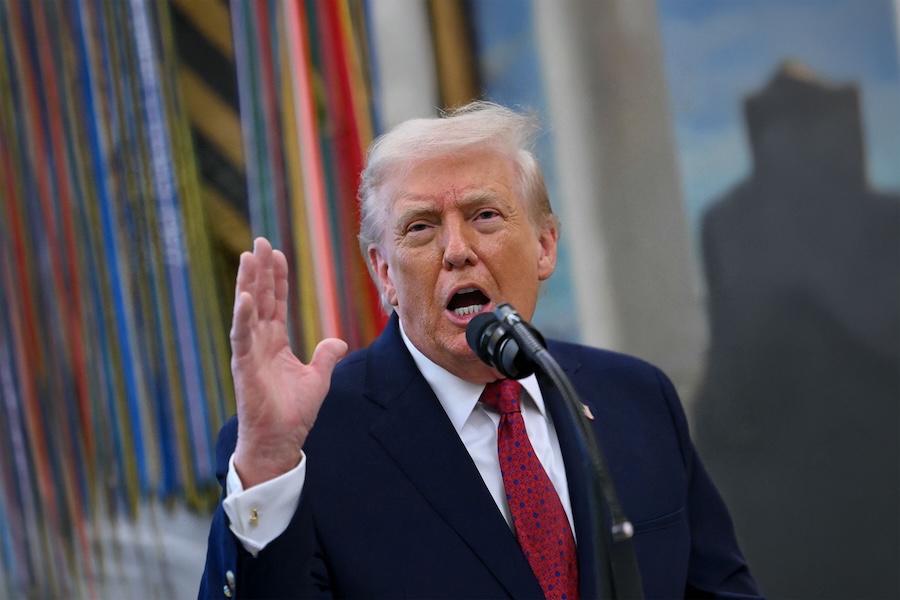
President Donald Trump notched a significant legal victory on Friday when an Obama-appointed federal judge cleared the way for the Trump Administration to terminate temporary status for thousands of Somali nationals currently residing in the United States.
Temporary Protected Status, commonly known as TPS, is a form of temporary immigration relief created by Congress through the Immigration Act of 1990. Under the program, the Secretary of Homeland Security may designate a foreign country for TPS when conditions there — such as ongoing armed conflict, an environmental disaster that substantially disrupts living conditions, or other extraordinary and temporary circumstances — make it unsafe for nationals of that country to return.
Eligible individuals already present in the United States who meet continuous residence and presence requirements, and who are not barred by certain criminal or security grounds, may register for TPS. Those granted the status receive protection from removal or detention and authorization to work in the United States for the duration of the designation, which initially lasts between six and 18 months and may be extended following periodic reviews of country conditions.
Somalia has held a TPS designation continuously since 1991, initially based on extraordinary and temporary conditions and later also on ongoing armed conflict. On January 14, 2026, the Department of Homeland Security published a notice in the Federal Register terminating the designation, with an effective date of March 17, 2026.
Then-Secretary Kristi Noem stated that conditions in Somalia had improved sufficiently that the country no longer met the statutory criteria for designation. The termination affected approximately 1,100 Somali nationals with TPS, while U.S. Citizenship and Immigration Services sources indicated roughly 2,471 current holders and 1,383 pending applications.
Four individual Somali nationals and two advocacy organizations, African Communities Together and the Partnership for the Advancement of New Americans, filed suit in the U.S. District Court for the District of Massachusetts challenging the termination. U.S. District Judge Allison Burroughs, appointed by President Barack Obama, issued an administrative stay in March 2026 that prevented the termination from taking effect while litigation proceeded. The case was later paused pending a related Supreme Court decision.
POLL: Should Sanctuary Cities Be Banned From Federal Funding?
🚨 IT'S OFFICIAL: Temporary Protected Status for Somali migrants is formally TERMINATED by President Trump, following an activist judge caving to the Supreme Court, per DHS
ONE MORE COUNTRY REMAINS for TPS: Ethiopia, held up by a judge
SEND 👏🏻 THEM 👏🏻 BACK pic.twitter.com/YSNax1qIfj
— Eric Daugherty (@EricLDaugh) August 15, 2026
On June 25, the Supreme Court held that the TPS statute bars judicial review of non-constitutional claims challenging the designation, extension, or termination of a country’s TPS status. The provision states there is “no judicial review of any determination” by the Secretary “with respect to the designation, or termination or extension of a designation, of a foreign state.”
The majority also concluded that an equal-protection challenge to the termination of Haiti’s designation was unlikely to succeed. The ruling cleared the way for the administration to end TPS for Haiti (affecting roughly 350,000 people) and Syria (affecting about 6,000).
Following the Supreme Court decision, the government moved to lift the stay in the Somalia case. Plaintiffs amended their complaint to focus on constitutional claims under the Fifth Amendment, including equal-protection and due-process arguments, as well as a claim that the Secretary lacked statutory authority to terminate the designation. Judge Burroughs initially continued temporary relief while considering the new filings.
On Friday, however, Judge Burroughs issued a memorandum and order denying the plaintiffs’ emergency motion for postponement of the agency action and for a preliminary injunction, and granting the government’s motions to lift the administrative stay. In the order, she stated that she was “bound … to view things through the Mullin prism.”
“Plaintiffs have made a convincing showing that they will suffer irreparable harm if the injunction is withheld … and the balance of hardships and the public interest also favor Plaintiffs, given that the government has made no showing that maintaining TPS status for the duration of this litigation would impose an undue burden,” she added.
Nevertheless, the court concluded that the plaintiffs had not demonstrated a likelihood of success on the merits of their claims in light of the Supreme Court’s interpretation of the judicial-review bar and related holdings. As a result, the stay was lifted and the termination of Somalia’s TPS designation was allowed to proceed.
RELATED: Court Issues Shock Ruling On Trump’s Ballroom
