
Politics
Nike To Be Removed From S&P 100 As Dramatic Decline Continues
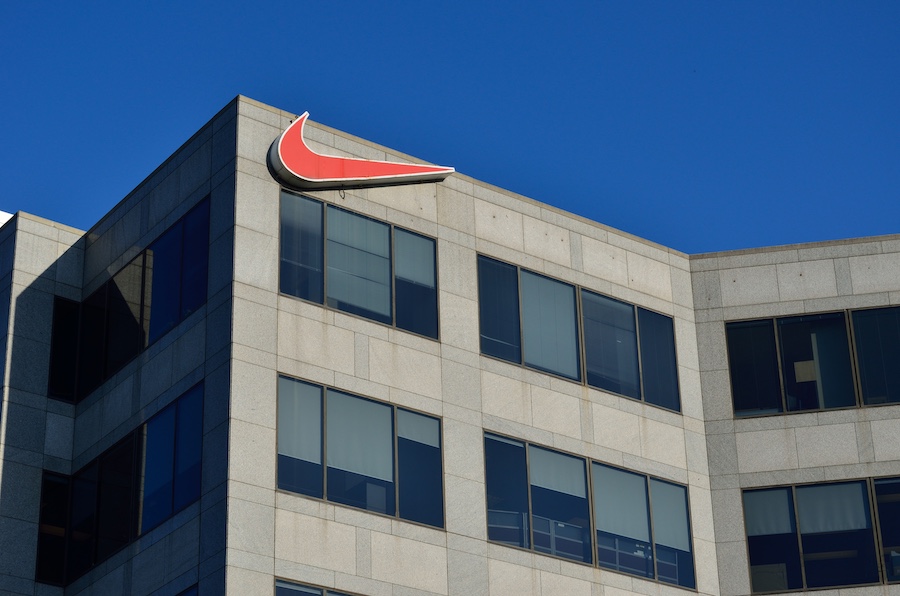
S&P Dow Jones Indices announced Friday that Nike Inc. will be removed from the S&P 100 index, effective prior to the open of trading on September 21, 2026.
The change is part of the provider’s regular quarterly rebalance, which is designed to keep each index representative of its intended market-capitalization range. Nike will remain a constituent of the broader S&P 500.
The S&P 100 is a subset of the S&P 500 that focuses on some of the largest and most established U.S. companies. Nike had been a member for nearly 18 years after joining in December 2008.
Three other companies will also leave the S&P 100 on the same date; Honeywell Aerospace, Simon Property Group, and Colgate-Palmolive. They will be replaced by four information-technology firms in Dell Technologies, Palo Alto Networks, Arista Networks, and Sandisk.
The removal follows a multi-year decline in Nike’s share price and market value. The stock closed at $38.40 on September 4, a level last seen around 12 years earlier. From its November 2021 peak, the shares have fallen roughly 76 to 79 percent.
POLL: Should Barack And Michelle Obama Stay Out Of Politics?
BREAKING: After falling -80% from its record high, Nike, $NKE, will be removed from the S&P 100 at the end of this month, ending a near 18-year run in the index.
The stock has now erased -$230 billion in market cap since its all time high.
A collapse for the history books. pic.twitter.com/jGr2R3JswU
— The Kobeissi Letter (@KobeissiLetter) September 5, 2026
Nike’s market capitalization, which reached approximately $264 billion to $280 billion at the end of 2021, stood near $57 billion in early September 2026, a reduction of more than $200 billion. Over the same five-year period the S&P 100 itself rose substantially
Operational results have been mixed. In fiscal 2026, which ended May 31, Nike reported revenue of $46.4 billion, down 2 percent on a currency-neutral basis. Sales in Greater China, which was seen as a key expanding market for the company, also declined 11 percent.
Management has cited challenges tied to an earlier direct-to-consumer strategy that reduced wholesale partnerships, later efforts to rebuild those relationships, increased competition, and softer demand in certain markets. The company has also navigated tariff-related costs and later recorded a one-time benefit from a tariff refund.
Index-tracking funds that follow the S&P 100 will adjust their holdings to reflect the change, which can produce some mechanical selling of Nike shares around the effective date. Because the company stays in the S&P 500, the overall impact on passive ownership is more limited than a full deletion from the larger index would be.
Nike has also taken a series of public positions on social issues over the past decade. In 2018 the company featured former NFL quarterback Colin Kaepernick as a prominent face of its 30th-anniversary “Just Do It” campaign, using the tagline “Believe in something. Even if it means sacrificing everything.” The campaign referenced Kaepernick’s national-anthem protests.
In 2020, after the death of George Floyd, Nike released a “For Once, Don’t Do It” message addressing racism and later pledged tens of millions of dollars to organizations focused on “social justice,” education, and economic opportunity in black communities.
The company also canceled a planned sneaker featuring the Betsy Ross flag after Kaepernick and others raised concerns about the design’s historical associations. Additional campaigns have addressed equality and inclusion.
RELATED: Buc-ee’s CEO Says Company Will Prioritize ‘Conservative, Business-Friendly’ States For Expansion
