
Politics
REPORT: Trump Set For Massive Victory That Could Cripple Administrative State
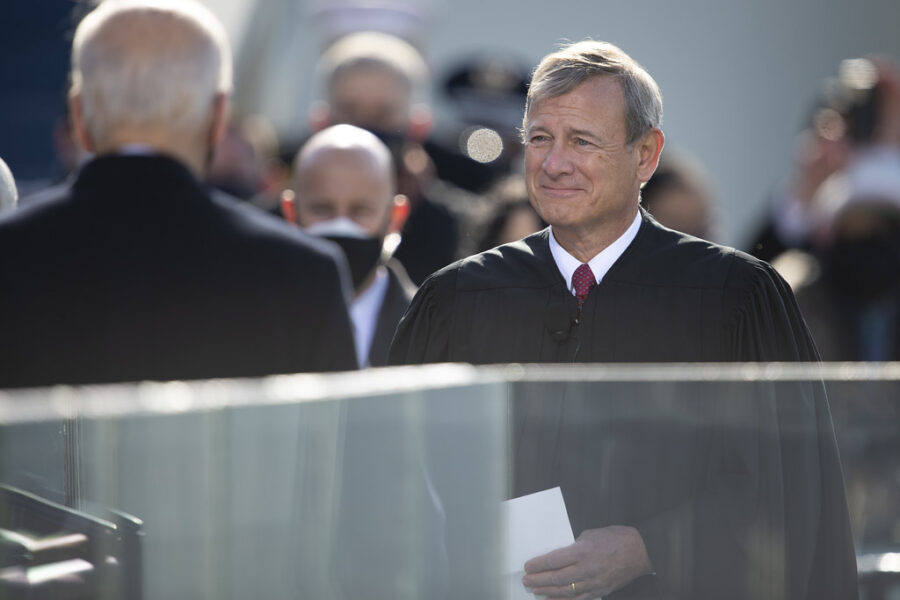
A newly empowered Trump administration may soon test its powers to cripple the administrative state after a groundbreaking decision by the U.S. Supreme Court granting the president broad authority to fire leaders of the Federal Trade Commission.
On the heels of that decision is another examining whether President Donald Trump is within his purview to fire five members of various independent agencies, an outcome that could expand his power and have far-reaching implications for executive authority.
The high court announced last week that it is revisiting the 1935 Humphrey’s Executor v. United States decision, which paved the way for the FTC, the Securities and Exchange Commission, and various labor boards to be insulated from presidential interference.
Hans von Spakovsky, a legal fellow at the conservative Heritage Foundation, told Fox News that the decision is on “life support.”
“The Constitution says the president is the head of the executive branch,” von Spakovsky told Fox News Digital. “That means, just like the CEO of a big corporation, they get to supervise and run the entire corporation, or in this case, the entire executive branch, and you can’t have Congress taking parts of that away from him and saying, ‘Well, they’re going to keep doing executive branch things, including law enforcement, but you won’t have any control over them.’”
Last week, Trump announced the firing of a Biden appointee to the FTC. The individual sued, prompting the Supreme Court to revisit Humphrey.
An initial 6-3 ruling allows Commissioner Rebecca Slaughter to remain in her seat while justices review the 1935 decision, which found that Franklin D. Roosevelt exceeded his authority in firing a commissioner at the FTC.

Slaughter cited the case in her defense, saying commissioners cannot be fired by the president without cause, such as malfeasance or negligence.
Joshua Blackman, a professor at South Texas College of Law, told Fox News that the overturning of Humphrey would affect other areas of the administrative state, which have, until now, asserted their independence.
“I think this ruling will necessarily reach beyond the FTC,” Blackman said. “The only question is whether they maintain that the Federal Reserve is different.”
The high court earlier this month found that the Federal Reserve is a “quasi-private” entity. A second decision involving Governor Lisa Cook, whom Trump is attempting to remove, is still pending.
Given the court’s recent history of decisions crippling the power of independent agencies, Von Spakovsky said it’s unsurprising to see Humphrey finally before the justices. A 2019 decision narrowed the Sarbanes-Oxley Act by stripping independence from an administrative oversight board, as well as the 2019 decision granting Trump the ability to fire the Consumer Financial Protection Bureau director, were hints about the direction the court was heading, he said.
