
Politics
NEW: ‘RINO’ Senator Draws Formidable Primary Challenger
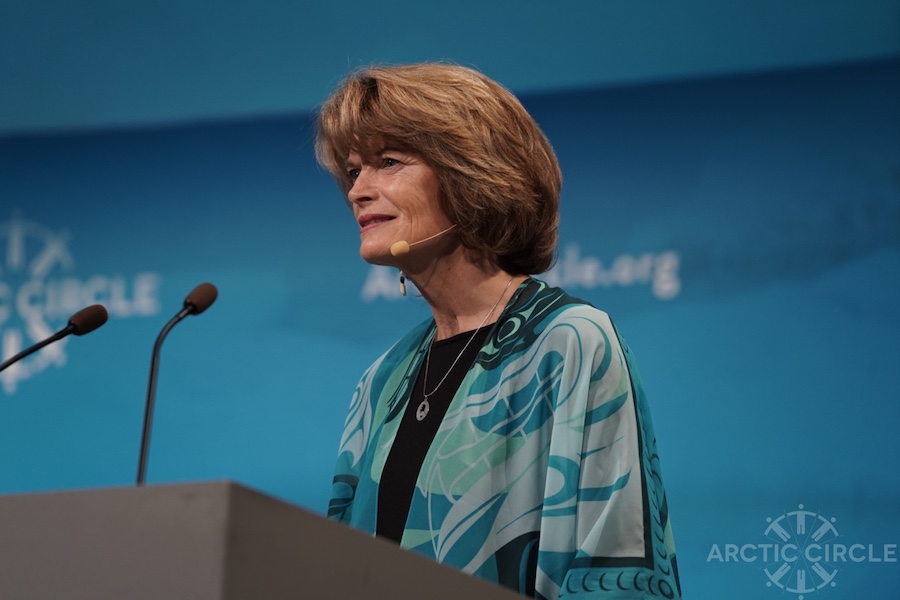
Alaska Governor Mike Dunleavy is set to announce a primary challenge to Senator Lisa Murkowski (R-AK), the four-term Republican senator whose overall approval rating has plunged to record lows in recent weeks.
“He’s not going to quit his term,” a “top source” close to the governor told Fox News, indicating that he will not be challenging Senator Dan Sullivan in the state’s next Senate race in 2026. The source, who used to work closely with Dunleavy, added that Governor Sarah Palin’s decision to resign as governor to serve as John McCain’s running mate did not work out.
Dunleavy “cares deeply about and wants Alaska to succeed,” the source said, adding that the governor is committed to keeping the character of what is often called the nation’s last frontier intact.
“But he knows that (being in Washington) is the only way to get things done,” the source said, adding that Dunleavy was the second governor to endorse Trump in 2016, and that he has maintained a close relationship with President Trump throughout his time in office.
“He’s not about an ego and pushing himself in front of the cameras. He gets stuff done … He’s not like, ‘please put me on this committee’ or ‘I have to attend this ball’. He doesn’t like those types of things,” the source added.
“Trump has talked to him before about running and wants him to run.” Dunleavy was notably present when Trump met with Russian President Vladimir Present for a high stakes summit in Anchorage earlier this month.
“Obviously there are a lot of frustrations with Senator Murkowski,” a second source told Fox News, adding that Trump’s rocky relationship with her is “no secret.”
“Governor Dunleavy has been not only a successful governor, but a pretty strong ally for him. So it’s only natural that he’d be hearing that from Alaskans — but also from folks in the broader MAGA movement,” the second source added.
Murkowski has indeed clashed with President Trump and voted against his agenda on numerous occasions since 2017. Notable deviations include her 2021 vote to impeach Trump after the January 6 Capitol protests, a vote to extend citizenship to DACA recipients in 2018, and a vote to block emergency funding for a border wall in 2019.
The senator did come through as a decisive vote in passing the president’s “Big Beautiful Bill” earlier this year, a massive spending package that contained a number of the president’s most important legislative items. The vote appears to have tanked Murkowski’s approval among independents and Democrats, however, which had been quite high.
According to a recent poll from Alaska Survey Research Murkowski’s net approval rating has fallen from +28 among self-described moderates in April to just two points in the green in the August survey, a decline of 26 percentage points in just a few months. The progressive left had an even bigger drop, as Murkowski’s favorability rating among the demographic dropped from +54 to an astonishing -21 between April and August.
Her approval among conservative voters is also underwater by 64 percentage points, a number that could provide decisive in a primary matchup with Dunleavy.
Murkowski has served in her position since 2002, when she was appointed by her father, then-Alaska Governor Frank Murkowski, who left office with historically low favorability. She most recently survived a primary challenge from a Trump-backed candidate in 2022, which is largely credited to the state’s ranked-choice voting system, which allows voters to rank their candidates in order of preference.
If no candidate secures north of 50 percent in the primary the candidate with the fewest votes is eliminated, and their votes are redistributed to the voters’ next preferences. This process repeats until one candidate achieves a majority.
Murkowski managed to defeat Trump-endorsed Kelly Tshibaka thanks to the ranked choice system, as the incumbent received 77 percent of Democratic Party candidate Patricia Chesbro’s second choice votes.
Murkowski is next up for re-election in 2028, though she has also left the door open to a gubernatorial bid.
