
Politics
Russian Bombers Near Alaska Spark NORAD Intercept
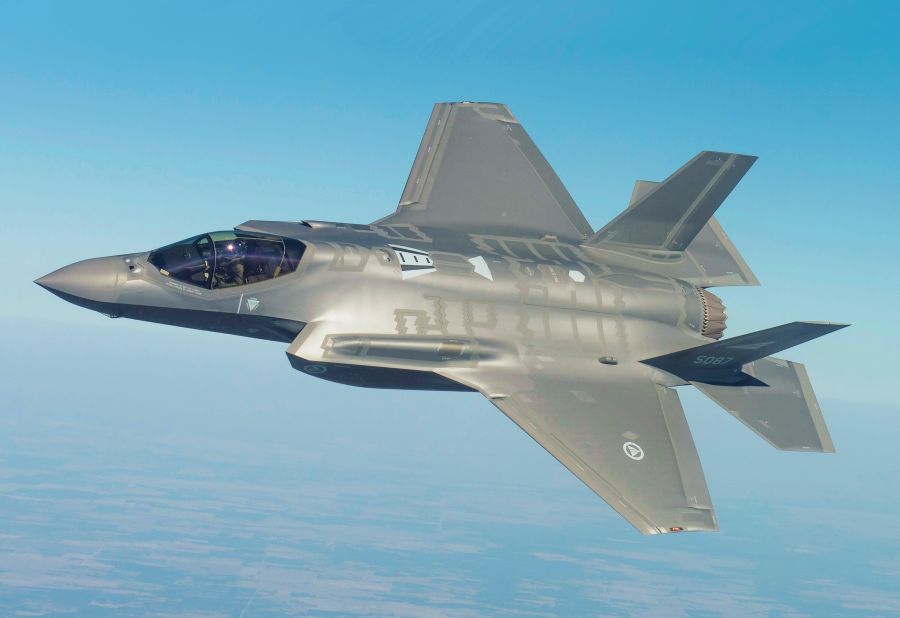
NORAD scrambled U.S. fighter jets Thursday after tracking Russian military aircraft operating inside the Alaskan Air Defense Identification Zone, a strategically sensitive buffer area off the U.S. coast.
The North American Aerospace Defense Command said it launched two F-16s, two F-35s, one E-3 and four KC-135s “to intercept, positively identify, and escort the aircraft until they departed the Alaskan ADIZ.”
“The Russian military aircraft remained in international airspace and did not enter American or Canadian sovereign airspace,” NORAD said in a press release. “This Russian activity in the Alaskan ADIZ occurs regularly and is not seen as a threat.”
NORAD said it identified two Russian Tu-95 bombers, two Su-35 fighters and one A-50 aircraft during the operation. The aircraft stayed outside U.S. and Canadian sovereign airspace, the command said.
The ADIZ is not sovereign airspace, but it is a designated region where aircraft are expected to identify themselves. It functions as an early-warning zone because of its proximity to Russia and the Bering Strait.
“NORAD employs a layered defense network of satellites, ground-based and airborne radars and fighter aircraft to detect and track aircraft and inform appropriate actions. NORAD remains ready to employ a number of response options in defense of North America,” NORAD said in its statement.
The intercept came as the U.S. continues to build up military presence overseas, including moving major naval assets toward the Middle East. Kremlin spokesman Dmitry Peskov urged restraint as tensions remain high in the region.
🇺🇸🇷🇺 Russia Flies Near Alaska’s Airspace
NORAD confirms monitoring of a Russian formation: 2 Tu-95 bombers, 2 Su-35 fighters and an A-50 AWACS plane.
All aircraft stayed in international airspace and were escorted until leaving the area. Is Moscow testing boundaries? #NORAD… pic.twitter.com/88NW4ihigo— The War Journal (@Thewarjurnal_) February 20, 2026
“Russia continues to develop relations with Iran, and in doing so, we call on our Iranian friends and all parties in the region to exercise restraint and caution, and we urge them to prioritize political and diplomatic means in resolving any problems,” Peskov said Thursday, according to Reuters.
The USS Gerald R. Ford, the world’s largest aircraft carrier, and its strike group deployed from the Caribbean Sea toward the Middle East in early to mid-February. The carrier was reportedly seen transiting through the Strait of Gibraltar into the Mediterranean Sea this month. The Ford is joining the USS Abraham Lincoln and three guided-missile destroyers that also arrived in the Middle East in February.
Meanwhile, Alireza Jafarzadeh, deputy director of the Washington office of the National Council of Resistance of Iran, said satellite images show the Iranian regime is trying to restore “2 trillion” uranium enrichment capabilities at the Isfahan complex, even as talks continue with the Trump administration.
U.S. Air Force and Navy strikes on June 22 targeted the Isfahan complex, along with Fordow and Natanz.
Download the FREE Trending Politics App to get the latest news FIRST >>
