
Politics
Sam Alito Humiliates Ketanji Brown Jackson With Brutal Rebuke
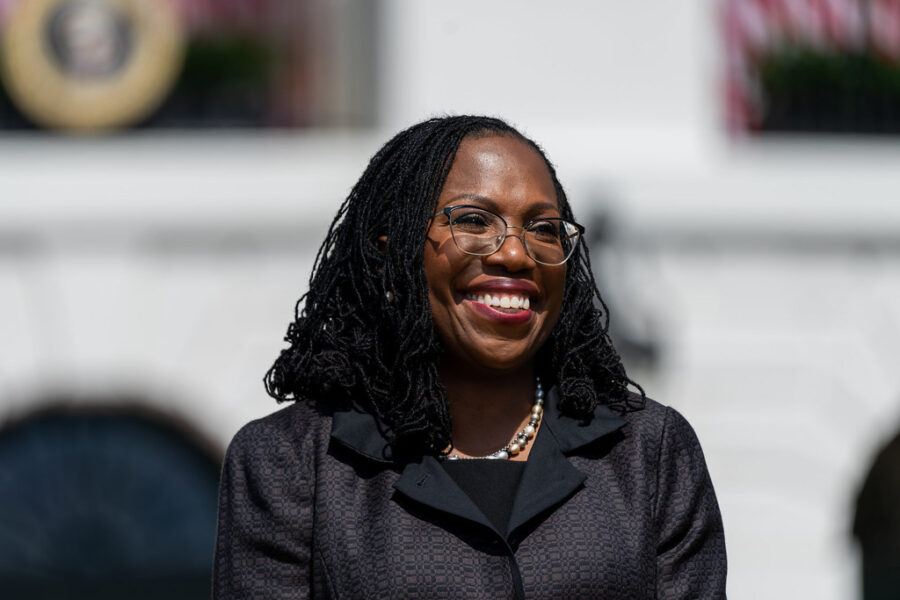
The Supreme Court of the United States moved swiftly on Monday to enforce its recent ruling striking down Louisiana’s congressional map, fast-tracking the case back to a lower court and setting off a sharp exchange between justices on opposite ends of the bench.
The order cuts short the usual 32-day waiting period before the court formally returns a case, clearing the way for Louisiana to move ahead with redrawing its districts ahead of the 2026 elections.
At issue is one of the state’s two majority-black House districts. With the court’s ruling now in effect, state Republicans are widely expected to eliminate one of those districts, creating a potential pickup opportunity for the GOP in November.
The decision drew a pointed dissent from Justice Ketanji Brown Jackson, who accused the majority of abandoning standard procedure.
In dissent, Jackson said the majority “unshackles itself” from “constraints,” arguing the court should have followed its normal timeline.
That triggered a sharp rebuttal from Justice Samuel Alito, joined by Justices Clarence Thomas and Neil Gorsuch. The trio called part of Jackson’s dissent “baseless and insulting.”
“The dissent in this suit levels charges that cannot go unanswered,” Alito wrote. “The dissent would require that the 2026 congressional elections in Louisiana be held under a map that has been held to be unconstitutional.”
No other justices publicly disclosed how they voted.
The fast action follows last week’s 6-3 ruling in which the court found Louisiana had unconstitutionally added a second majority-Black district, a decision that weakened a key provision of the 1965 Voting Rights Act.
RELATED: SCOTUS Issues Blockbuster Ruling That Could Decide The Midterms
The timing created immediate complications. Louisiana officials had already begun sending overseas ballots and preparing for early voting, raising concerns about whether election rules could be changed so close to the primary.
The court offered no clear direction on whether the map must be redrawn before this year’s contests, even as it has previously warned against altering election procedures too close to voting.
Republican Gov. Jeff Landry responded by delaying the state’s primary, giving lawmakers time to draft a new map. A lower court indicated the state would have that opportunity.
The legal fight over timing was intense. The group of voters who challenged the map urged the justices to immediately return the case, arguing delays would block Louisiana from acting. Meanwhile, black voters who had supported the second majority-black district pushed for the court to hold the case until after the election. The state itself took no position, saying it already had authority to proceed.
“The Court’s decision in these cases has spawned chaos in the State of Louisiana,” Jackson wrote in her dissent, adding later, “The question whether our decision should affect the map to be used in the ongoing primaries raises a host of legal and political questions that are entirely independent of the issue in Callais.”
RELATED: SCOTUS Issues Blockbuster Ruling That Could Decide The Midterms
The ruling lands in the middle of a broader redistricting fight playing out nationwide, with both parties scrambling to redraw maps ahead of the midterms.
Republican-led states, backed in part by pressure from the White House, have already moved to redraw districts in places like Texas, Missouri, North Carolina, and Florida. Democrats are attempting to counter those efforts in states including California and Virginia.
Control of the House remains a central prize. Democrats see it as their best shot at flipping a chamber of Congress in November, while Republicans aim to protect their edge and avoid a divided government during the final stretch of President Donald Trump’s second term.
More legal battles are already in the pipeline. Alabama has asked the high court to release a similar case involving its own second majority-black district, which the court itself required in a 2024 ruling. Tennessee is also weighing changes to its map.
With Louisiana now cleared to act, other states are watching closely and preparing to follow suit.
Download the FREE Trending Politics App to get the latest news FIRST >>
