
Politics
Savage Murderer Gets Sentence Reduced Due To His Race
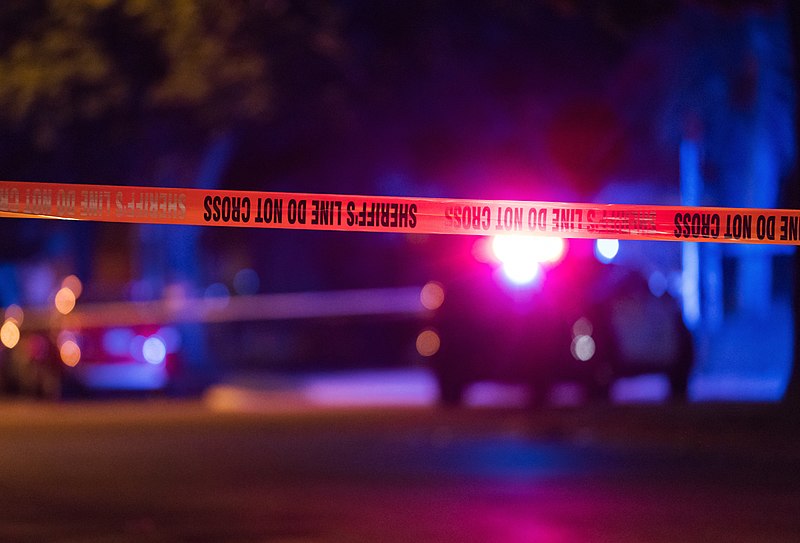
A Canadian judge handed a lighter parole eligibility to a convicted killer after weighing a report about the impact of race and culture on his life.
Everton Javaun Downey, 35, stabbed his girlfriend, Melissa Blimkie, 15 times in a stairwell at the Metrotown Shopping Centre in Burnaby, British Columbia, on Dec. 19, 2021. After the attack, Downey fled with the knife before later surrendering to police.
Downey was convicted of second-degree murder and sentenced last month to life in prison. Prosecutors asked the court to set parole eligibility at no less than 15 years, but B.C. Supreme Court Associate Chief Justice Heather Holmes ruled he can seek parole after 12 years, citing findings from his Impact of Race and Culture Assessment, known as an IRCA.
“As I have indicated, Mr. Downey has a substantial criminal record involving violence and firearms. I recognize, however, that the aggravating effect of his criminal record is offset in part by the mitigating circumstances of his background, as detailed in the IRCA,” Holmes said in her Feb. 13 decision.
IRCAs function similarly to Gladue reports used in cases involving Indigenous offenders. The reports aim to explain how poverty, discrimination and other systemic pressures may have shaped the lives of Black or other racialized defendants.
According to Canada’s Department of Justice, the assessments are meant to “help criminal justice professionals better understand the effects of poverty, marginalization, racism, and social exclusion on Black and racialized offenders and their experiences.” The reports were first developed in 2014 by a sociologist in Nova Scotia and have since been used more frequently in Canadian courts.
Downey’s report, written by University of Calgary social work professor Patrina Duhaney, identified him as a “Black man of African Nova Scotian, African American and Jamaican ancestry.” The report also stated that he did not encounter “overt racism” during his early years.
RELATED: Illegal Alien Randomly Attempts To Drown A Woman At The Beach
“He grew up in Toronto in predominantly Black and racially diverse neighbourhoods and attended racially diverse schools, and felt that he did not experience overt racism,” Holmes wrote in the decision. “Mr. Downey explained to Dr. Duhaney that his experience living in communities which normalized racial diversity shaped his early sense of identity and belonging.”
Downey moved to British Columbia in 2016, where the court said he struggled to adapt.
“Here, he found a much smaller Black population, and the cultural norms among Black communities felt unfamiliar to him, and contributed to feelings of disconnection and isolation. He also experienced racism in ways he had not previously encountered, both in the community and in the institutional setting,” Holmes wrote.
Holmes acknowledged that Downey had “a significant criminal record that includes serious offences of violence,” including crimes that occurred before he moved west. But she said the IRCA showed “clear that broader systemic, structural, and community factors relating to Mr. Downey’s experience as a Black person have played a part in his life experience, bringing various types of trauma, negative peer influences, and mental health challenges.”
The report detailed hardships in Downey’s upbringing, including poverty, the absence of his father, domestic violence at home and shootings in his neighborhood.
RELATED: Illegal Alien Randomly Attempts To Drown A Woman At The Beach
Holmes cited the report when discussing Downey’s “lasting sense of danger and mistrust,” along with mental health effects linked to previous time in prison and the stress of living far from his community in Ontario.
She specifically listed the findings under “Mitigating Circumstances,” writing that the report documented “early exposure to violence, chronic instability, poverty, systemic anti-Black racism, and untreated mental health symptoms, such as hypervigilance, that may be trauma related.”
Downey’s admission that he killed Blimkie and his statement expressing remorse were also considered mitigating factors.
The ruling also acknowledged the toll on the victim’s loved ones.
“The victims have suffered an almost unbearable loss that affects them all profoundly, and, for some, in almost every aspect of their lives,” Holmes wrote.
“The family members feel the loss all the more deeply because they had no opportunity to say goodbye to Ms. Blimkie or to give her comfort in her final moments. They also feel betrayed by Mr. Downey who they welcomed into their home.”
Download the FREE Trending Politics App to get the latest news FIRST >>
